How to Learn Jewelry CAD Design: Courses, Tutorials & a Realistic Career Path Guide
A CAD jewelry design course is worth paying for when it ends with files a caster can use. Here is how online, classroom, and free routes compare, what to check before you pay, and how long competence takes.
A CAD jewelry design course is worth paying for when it ends with files a caster can use, not just when it teaches the software. There are three ways to learn jewelry CAD: live online courses, full-time programs in a classroom, and free tutorials. Each can teach the software, but only feedback on real files teaches the manufacturing, and competence arrives well after any course ends.
That is the short answer. The rest of this post is how to tell the routes apart, what a realistic timeline looks like, and why brands often keep outsourcing after the team has learned.
Three Ways People Learn Jewelry CAD
Search for a jewelry CAD design course and nearly every result is a school selling enrollment. That is fair enough, but it means nobody on the page compares the routes against each other. Here they are side by side.
|
Route |
What you get |
What it asks of you |
Best for |
|---|---|---|---|
|
Live online course |
A syllabus, an instructor, a final project |
Fixed class times, week after week |
Designers with a day job |
|
Full-time classroom program |
Equipment, CAM and casting context |
Weeks away from work, travel, tuition |
Career changers |
|
Free tutorials |
Unlimited video, any program, any pace |
Discipline, and nobody checking your files |
Testing interest before paying |
Live online courses. This is the most common route for working designers, and most results for a CAD jewelry design course online are this kind. As one example, ELVTR's Jewelry CAD Designer course runs 7 weeks with 12 live classes in Rhino (checked September 2026), and ends with a three-piece collection of manufacturable Rhino files. That last part is what to look for: a course that finishes with a production file, not a good-looking screenshot.
Full-time programs in a classroom. GIA's Comprehensive CAD/CAM for Jewelry certificate is taught on campus in Carlsbad, New York, and London. Its stated outcomes go past modeling to building pieces "within the constraints of cost, time, size, style, and manufacturing methods". That is the manufacturing knowledge a tutorial will not give you. If you are searching for CAD jewelry design classes near you, in Mumbai, in Sri Lanka, or in New York, judge a local class by the checklist in the next section rather than by how close it is.
Self-taught, from tutorials. Free video is where most people start, and it teaches commands well. It does not tell you whether the ring you just built would survive casting. That gap is covered further down.
What A Good CAD Jewelry Design Course Teaches Besides The Software
The software is the easiest part to compare and the least important. Before you pay for a CAD jewelry design course, or any other jewelry CAD training, check five things:
- Which program, and why. Most courses teach Rhino, often with a jewelry plugin on top. That is a reasonable base, but the course should say which plugin and whether you have to buy it. Software choice is its own decision, covered in which jewelry CAD program does which job.
- Manufacturing, not just modeling. Stone seats sized to real stones, prongs that hold a stone rather than resemble one, and walls thick enough to survive casting. If the syllabus never mentions casting or 3D printing, it is a modeling course, not a jewelry CAD course.
- The portfolio outcome. Ask what you leave with. Files you can send to a manufacturer are worth more than renders, because a render can hide geometry that would fail at the bench.
- Who teaches it. An instructor who has produced files for a manufacturer knows which mistakes cost a casting. An instructor who only teaches software may not.
- Feedback on your files. Recorded lectures are the cheap part. Someone opening your file and telling you the seat is too shallow is what you are paying for.
It also helps to know what a 3D jewelry model actually holds before the first class: geometry only, with no metal, color, or light until someone renders it.
How Long A CAD Jewelry Design Course Takes, And How Long Competence Takes
Nobody can give you an honest number of weeks, and a course length is not one. Seven weeks is how long a CAD jewelry design course might run, not how long it takes you to become competent. The speed depends mostly on what you bring. A bench jeweler who has set stones for years is learning software. A graphic designer is learning software and jewelry at the same time.
A milestone ladder is more useful than a calendar:
- You can drive the interface. You follow a tutorial without stopping to hunt for commands.
- You can build a four-prong solitaire from a sketch and export it in a format a manufacturer can open and use.
- A caster accepts your files without rework. Most self-taught designers stall here, because nobody tells them what rework means until a casting comes back wrong.
- You can do it at production pace. Same quality, with the next five designs waiting.
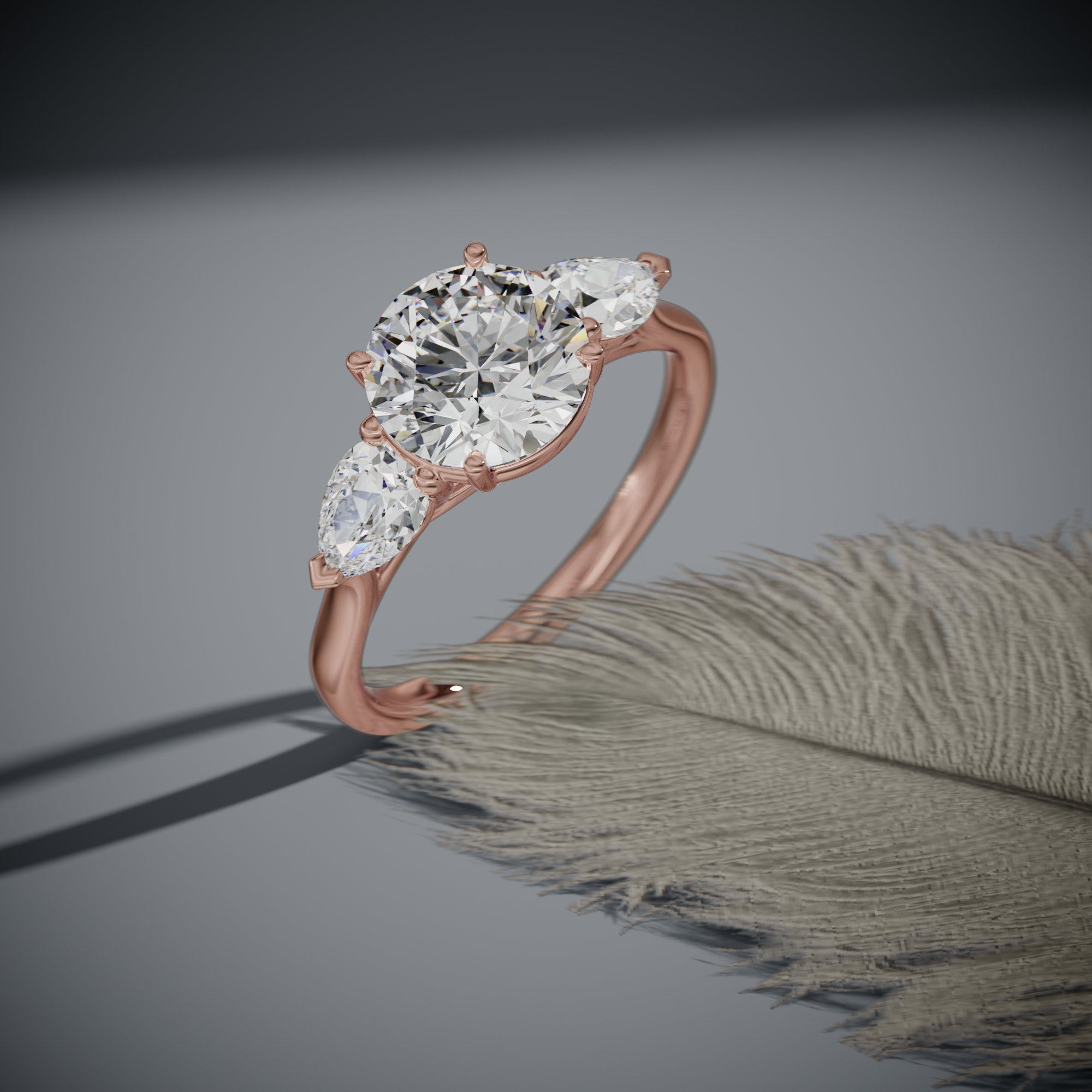
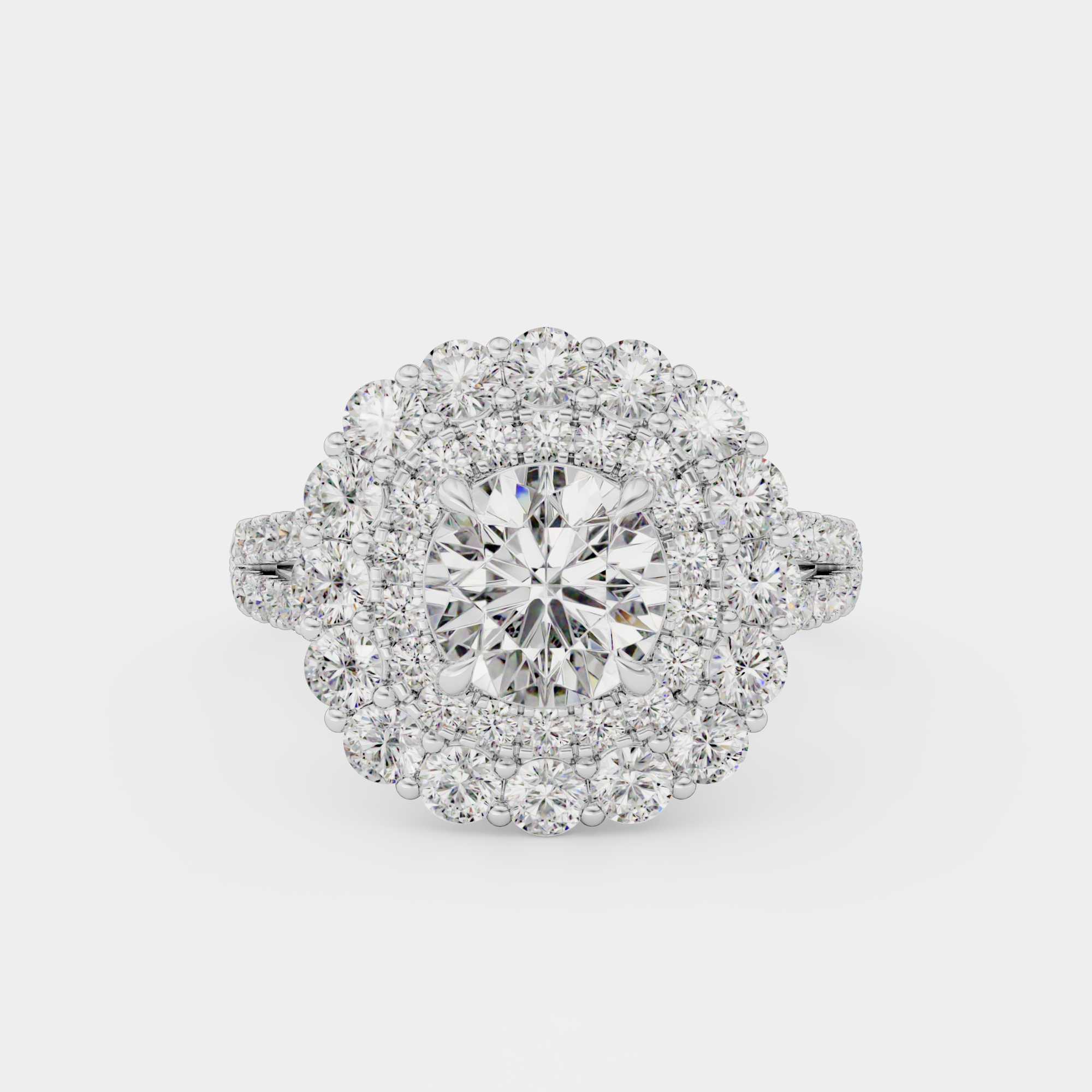
The seat under the stone and the taper on each prong of this six-prong head are what a caster works from. They are also the parts a course project can get wrong without anyone noticing.
A course usually carries you through the first two stages. The third takes real files going to a real manufacturer, and the fourth is simply time. If you want to become a CAD jewelry designer as a job, employers hire for stages three and four, so your portfolio has to show you reached them.
Where Free Tutorials Stop And Paid Training Starts
Free CAD jewelry design tutorials are good enough to find out whether you like the work. Rhino's own evaluation version runs the full program for 90 days (terms checked September 2026), after which saving and plugins stop working. That is long enough to work through a dozen tutorials and decide whether to pay for more.
Where free falls short is feedback. A tutorial shows you how its author built a ring. It never looks at yours. So the errors that matter most in jewelry CAD, a seat too shallow for its stone or a wall too thin to cast, go unnoticed until metal is involved.
The export is where we see it. We have delivered 12,000+ renders, and the file a design arrives in says a lot about how it was learned. A clean 3DM or STEP file renders at base price. A mesh export at a coarse setting shows up at 3000 x 3000 px as a faceted line along the inside of the shank, where one smooth highlight should run. A broken export needs repair time before anyone can light it. None of that is visible in the small preview at the end of a tutorial video.
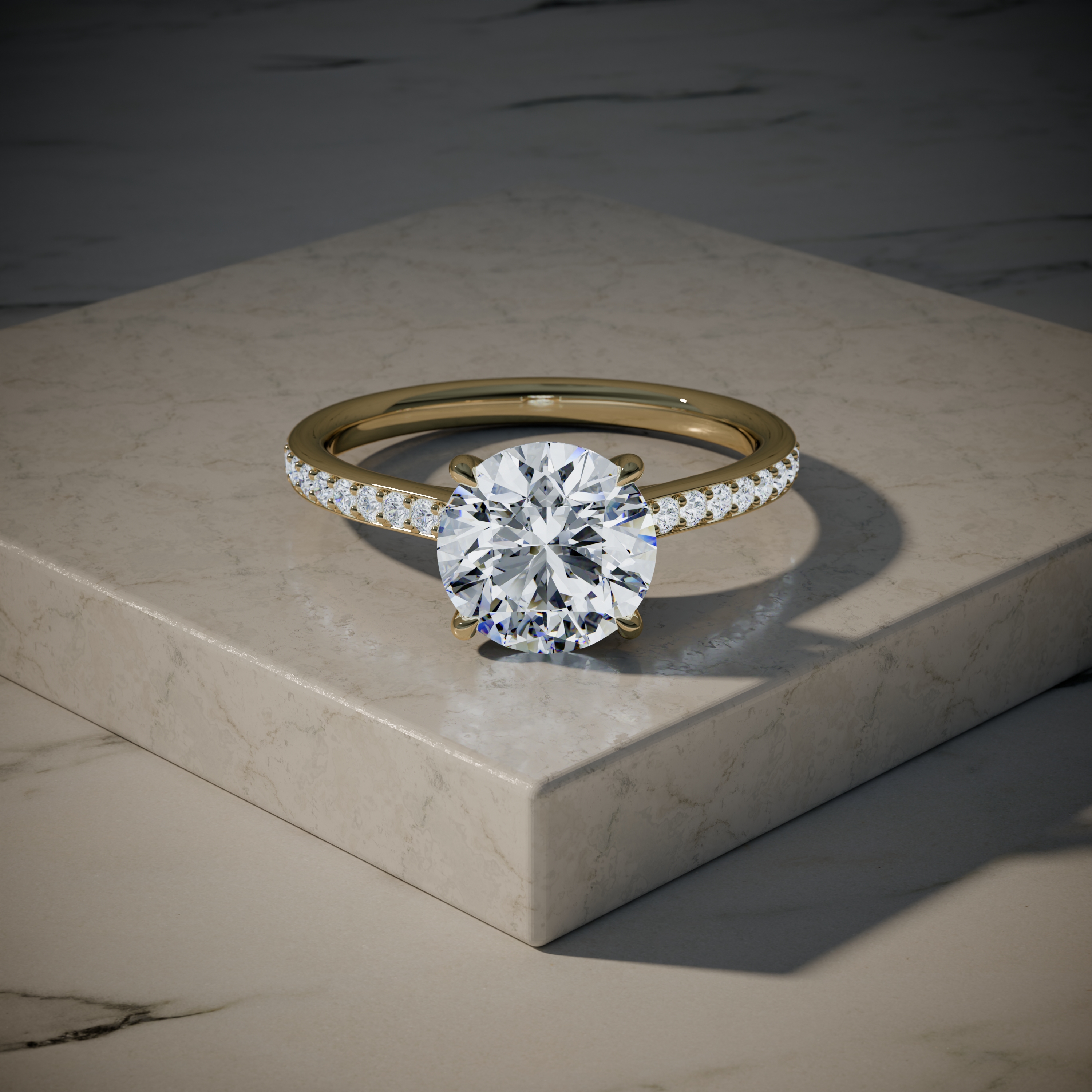
A clean export holds one continuous highlight along the curve. A coarse mesh export breaks it into short flat segments.
A paid CAD jewelry design course earns its price on exactly this point: someone checks your file against what a manufacturer needs. Every render we deliver is checked by someone with jewelry bench experience for the same reason. A good course gives your files that check while you are still learning, when a mistake costs an evening rather than a casting.
Where This Advice Does Not Fit
We are a rendering studio, not a school. We cannot vouch for a particular class in Mumbai, Sri Lanka, or New York, and we have not taken any CAD jewelry design course named here. They are examples of what to look for, not recommendations.
We also have a commercial interest in the outsourcing answer below, so weigh it accordingly. Our modeling is an add-on before a render, not a standalone service for manufacturing files. If you need casting-ready CAD at volume, that is a job for a dedicated CAD service or your own manufacturer.
And if your goal is CAD as a career, outsourcing teaches you nothing. Take the course, build the files, and get them in front of a caster as early as you can.
Why Brands Still Outsource CAD After The Team Learns It
Learning the basics and producing files at production pace are different jobs. A team that has just finished a course can model a solitaire. It is not yet the fastest route to a finished collection, and a file error now costs a failed casting rather than a redo on screen. So training does not have to end outsourcing, at least for the pieces that matter most.
The test from the software guide still applies. If you release two or three new designs a month or more, learning in house pays back on speed. Below that, the learning curve costs more than it saves for a long time.
While your team is learning, keep production moving. If a design exists only as a sketch or a photo, we build the CAD model first for an added fee, then render it once you approve the model. That split is explained in when modeling is a separate job. If the file already exists, 3D jewelry rendering turns it into images now. The free sample render (one file, once per prospect) is a cheap way to see how an export your team produced holds up under studio lighting.
Curious how this works in practice? See the process, browse the portfolio, check pricing, or see every service we run.