How to Choose a Jewelry Rendering Service: A Buyer's Checklist for 2026
How to choose a jewelry rendering service in 2026: an eight-point buyer's checklist on price, file formats, revisions, NDAs, and testing a studio first.
How to choose a jewelry rendering service comes down to one rule: test the studio before you trust its homepage. A studio worth hiring publishes a price and says what it buys. It takes the CAD file you already have, puts revisions and confidentiality in writing, and renders one of your own pieces as a free sample. A studio that fails any of those checks is asking you to carry the risk.
That is the short version. The rest of this post is the detail behind each check, and how to tell good jewelry rendering from cheap rendering before you pay for it.
Eight Things A Jewelry Rendering Service Should Put In Writing
Most studio homepages say photorealistic, fast, and affordable. None of those words can be checked. The eight items below can, and a good studio answers all of them before it opens your file:
- A price, with contents. "From $25" is not a price. Ask what one order buys: how many images, how many angles, which metals, whether video is included, and at what resolution.
- Your file, as it is. Good jewelry CAD rendering services take 3DM, STL, OBJ, and STEP. Some take one or two formats only, which means you pay someone to convert. If you have only a sketch, modeling is a separate job with its own fee.
- Jewelry-only experience. A 3D rendering studio that also renders sofas and kitchens can produce a clean image of a ring that could never be cast. Ask who checks each render, and whether that person has worked at a bench.
- Revisions, counted. How many rounds, what each round covers, and the turnaround on changes. "Unlimited revisions" usually means nobody has defined a revision.
- An NDA before the file is opened. Then ask who owns the design afterward. The answer should be you, in writing.
- Resolution that survives a zoom. Ask for the pixel size. Ours ships at 3000 x 3000 px or larger. Then ask for the formats: JPG, PNG with a transparent background, and a layered file for your retoucher.
- Consistency across the catalog. Your 40th piece should sit next to your first without a lighting jump. Ask whether the studio keeps the render scene on file for reorders, or rebuilds it each time.
- Terms you can enforce. Jewelry rendering in India, whether the studio sits in Surat or Vadodara, works from an uploaded file, the same as a studio abroad. So ask about time-zone overlap, payment methods you can use, and where an NDA would be enforced.
How To Judge Jewelry Rendering Techniques From A Portfolio
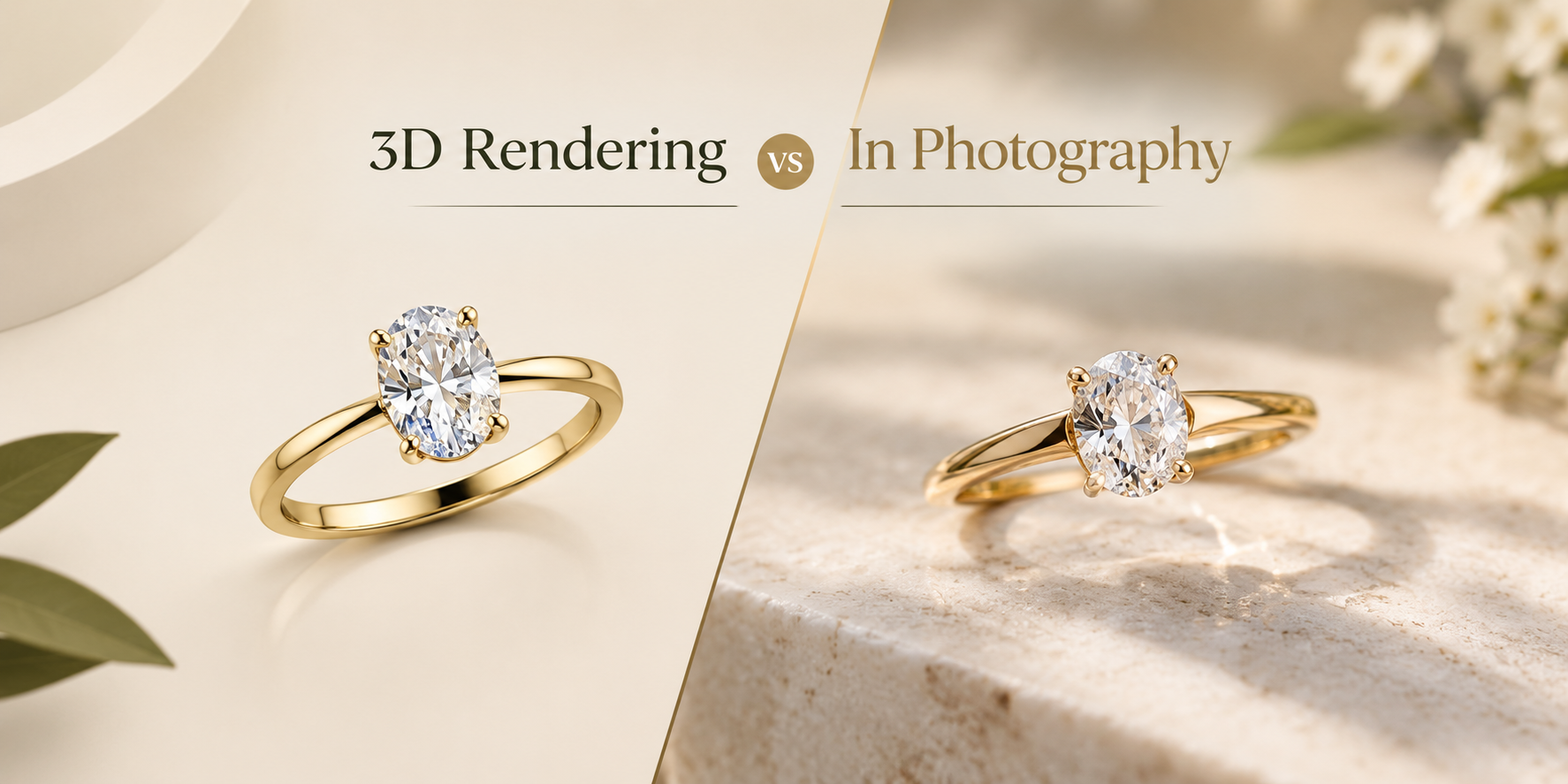
Most portfolios are shown at thumbnail size, where every render looks good. Ask for two or three finished files at full resolution and look at them at 100 percent zoom. That is where rendering technique shows, or does not.
Check four things:
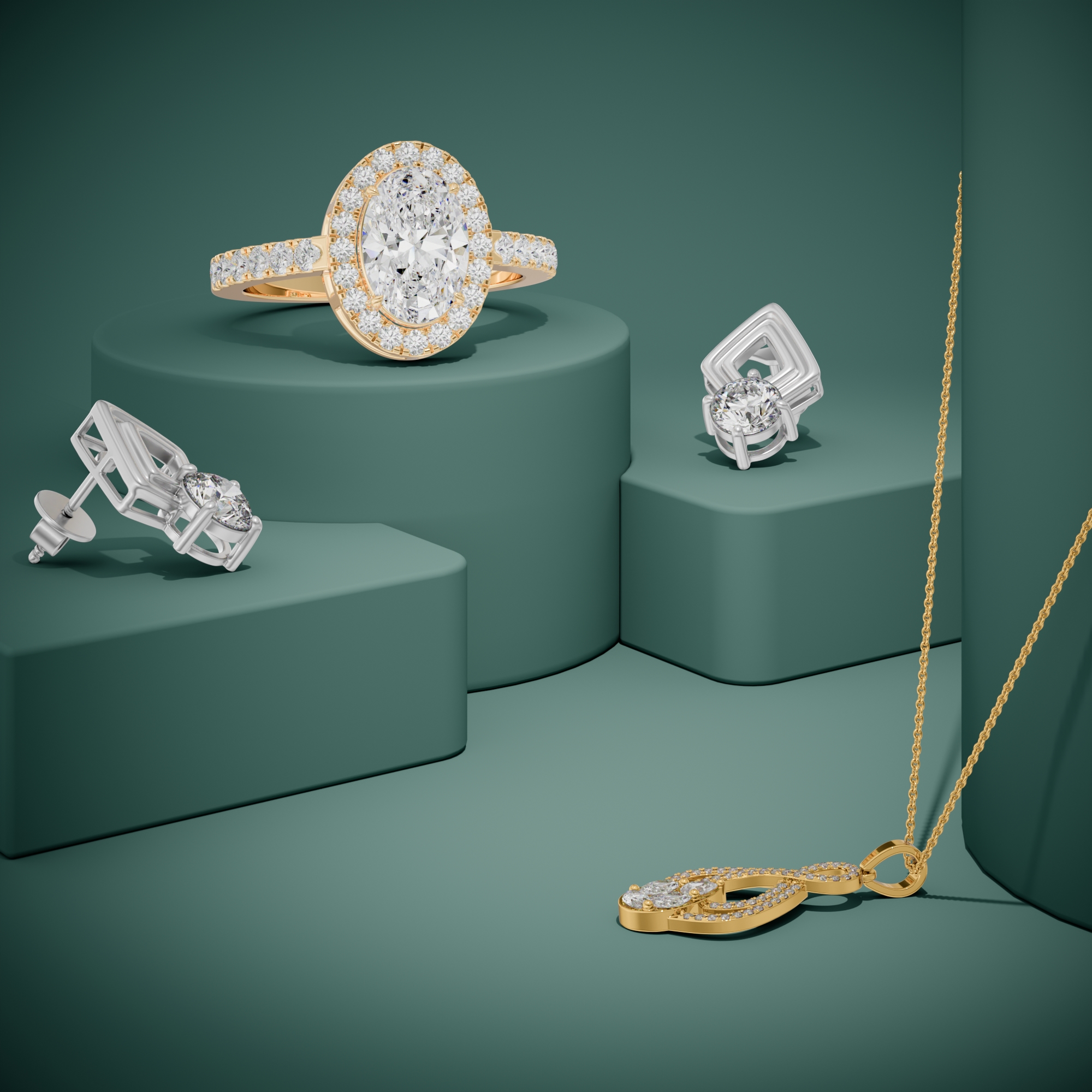
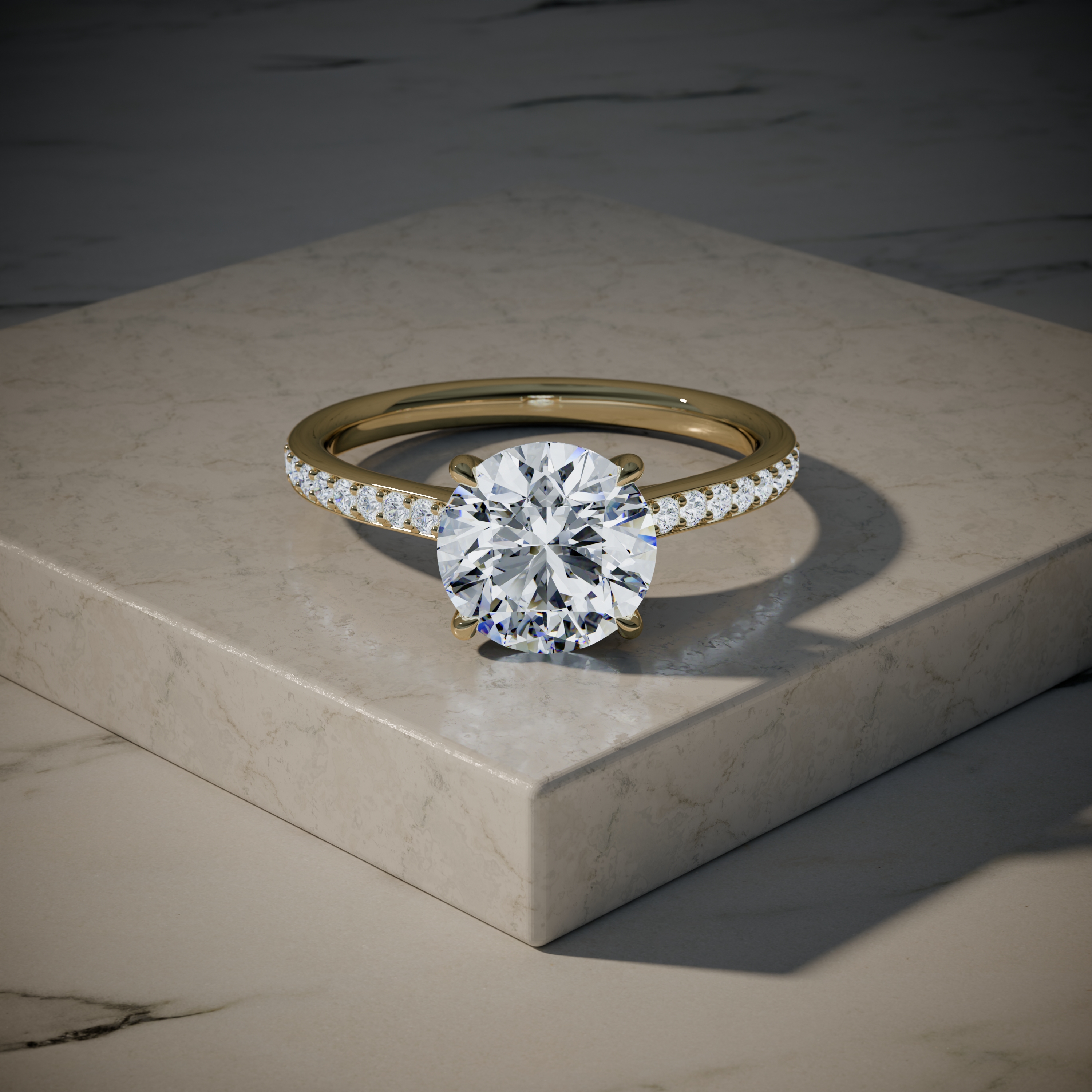
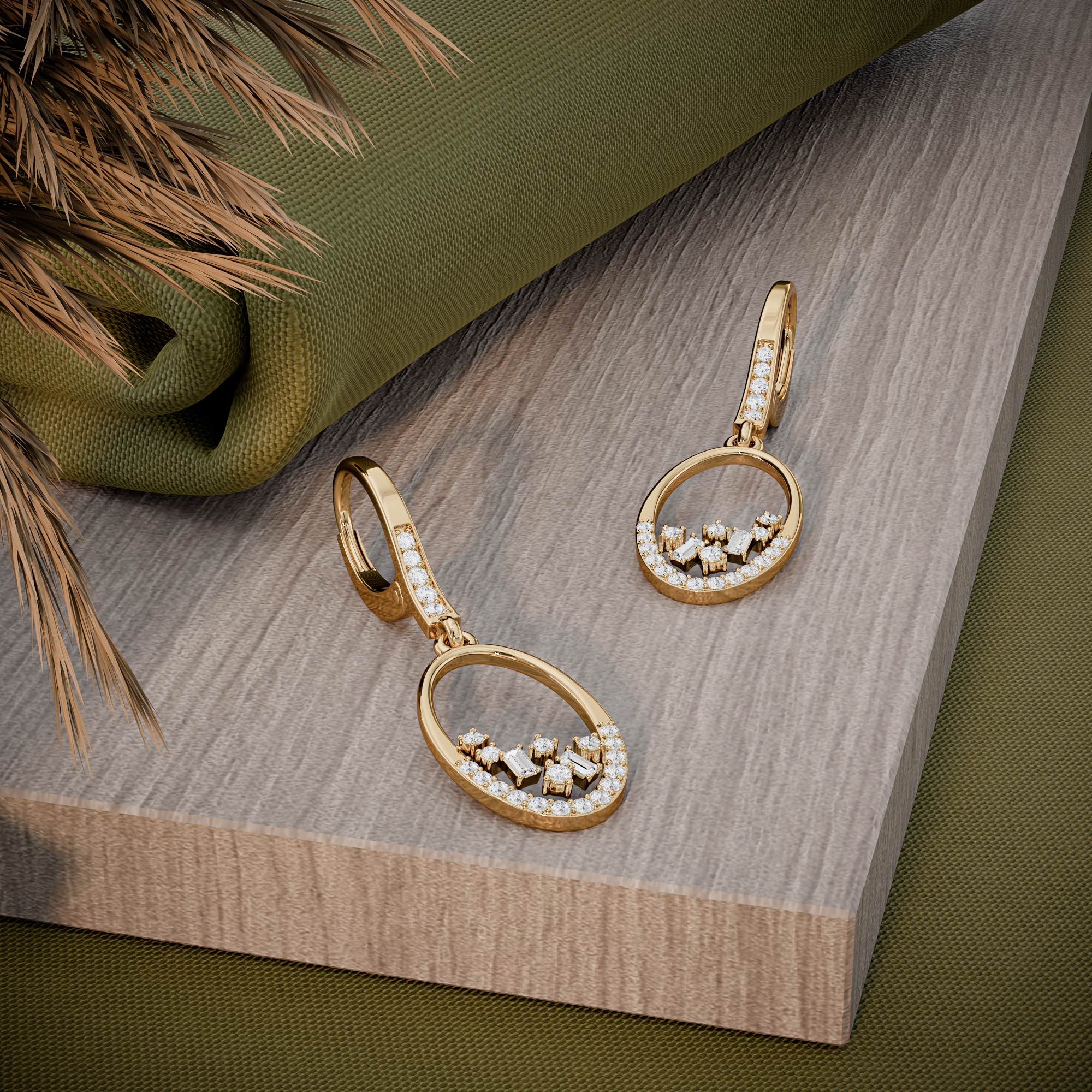
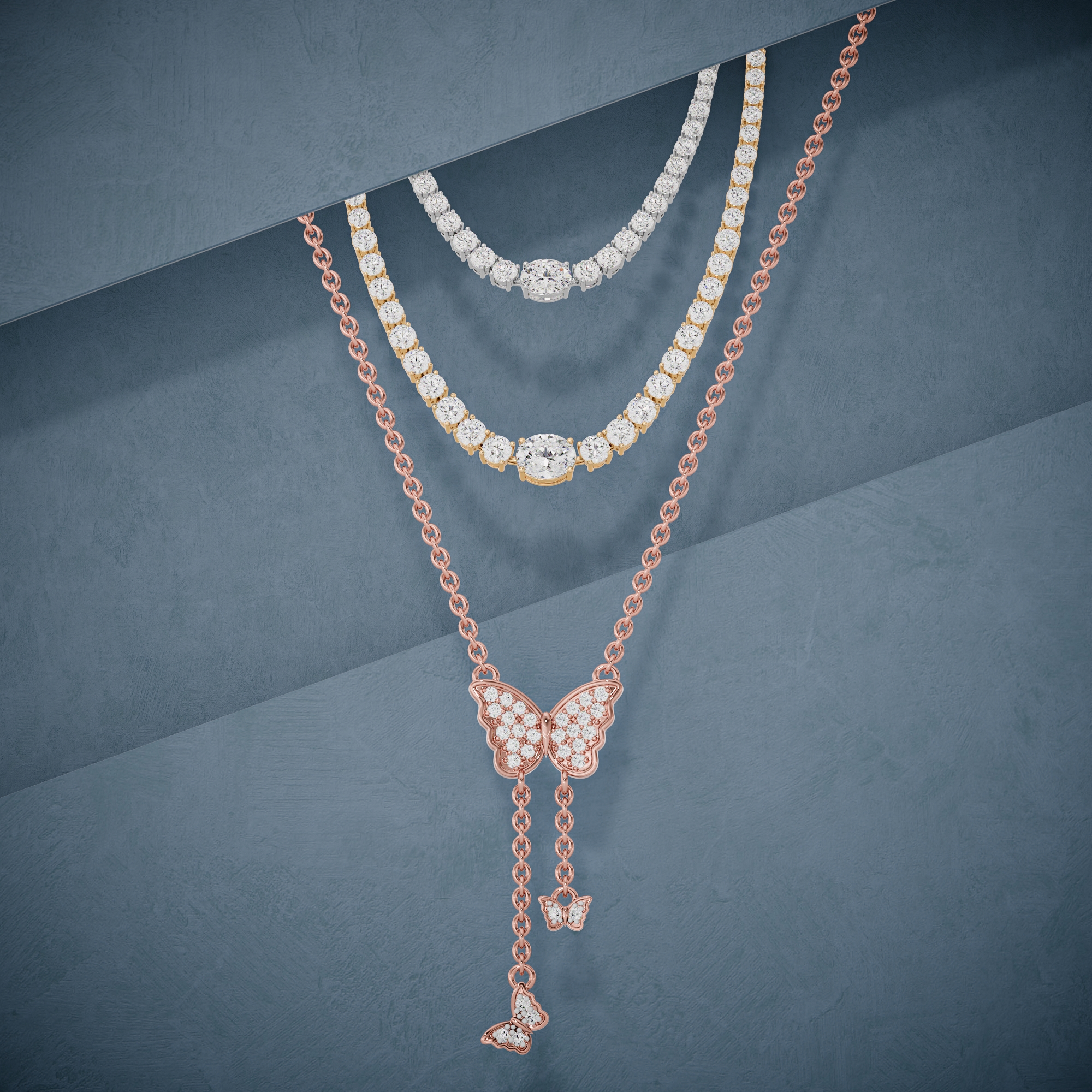
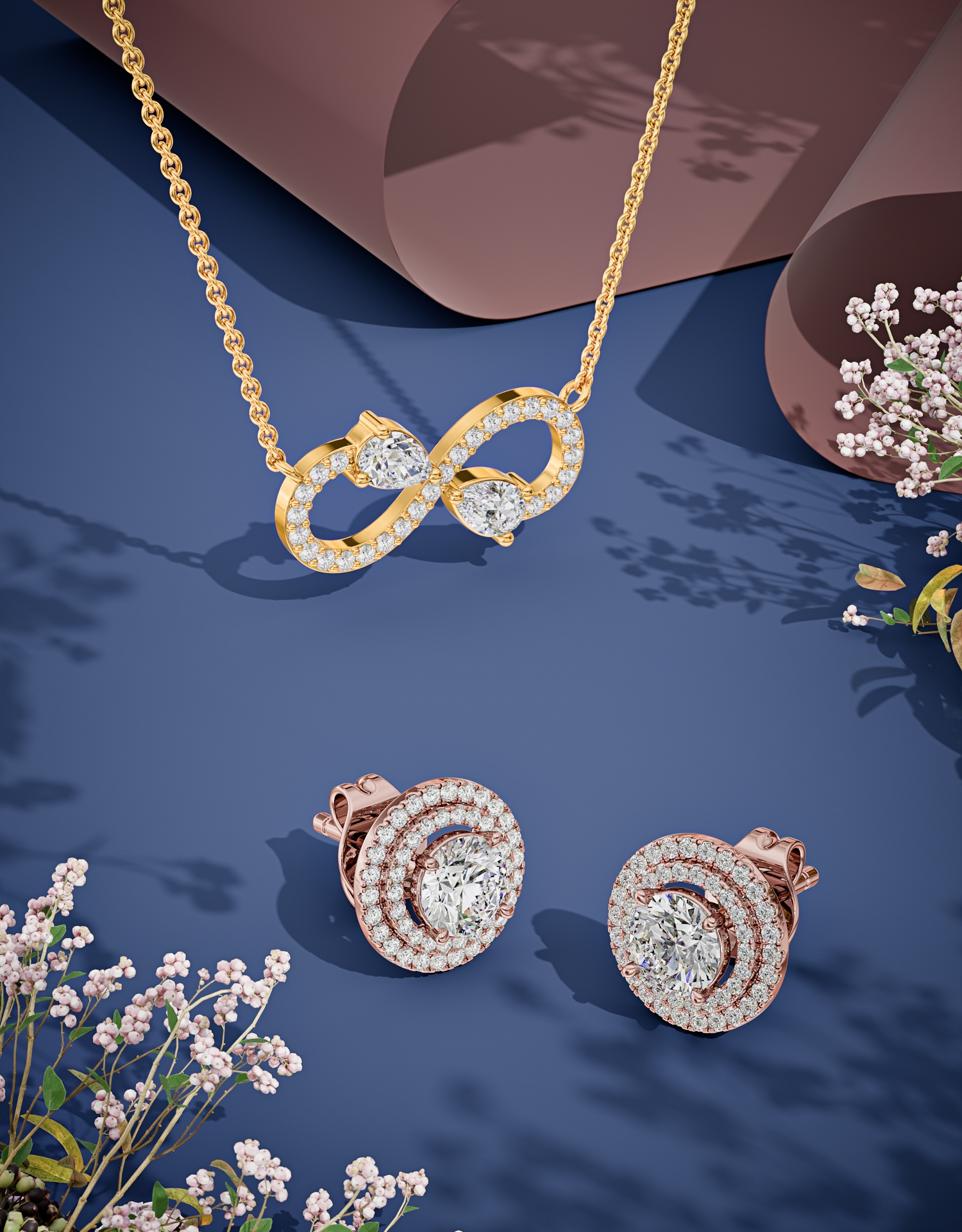
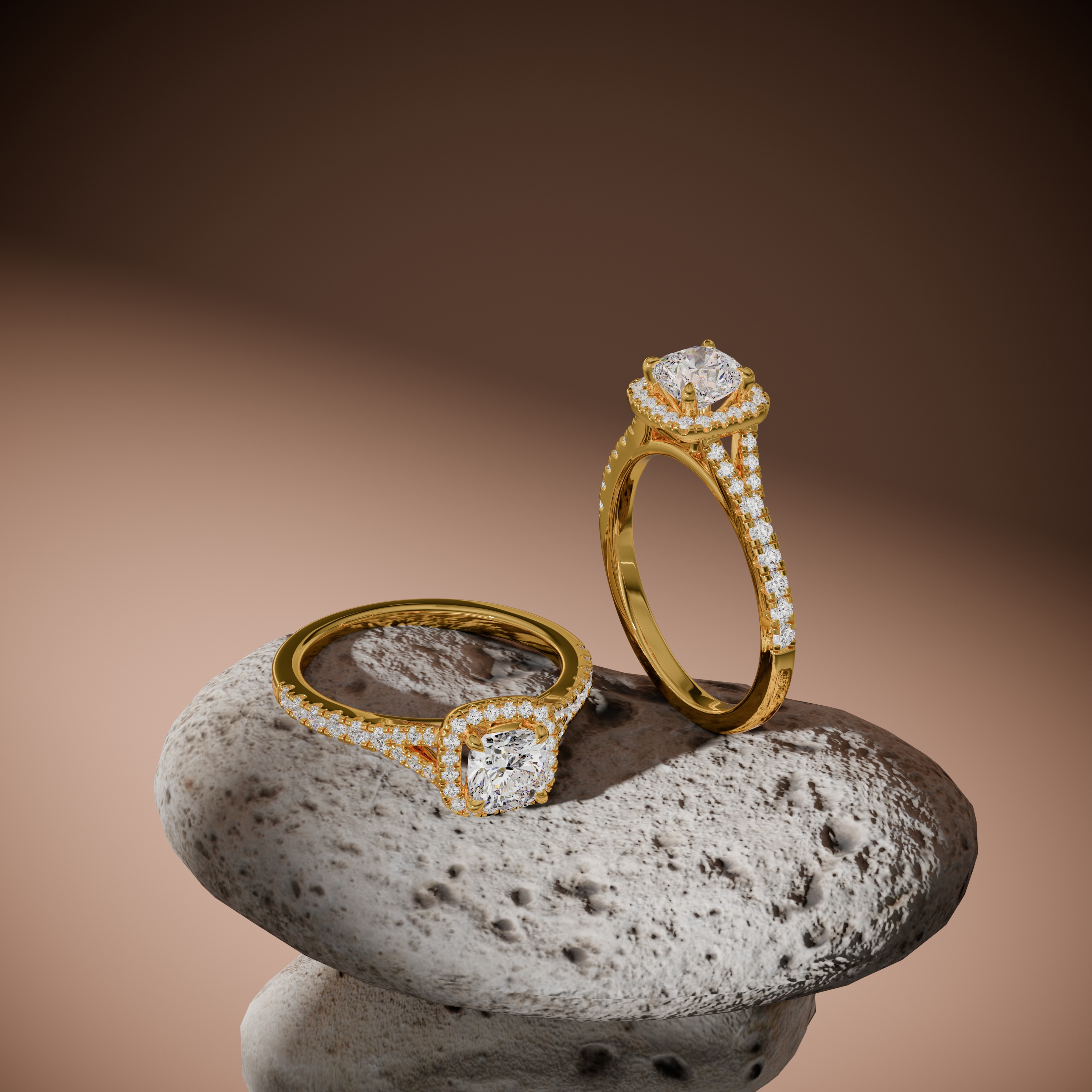
- Metal. Rose, white, and yellow gold should read as three different metals, with soft reflections that wrap around the shank. Metal that looks like painted plastic is a budget-tier tell.
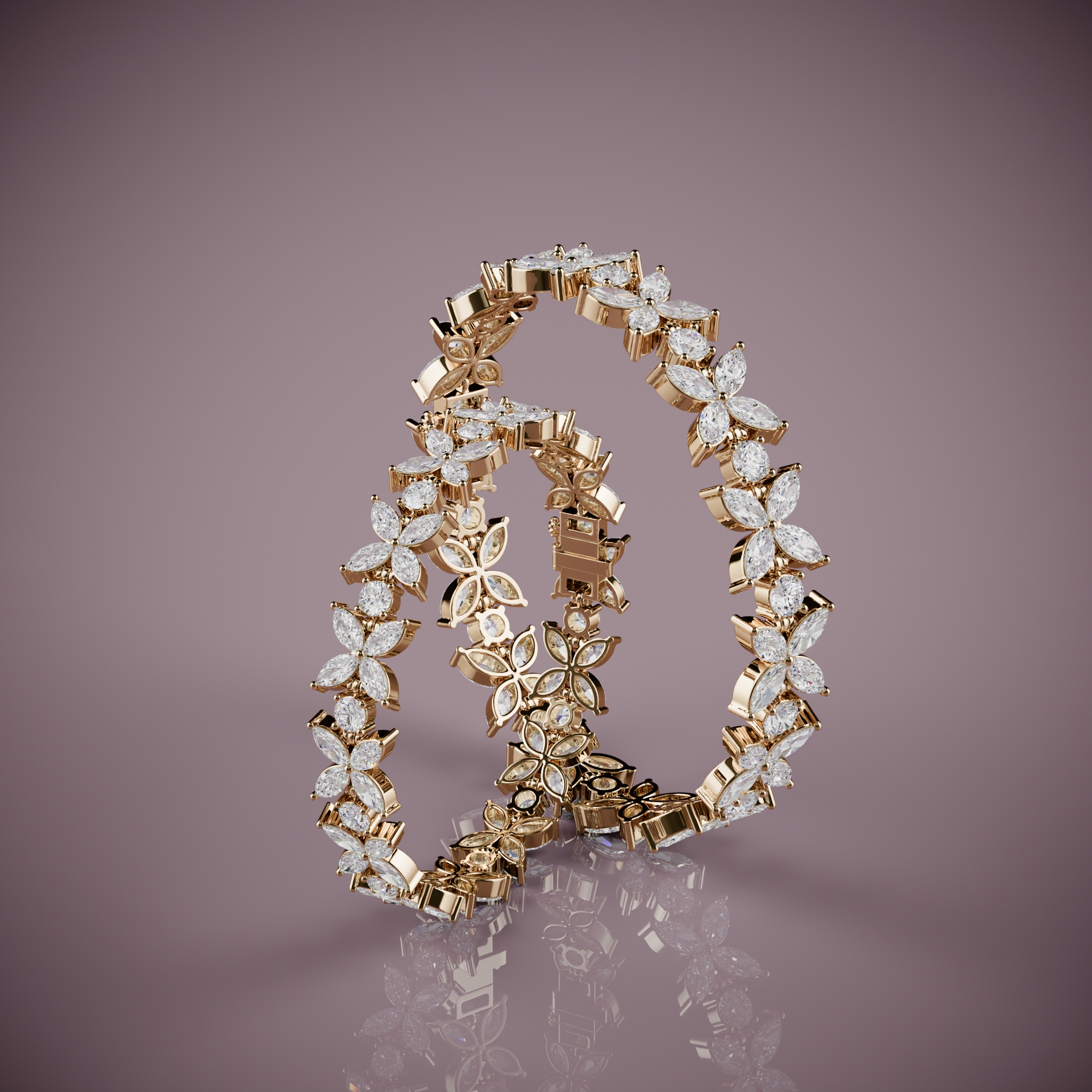
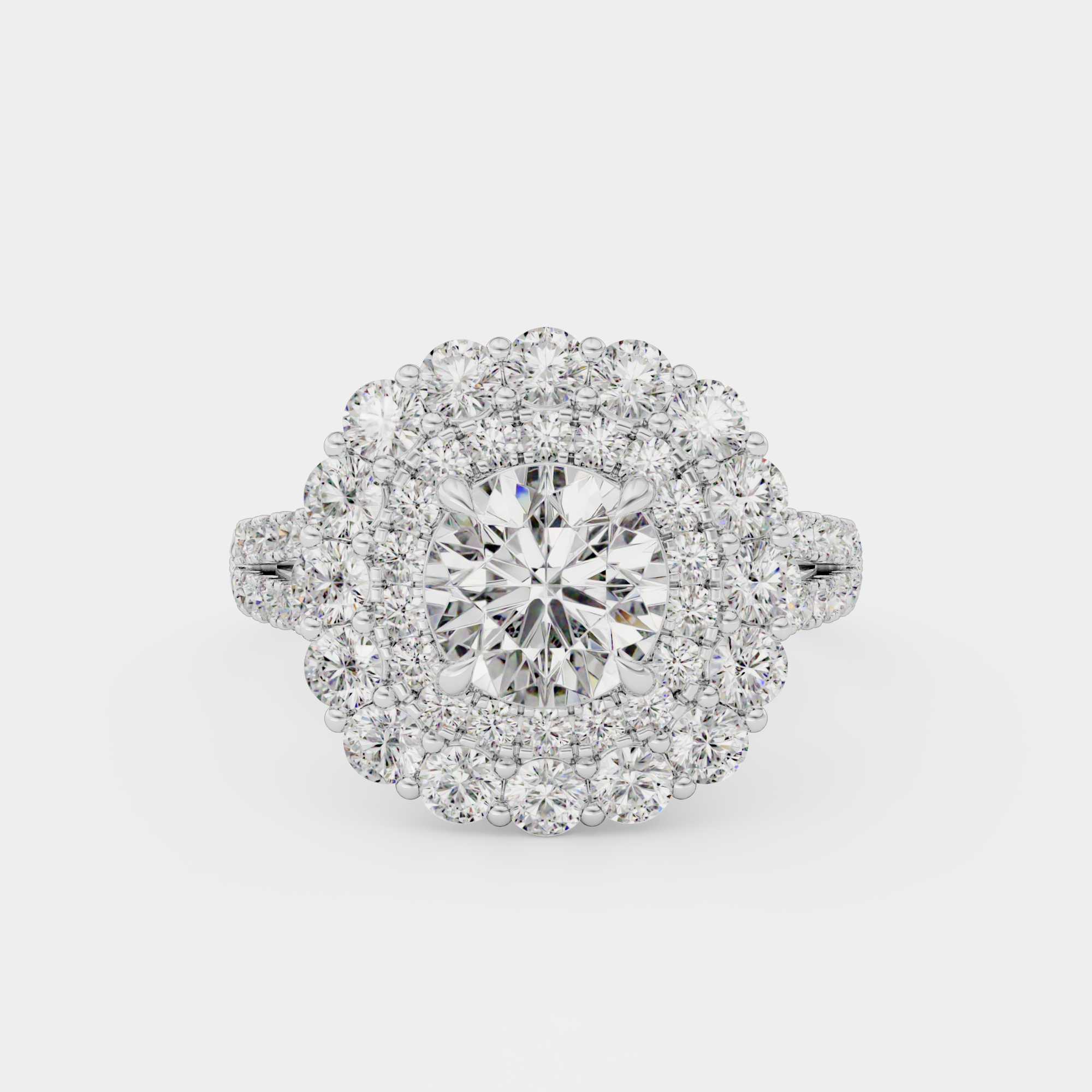
- Stones. A diamond should break light into sharp facets with flashes of color. A stone that glows evenly from inside is not being traced properly.
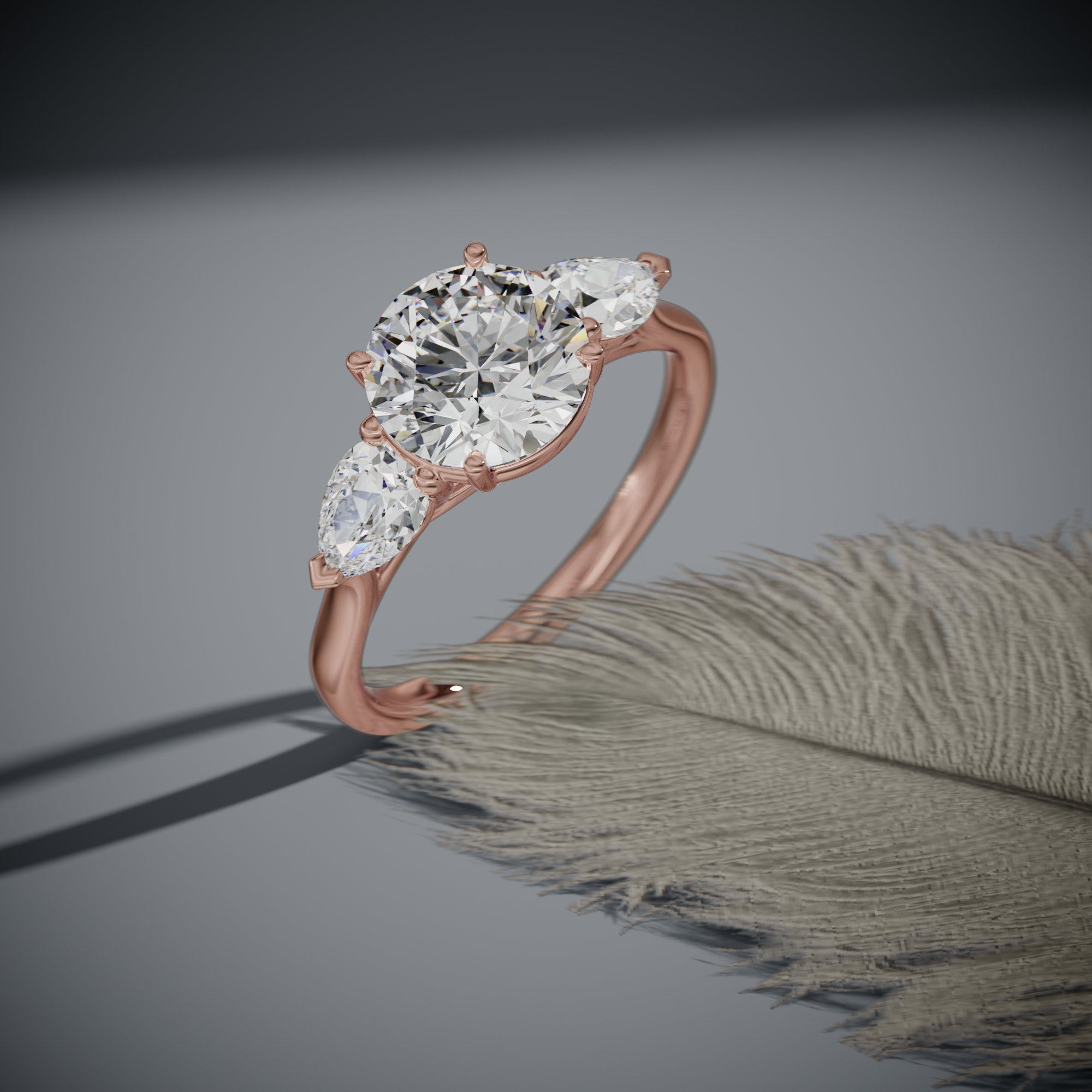
- Prongs and settings. Every prong should touch the stone it holds. A prong floating a fraction above the girdle, or a pave field where every stone sits at the identical angle, is the error a bench-trained reviewer catches and a buyer's eye misses at thumbnail size.
- Light and shadow. Studio-style HDRI lighting leaves soft, believable reflections. A piece with no contact shadow looks pasted onto the background.
Then compare the portfolio with what the studio sends you on a sample. They should match. You can hold examples of our renders to the same test.
Compare Pricing Models, Not Headline Prices
Studios price jewelry rendering in four different ways, so two quotes of "$15" can buy very different things. Industry ranges run from $15 to $25 per render at the budget tier, $25 to $50 for standard ecommerce work, and $45 to $150 for hand-lit hero images. The full breakdown is in what jewelry rendering costs.
|
Pricing model |
What one price buys |
What to watch |
|---|---|---|
|
Per CAD file |
A bundle: several angles, metals, sometimes video |
Read the bundle. That is the real price |
|
Per view |
One image, one angle |
Nine views at $15 each is $135 |
|
Hourly freelancer |
Time, about $25 to $40 an hour |
Hours are hard to cap, and revisions add more |
|
Subscription |
Credits on an automated platform |
Minimum spend, credits that expire, fixed angles |
The hourly figure comes from Upwork's published rates for 3D rendering artists, which put the median at $30 an hour. A render that takes three hours is $90 before the first revision.
Our own price is $15 per CAD file (a launch offer, regularly $30), which buys 9 HD images and 3 videos across rose, white, and yellow gold. That is not the lowest price on the market: at least one studio charges $12 per product, and an automated platform charges less per image. The difference is how much one order includes, which is why you should compare what each quote buys, not the first number on the page.
The Weaknesses A Small Jewelry Store Has To Plan Around
A small jewelry store usually has four weaknesses a large brand does not. It has no spare budget for samples that do not sell. It has no CAD modeler or photographer on staff. Its orders are too small to earn volume discounts. And one bad batch of images costs it a season, not a quarter.
Each weakness points to a choice when you pick a jewelry rendering service:
- No sample budget. Render first and cast what sells. That only works if the render is good enough to sell from, so the free sample matters more to you than to anyone.
- No in-house staff. Choose a studio that takes your file as it is, without a written spec sheet, and that will build the CAD model if you have only a sketch.
- Small orders. Avoid subscriptions and minimum spends. A flat per-file price with no minimum suits a store that adds six pieces a month.
- No room for a bad batch. Get the revision count and the guarantee in writing. Ours is two rounds, and if we still miss, you do not pay for that piece.
When No Rendering Service Is The Right Hire
A render proves the design. It does not prove the piece that comes out of casting. Casting, polishing, and stone setting all add small variations the CAD file does not contain, and no studio can promise the finished piece will match pixel for pixel. Be careful of any studio that says it can.
Rendering is also the wrong purchase in four common cases:
- Model and lifestyle shots. Rendering human skin convincingly costs more than photographing a person. Book a photographer.
- Existing one-off pieces. An estate piece or a handmade one-off has no CAD file. Modeling it only to render it usually costs more than shooting it.
- Hand engraving and hammered texture. These can be rendered, but matching their exact character takes modeling time that a camera gets for free.
- Pieces you know will sell. If a design is already proven, a sample and a photoshoot still make sense.
How To Choose A Jewelry Rendering Service In One Week
Pick one design you have as a CAD file, ideally one with pave or a difficult setting. Send it to two studios on the same day as a free sample request. Then compare the results on four things: how long each took, whether the stones and prongs hold up at full zoom, how each handled your revision notes, and whether the final price matched the quote.
One week and one file will tell you more than any portfolio. If you want to include us, our 3D jewelry rendering service works from 3DM, STL, OBJ, and STEP files, with an NDA signed before your file is opened. Any studio confident in its work will render one piece to prove it, so request a free sample render of your own design and judge it by the checklist above.
Curious how this works in practice? See the process, browse the portfolio, check pricing, or see every service we run.