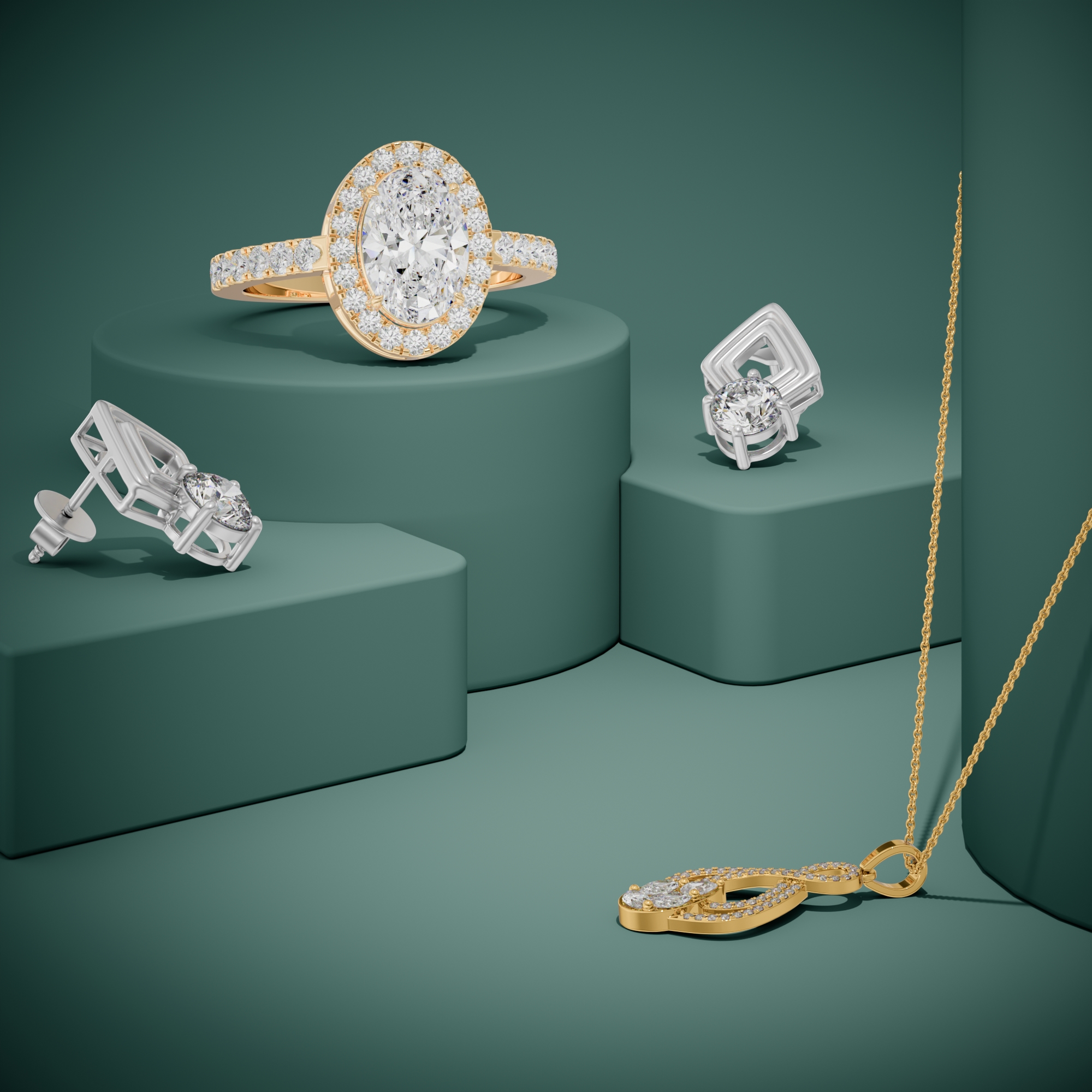
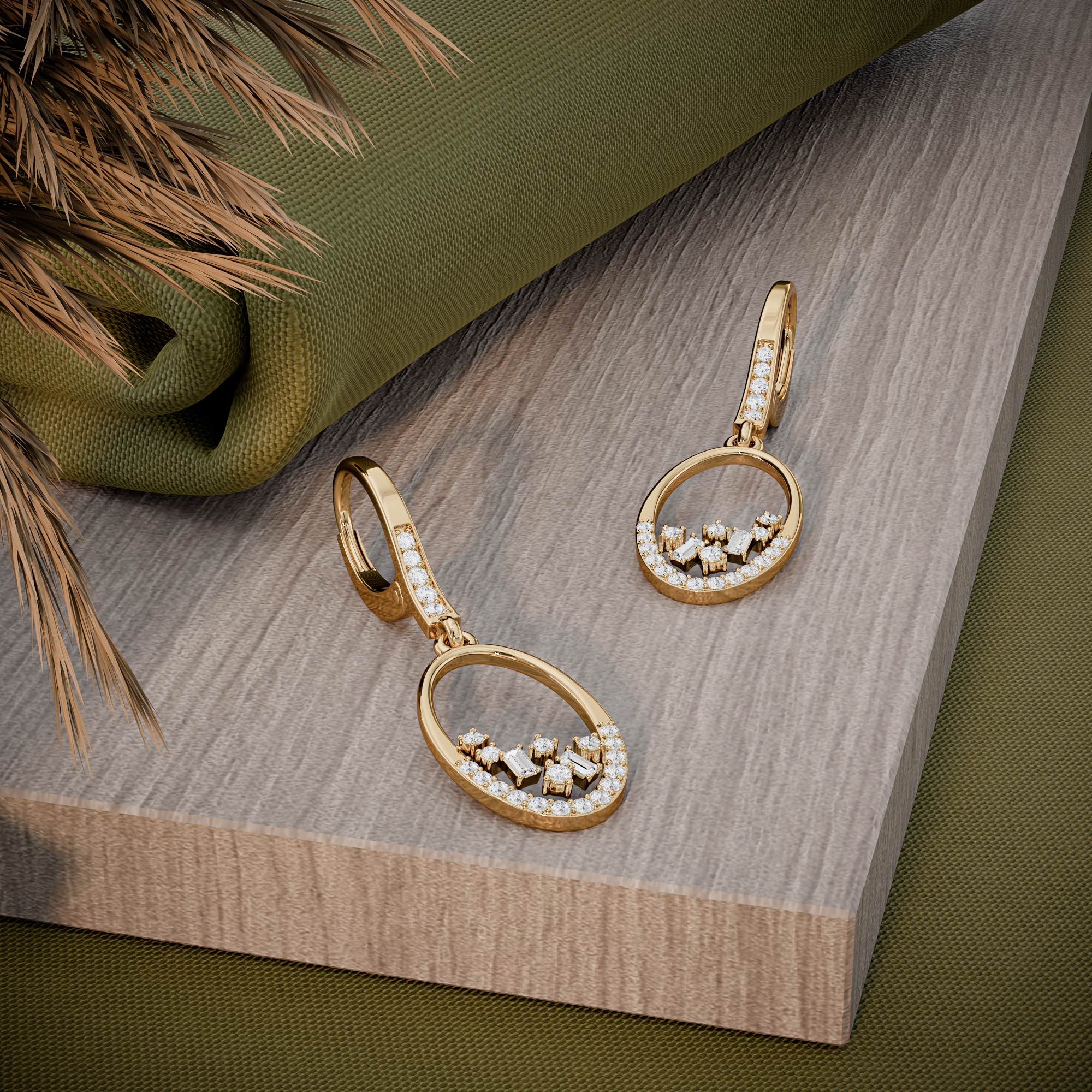
Prong Setting
Also called claw setting, four prong setting, six prong setting
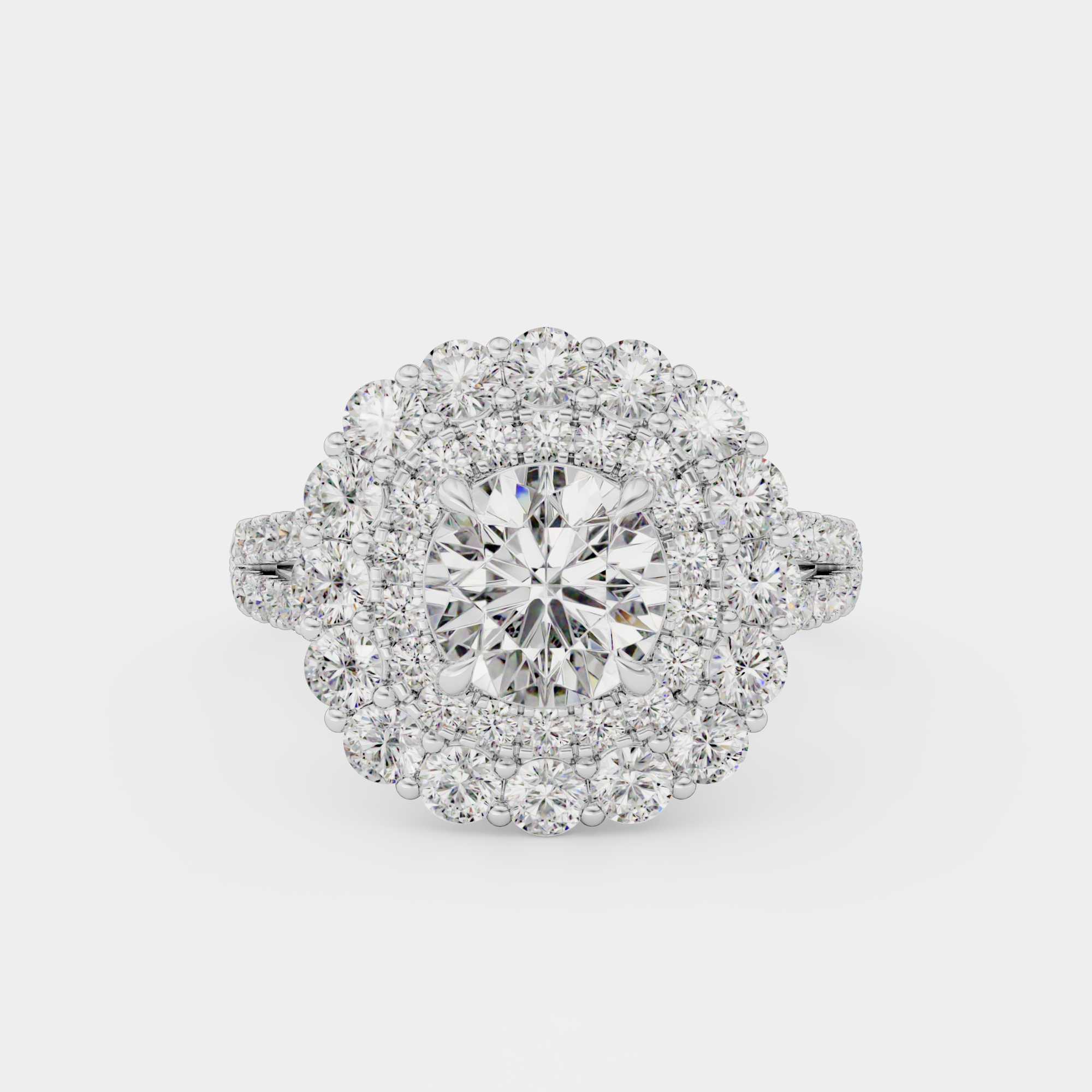
A prong setting is a stone setting that uses small metal claws bent over the edge of a gemstone to hold it. It is the most common setting for engagement rings because it covers very little of the stone, letting light enter from the sides and the back.
In other words, thin metal fingers grip the stone at a few points, so nearly all of the gem stays open to the light.
How it works
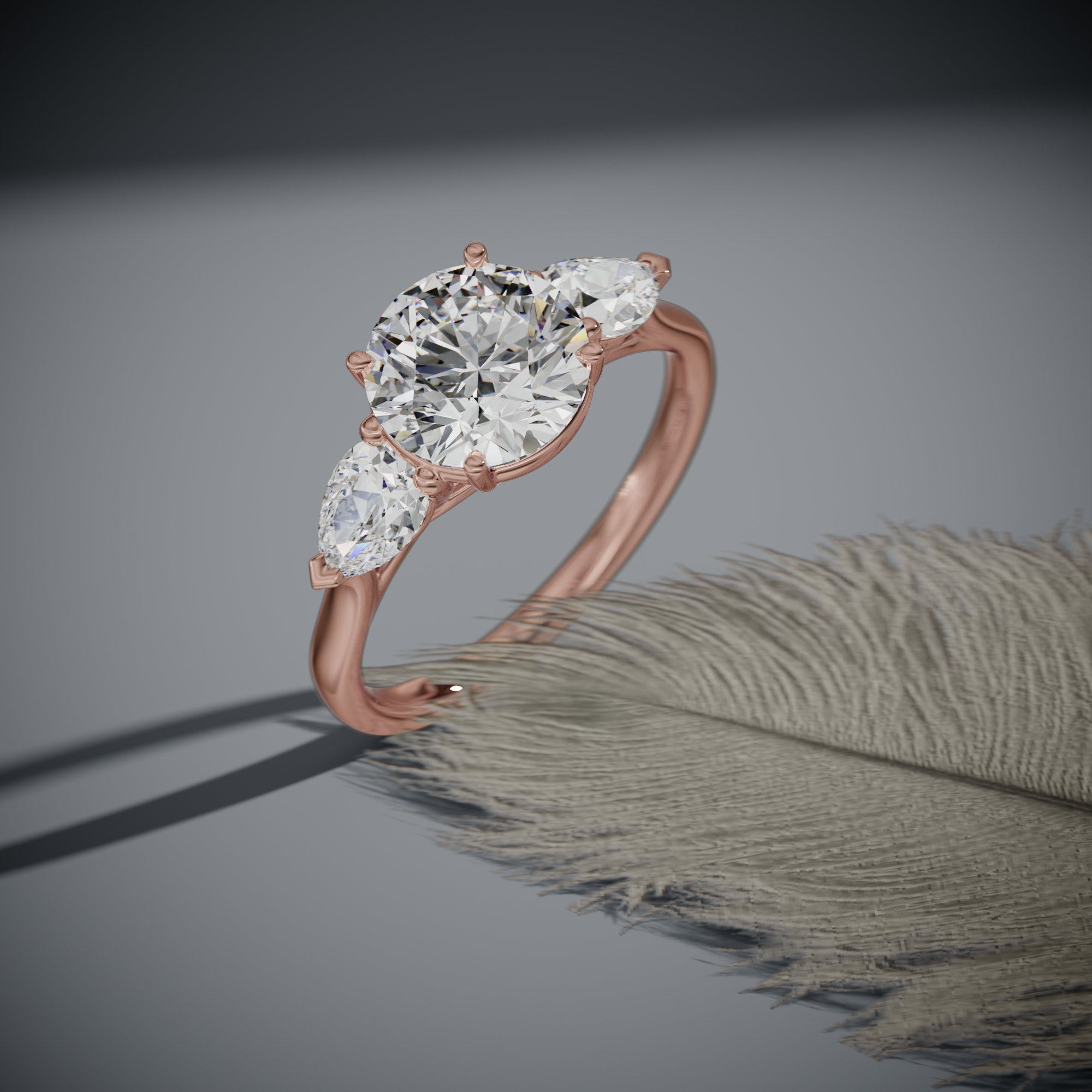
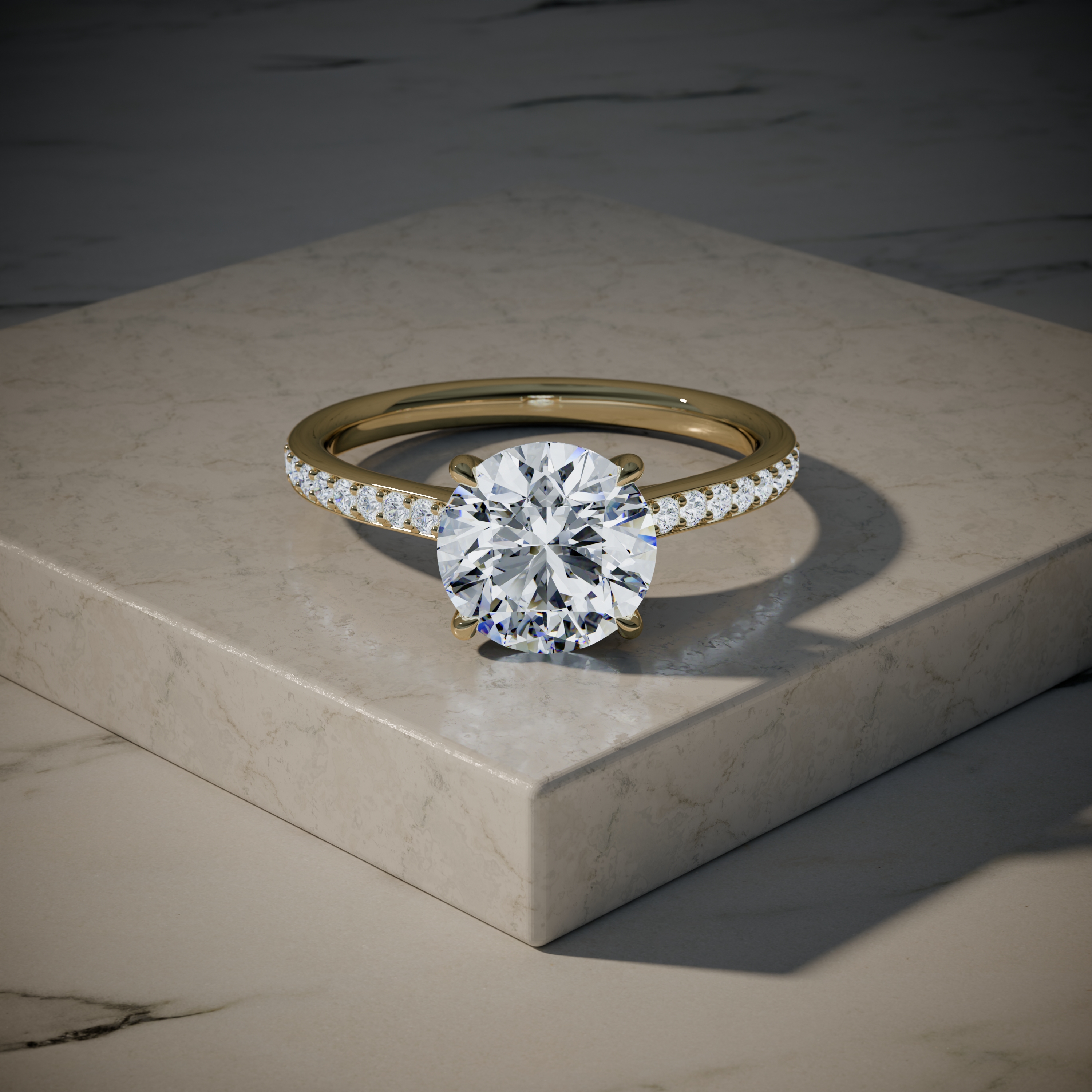
The stone sits in a basket or head. Wires of metal run up past the girdle, the widest edge of the stone, and the tips are pressed over the top to lock it down. Four and six prongs are the usual counts.
Four prongs show more of the stone and give a squarer look to a round diamond. Six prongs hold more securely and read rounder. Prong tips come in shapes too, and the shape is a visible design decision.
- Round prong: the standard, a soft dome over the stone edge.
- Claw or talon prong: pointed and tapered, a sharper look.
- V prong: fitted to protect the corner of a pear, marquise, or princess cut.
- Double prong: two thin wires side by side, common on vintage styles.
Why it is hard to render well
Prongs are the smallest metal on the piece and they sit right on top of the most reflective part of it. They pick up light from the stone below and from the studio around them, so a careless render turns them into white blobs or loses them into the diamond entirely.
The other trap is contact. The tip has to look like it is pressing on the stone, not floating above it or sinking into it. At the resolution an ecommerce zoom uses, a half-millimetre gap is obvious and it makes the piece look unmakeable.
What we do about it
We light the head separately from the body of the ring so the prongs keep their own edge and shadow. Then we check the tips at full resolution before anything goes out, because a prong that reads wrong is the fastest way to lose trust on a product page.
You get nine HD images and three videos per file. The close-up angles are where prong work shows, and the videos let a buyer watch light move across the tips as the ring turns.
What to send us
The CAD file as 3DM, STL, OBJ, or STEP is enough. If the prong tips are meant to be a specific shape, and your file has them modelled generically, say so in the order note and we will match the intent rather than the geometry.
Questions about Prong Setting
How many prongs should a ring have?
Four shows more of the stone, six holds it more securely. Larger or more valuable stones usually get six.
Can you render a prong setting close enough to see the tips?
Yes. The nine images per file include close-up angles, and prong tips are checked at full resolution before delivery.
Is a prong setting safe for everyday wear?
It is the most common engagement ring setting, so yes, but prongs are the part that needs checking over time. A bezel setting protects the stone more.