Platinum Jewelry
Also called 950 platinum, Pt950, 900 platinum, plat.
Platinum is a dense, naturally white precious metal, used in jewelry at high purity, most often 950 parts per thousand. Unlike white gold, it is white all the way through, so it needs no plating, and it is chosen for settings that have to hold stones securely for decades.
What Platinum Means in Jewelry?
Platinum is a chemical element, symbol Pt, and one of six platinum group metals alongside palladium, rhodium, iridium, ruthenium, and osmium. The name comes from the Spanish platina, little silver, because early European collectors took it for an inferior silver.
In jewelry, the word means a piece made mostly of that one metal. Gold is alloyed down to 75 percent at 18k or 58.5 percent at 14k, but platinum is usually worked at 90 to 95 percent purity, with the remainder made up of other platinum group metals or a small share of cobalt or copper for hardness.
That high purity is the reason it is chosen by buyers who react to the nickel used in some white golds. There is very little else in the metal.
How Platinum Purity is Marked?
Platinum purity is stated in parts per thousand, not karats. The four recognized standards are 850, 900, 950, and 999, so a ring stamped 950 is 95 percent platinum. 950 is the most common standard for rings, and 999 is too soft for most settings.
In the UK, platinum items of 0.5 gram and over must be hallmarked by an assay office, and 950 and 999 may carry the traditional orb mark. In the US, the FTC jewelry guides let a seller describe 950 as platinum, while 900 and 850 have to carry the number, as in 900 Plat or 850 Pt.
- 999: 99.9 percent, too soft for most rings
- 950: 95 percent, the usual standard for rings
- 900: 90 percent, harder, common in some markets
- 850: 85 percent, the lowest recognized standard
Platinum Jewelry Pros and Cons, and Why it Costs More
Platinum is chosen for the setting more often than for the color. It is dense and tough, so prongs bend rather than snap, and when platinum scratches, the metal is pushed aside rather than lost. Over years, that builds a soft satin patina, which a polish removes.
The costs are real. A platinum ring is heavier than the same ring in gold, because platinum weighs 21.45 grams per cubic centimeter. It melts at 1,768 C, so casting, sizing, and repair need equipment and a bench jeweler that some workshops do not have.
The platinum price per ounce is only part of the bill. Platinum has traded both above and below gold per ounce, so the metal price alone never explains what a platinum ring costs.
Three things drive it instead. The ring holds more metal by weight, because platinum is denser than gold. That metal is 95 percent pure rather than 75 or 58.5 percent. And the higher melting point makes every casting and repair slower. A quote for a platinum piece is mostly a quote for grams and bench hours.
- Pros: naturally white, no plating, high purity, holds stones securely
- Cons: heavier, costs more, patinas with wear, fewer shops can repair it
What Platinum Means for a Render?
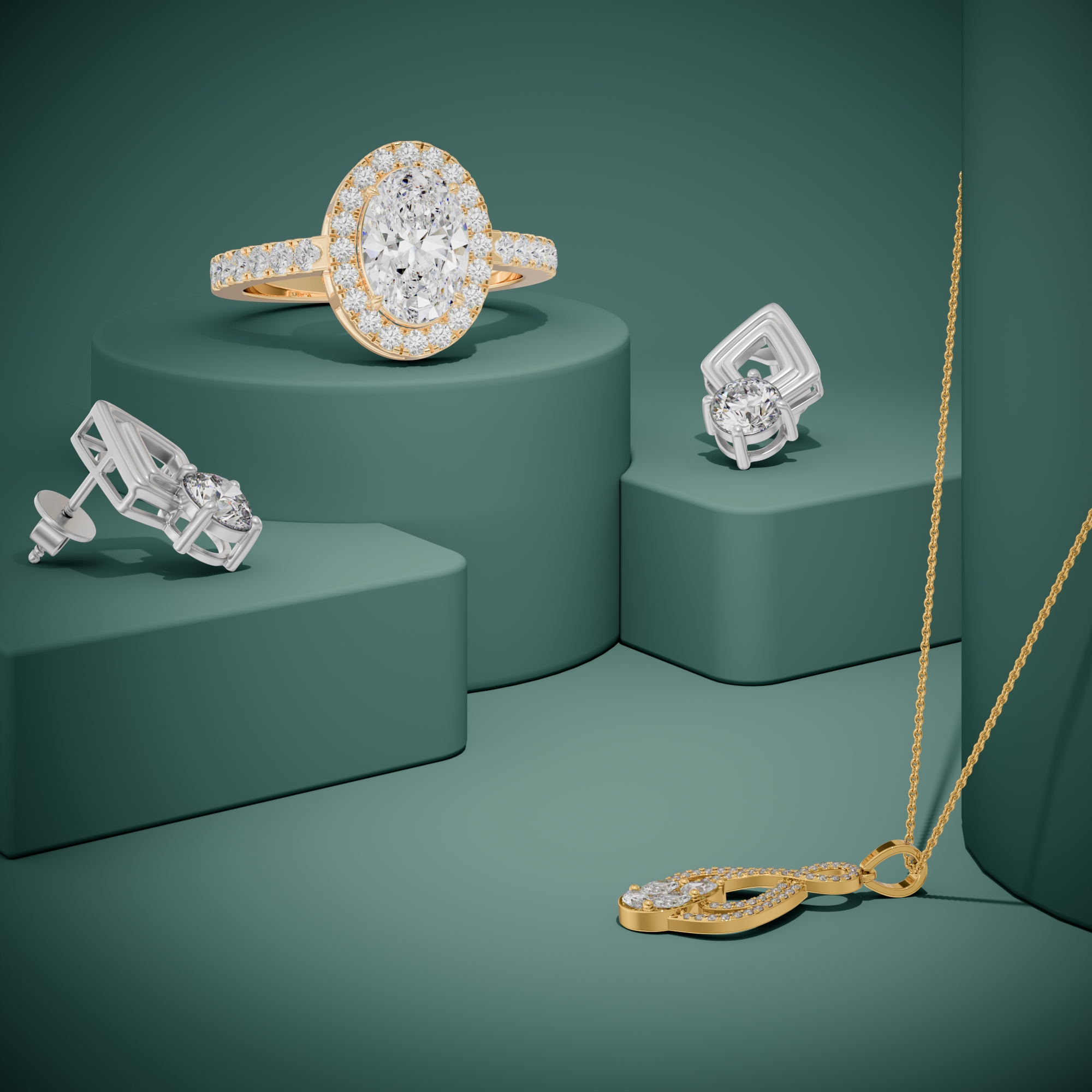
Under the same light, platinum and white gold make the same image. Both are neutral white metals, and no still render can tell a buyer which one is in the box. If a listing needs to say platinum, the word goes in the product title, and the hallmark goes in the description.
Where platinum does change the file is two-tone work. A platinum head on a yellow gold shank needs the head modeled as its own object, because a renderer assigns one material per object. Send a 3DM with the parts separated, or note which parts are platinum. An STL arrives as one mesh, so the split has to be made before any material can be applied.
Questions about Platinum Jewelry
What does 950 mean on platinum?
It means the metal is 950 parts per thousand platinum, or 95 percent. The rest is usually other platinum group metals or a small amount of cobalt or copper added for hardness.
Is platinum better than white gold?
Neither is better. They fail differently. Platinum stays white without plating but costs more and dulls to a patina, while white gold costs less and needs rhodium replating to stay bright. The white gold entry covers the comparison in full.
Why is platinum jewelry so expensive?
Because a platinum piece uses more metal at higher purity than a gold one, and is harder to cast and repair. The per-ounce price of platinum is not the main driver, and it has sometimes been lower than gold's.
Does platinum tarnish?
No. Platinum does not tarnish or change color. It does scratch, and the scratches build into a satin patina over time, which a jeweler can polish back to a bright finish.