Findings (Jewelry)
Also called jewelry components, jewellery findings
Findings are the small functional components that finish a piece of jewelry and let it fasten, hang, or be worn. Clasps, jump rings, earring backs, ear wires, and bails all count, and they are usually bought as standard parts rather than made for each design.
In other words, they are the working hardware of a piece: the bits that open, close, connect, or hold it on the body.
The common parts
Most findings are standard sizes, which is why they rarely appear in a designer's CAD file. The design is the visible part, and the finding is picked from a catalog at assembly.
- Clasps: lobster, spring ring, toggle, and box clasps for chains and bracelets.
- Jump rings: small circles of wire that link parts together.
- Earring backs: butterfly backs, screw backs, and friction posts.
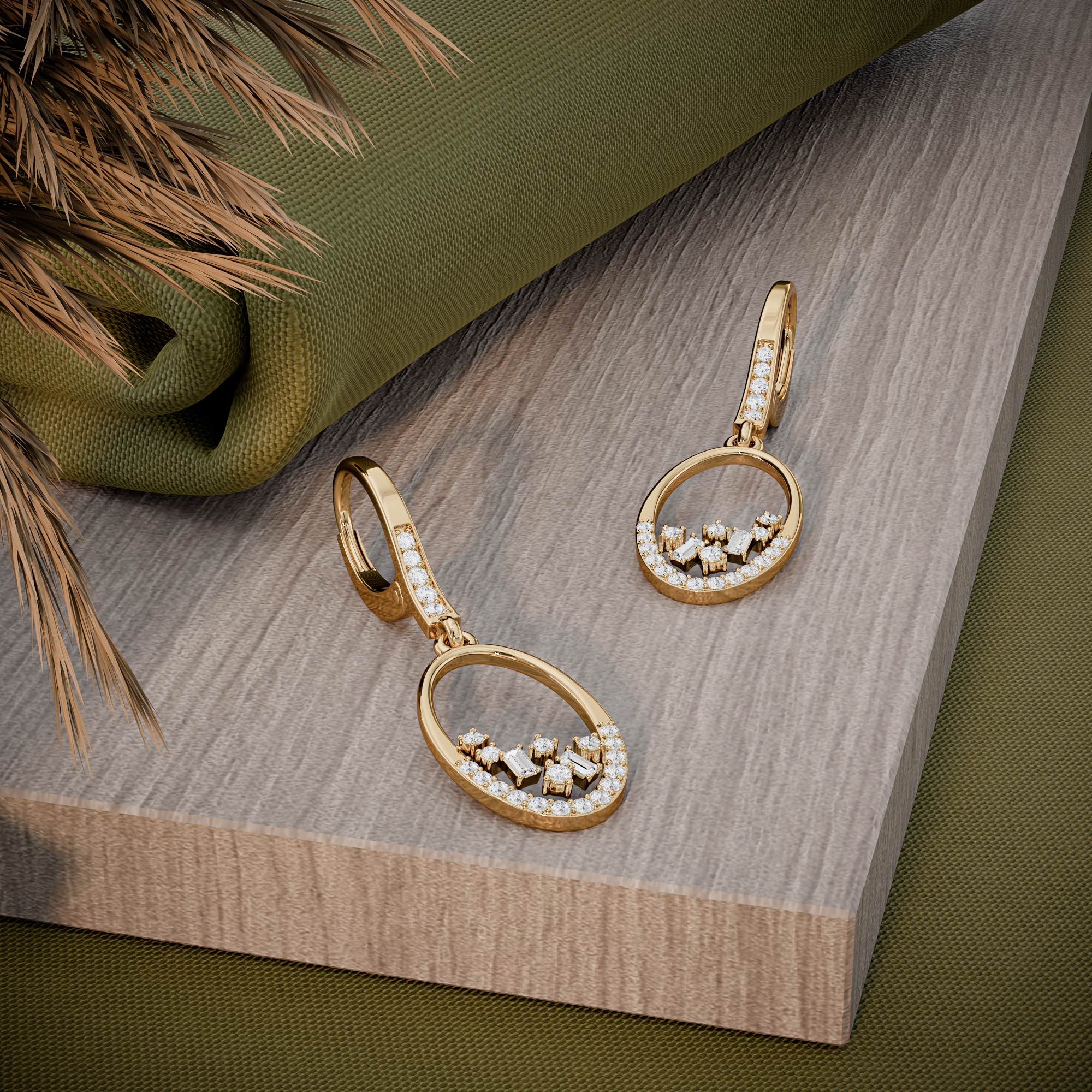
- Ear wires and hooks: the part that passes through the ear.
- Bails: the loop that lets a pendant sit on a chain.
Findings in a render
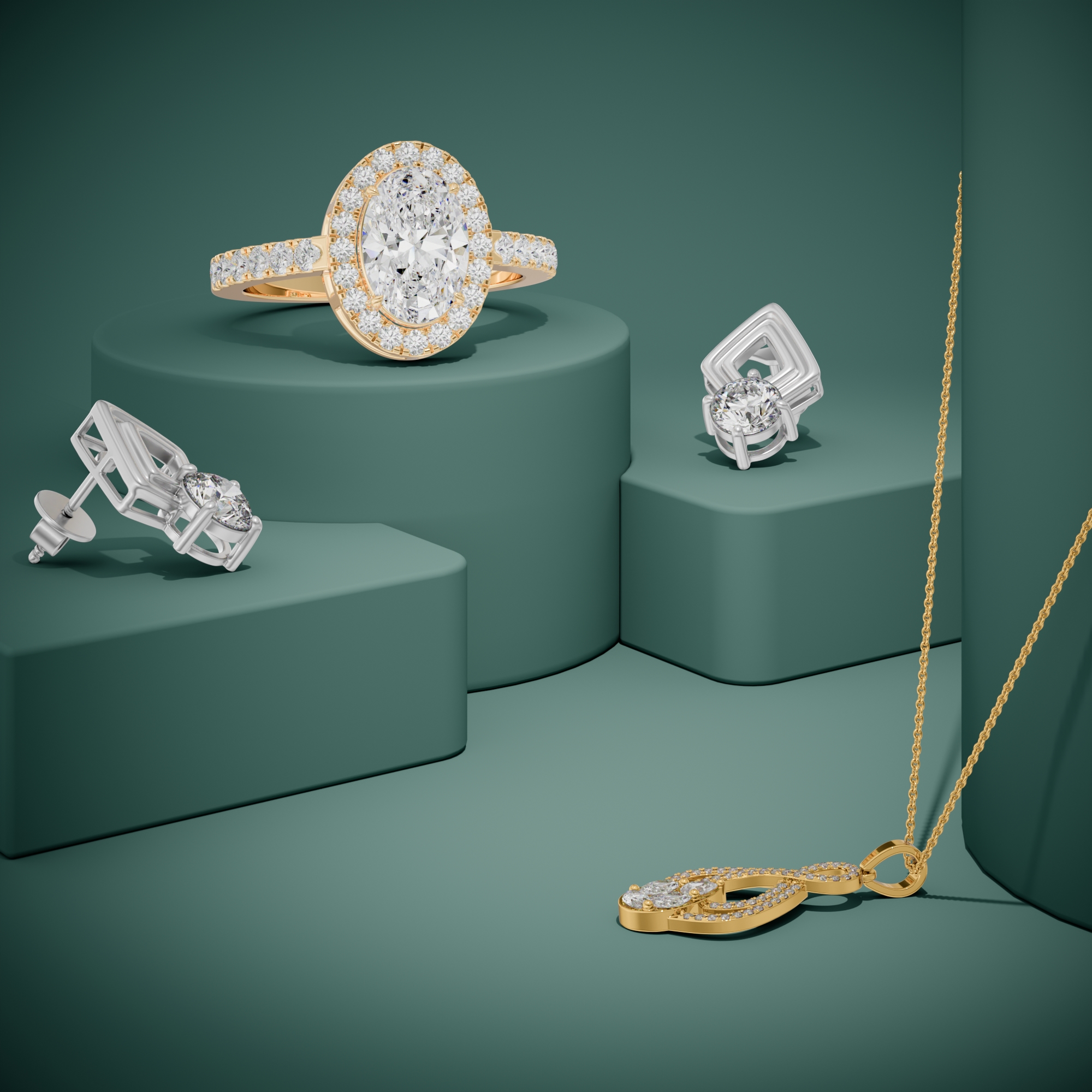
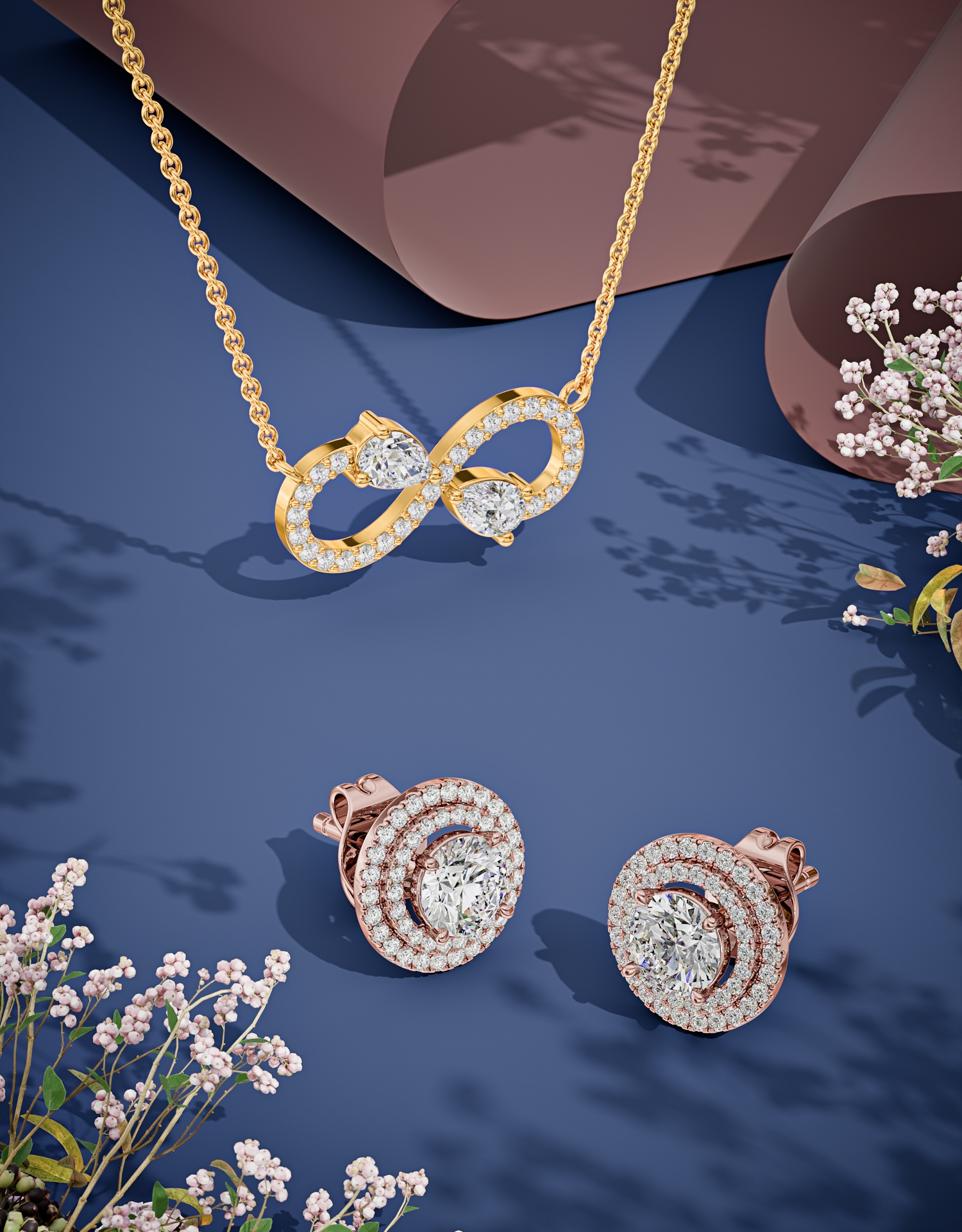
Findings are often missing from the file we receive, because the designer models the decorative part and assumes the workshop will fit the rest. On an earring that matters: a stud with no visible post reads as unfinished, and a buyer notices.
Tell us which finding your piece actually ships with and we will show it correctly. If it is not in the file, we can still frame the angles so the missing part is not the thing the eye lands on. Either way we would rather ask than guess, and the first pass plus two revision rounds is enough to settle it.
Questions about Findings
Do renders include clasps and earring backs?
If they are modelled in your CAD file, yes. If they are not, tell us what the piece ships with and we will frame the images accordingly.
Should I model findings before sending a file?
It helps for earrings and necklaces, where the post, hook, or clasp is visible in normal wear. For rings it makes no difference.