
Global Illumination
Also called GI, indirect lighting, bounce lighting
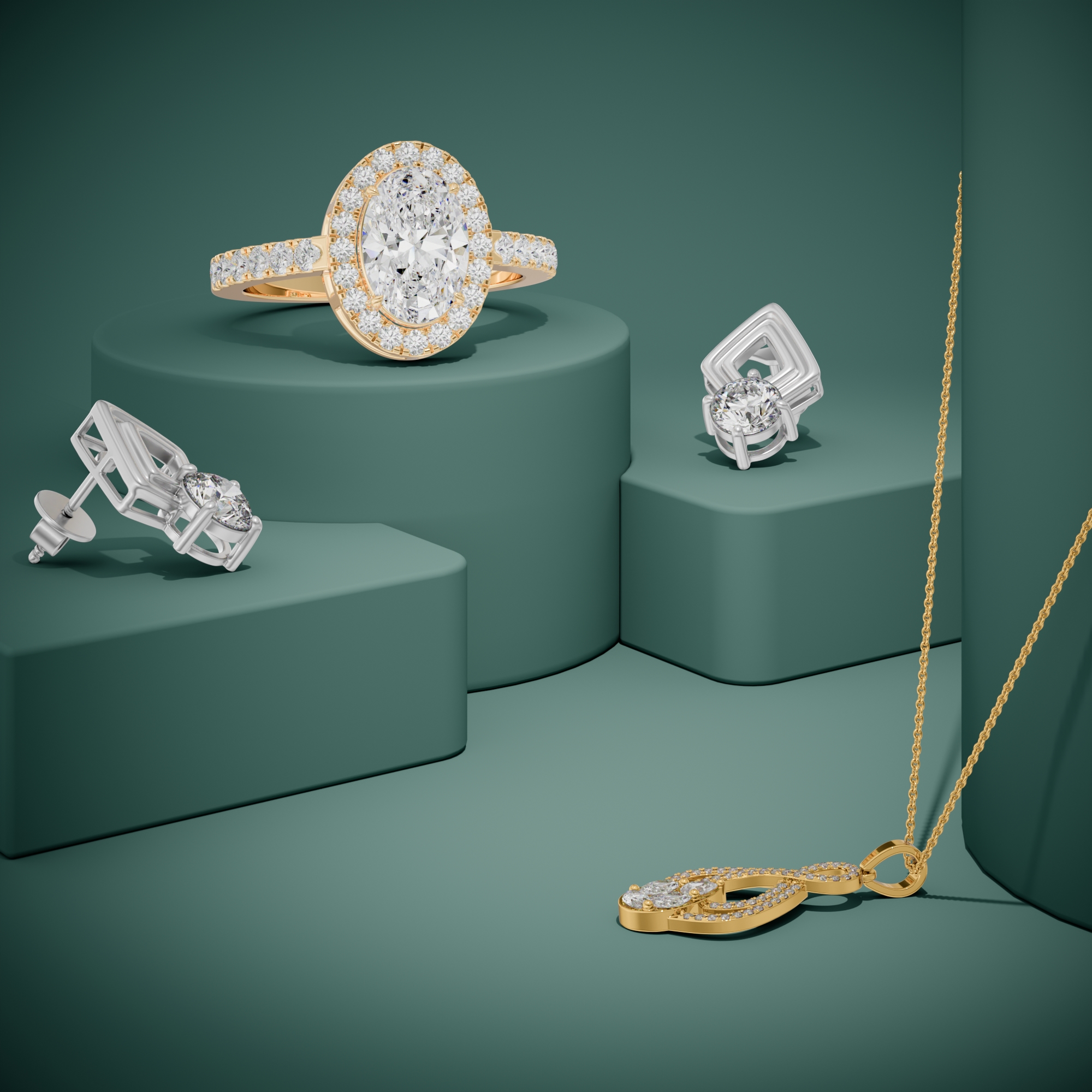
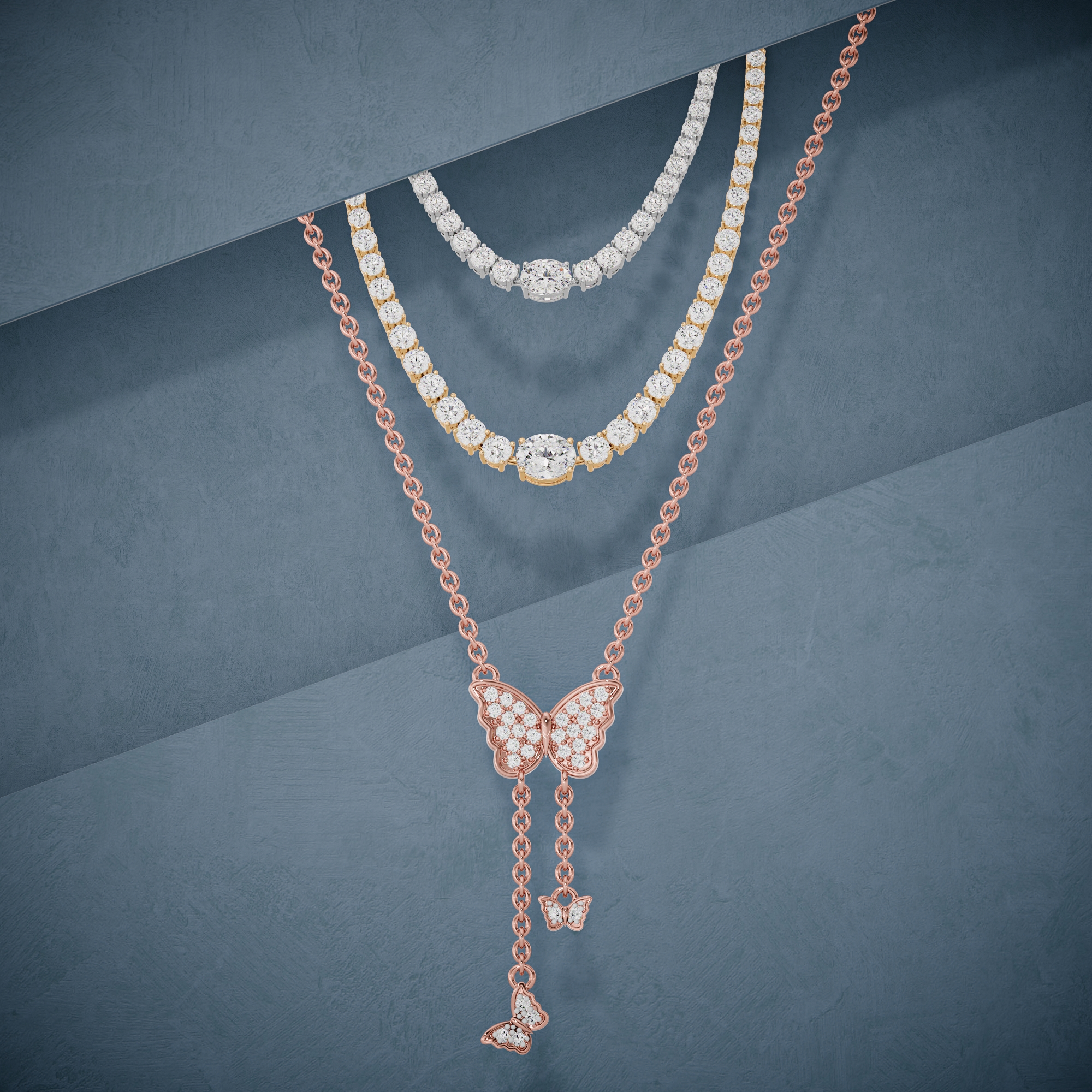
Global illumination is a lighting method that accounts for light bouncing between surfaces, not just light arriving straight from a lamp. Bounced light fills shadows and carries colour from one surface to another, which is what stops a render looking flat and cut out.
Direct light against bounced light
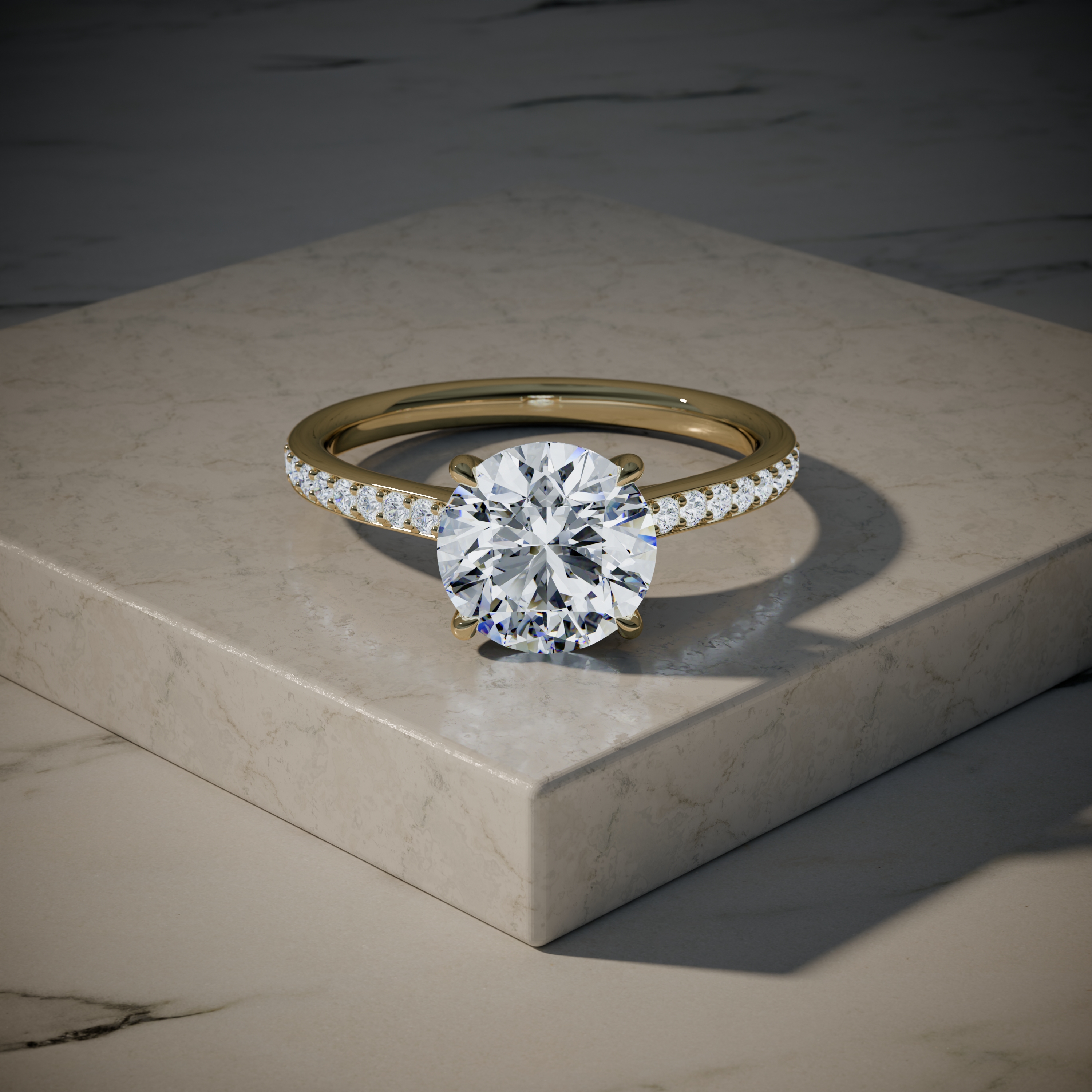
Direct light is the part that travels from the source to the surface and stops. Indirect light is everything after that: light that hits the table, bounces up under the ring, and lights the underside of the setting.
In real life most of what you see is bounced light. Render only the direct part and shadows go pitch black, undersides disappear, and the piece looks pasted onto the background instead of sitting on it.
What it does for jewelry
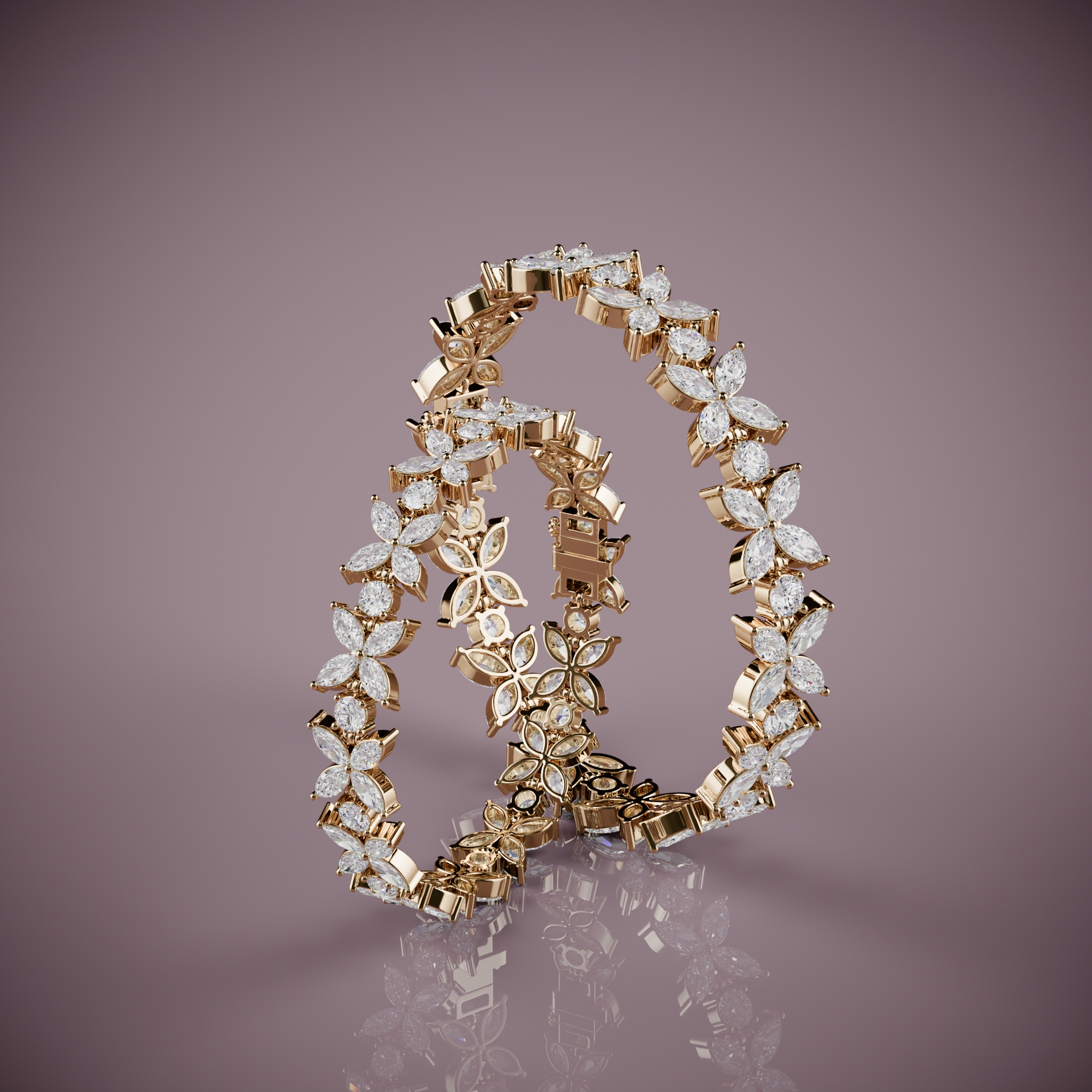
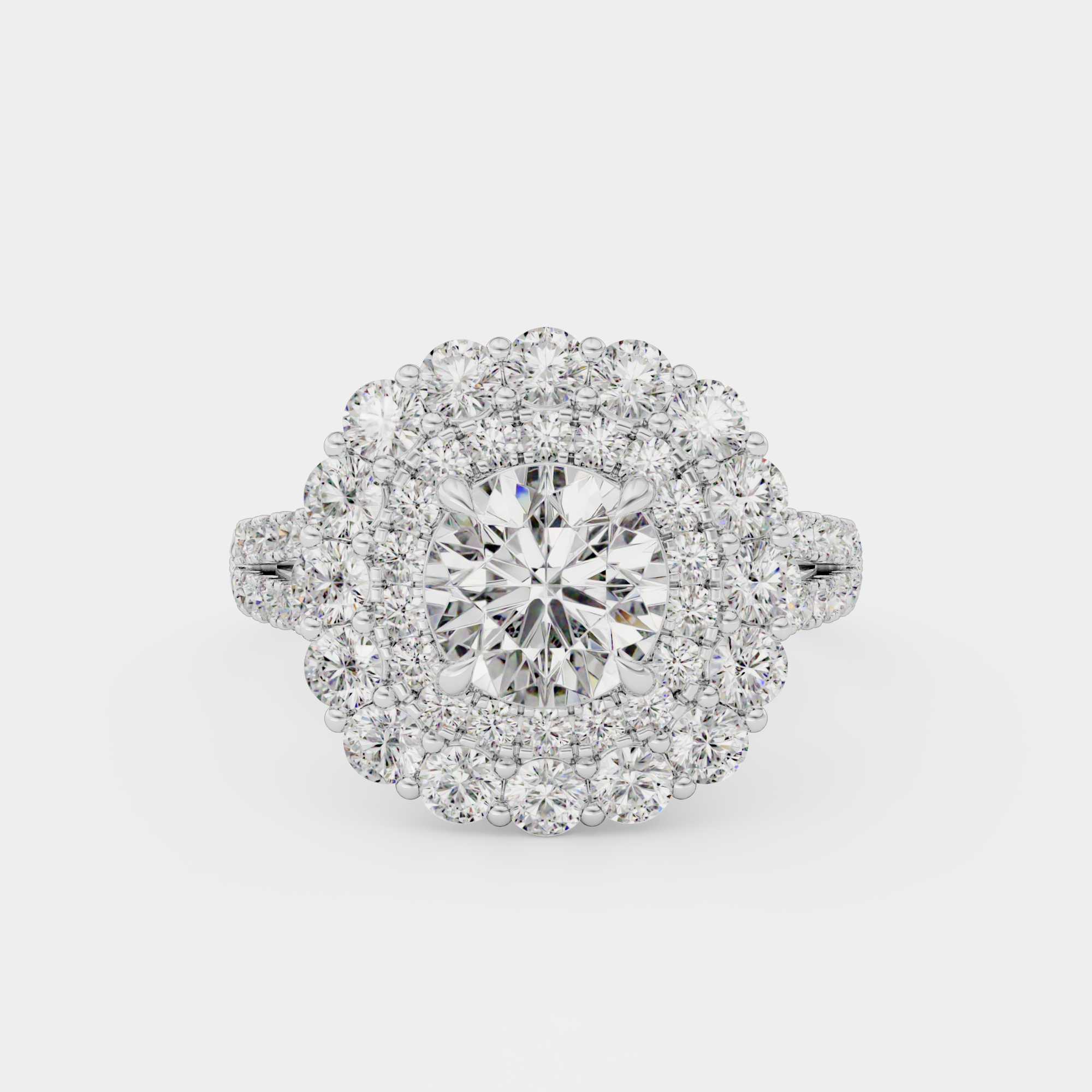
On a white background, global illumination is doing most of the work. The white surface bounces light back up into the gallery and under the prongs, so the piece keeps its shape in the shadows instead of turning into a silhouette.
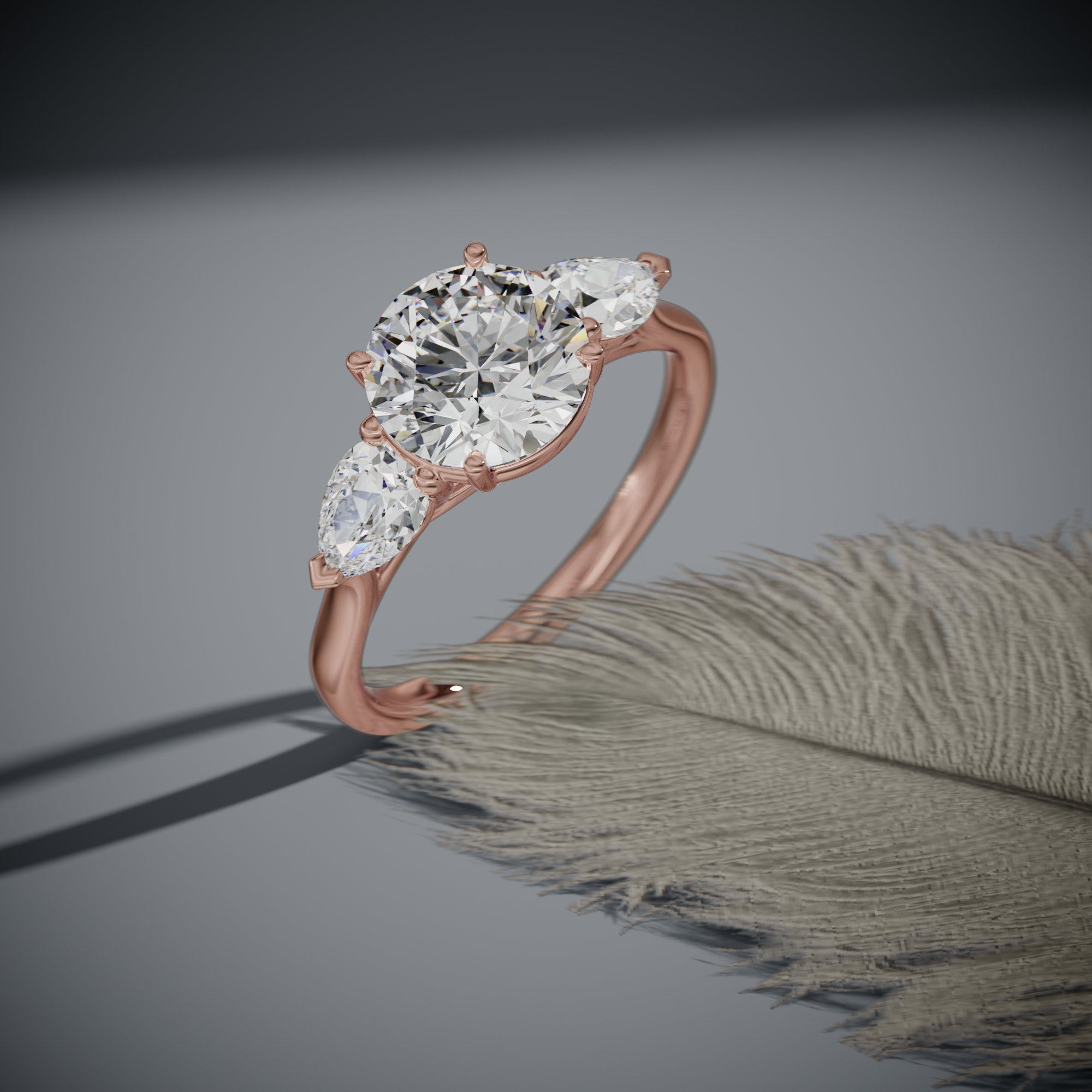
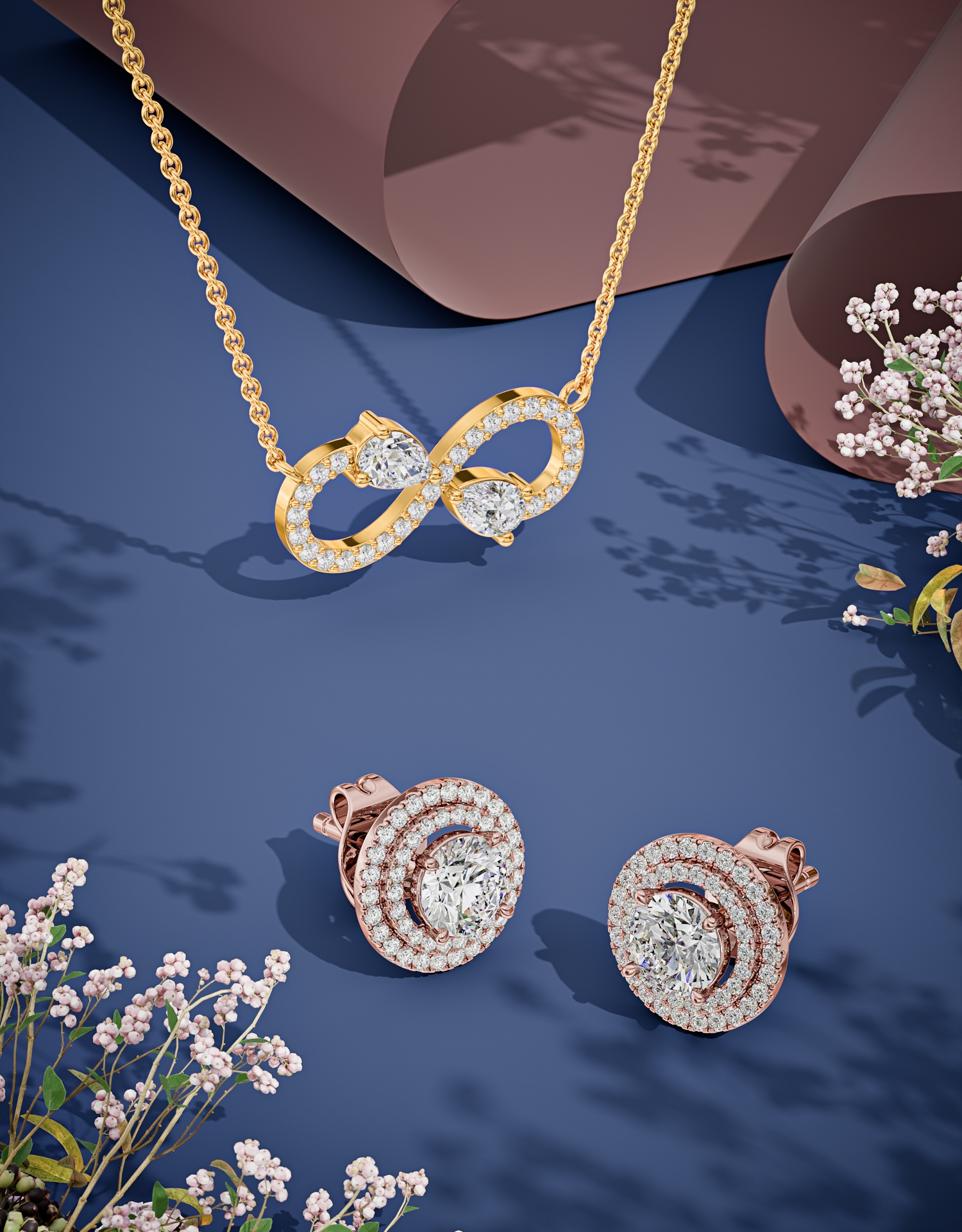
It also carries colour. Yellow gold throws a warm cast onto a white surface next to it, and a rose gold shank tints the pavilion of the stone above it. Those small colour transfers are a large part of why a render reads as a photograph.
Questions about Global Illumination
What is the difference between global illumination and ray tracing?
Ray tracing is the technique for following light rays. Global illumination is the lighting result it makes possible, where bounced light is included rather than only direct light.
Does global illumination slow down rendering?
Yes, because every extra bounce is more light to calculate. It is worth the time on jewelry, where bounced light is what keeps shadowed areas readable.