Ambient Occlusion (AO)
Ambient occlusion (AO) is a shading technique that darkens each point of a 3D model by how much nearby geometry blocks it from open space. It produces soft, dark contact areas in creases, corners, and gaps, without tracing how light actually bounces through the scene.
In other words, aO, AO shading, ambient occlusion map, AO map, AO pass, SSAO
How ambient occlusion works, and how it differs from a shadow
For every point on a surface, the renderer looks out across the half sphere above it and asks how much of that view is blocked by the model itself. Open, exposed surfaces stay bright. A point at the bottom of a groove, or where a prong meets the band, is mostly blocked and goes dark.
A shadow depends on a light. Move the light and the shadow moves with it. AO ignores the lights entirely and depends only on geometry, so it stays put when the lighting changes. That is why AO reads as soft contact darkening, never as a cast shape.
An ambient occlusion map is the same result stored as a grayscale texture, baked once so a game engine or viewer does not have to recompute it. Screen space ambient occlusion (SSAO) is a fast estimate computed from the visible image, which is common in real-time 3D and less accurate at edges.
Why AO is a shortcut in a photorealistic render
AO is an approximation of something a full light simulation already does. A renderer that traces bounced light produces contact darkening on its own, because light really does reach a deep crease less often. Adding an AO layer on top of that darkens the same areas twice.
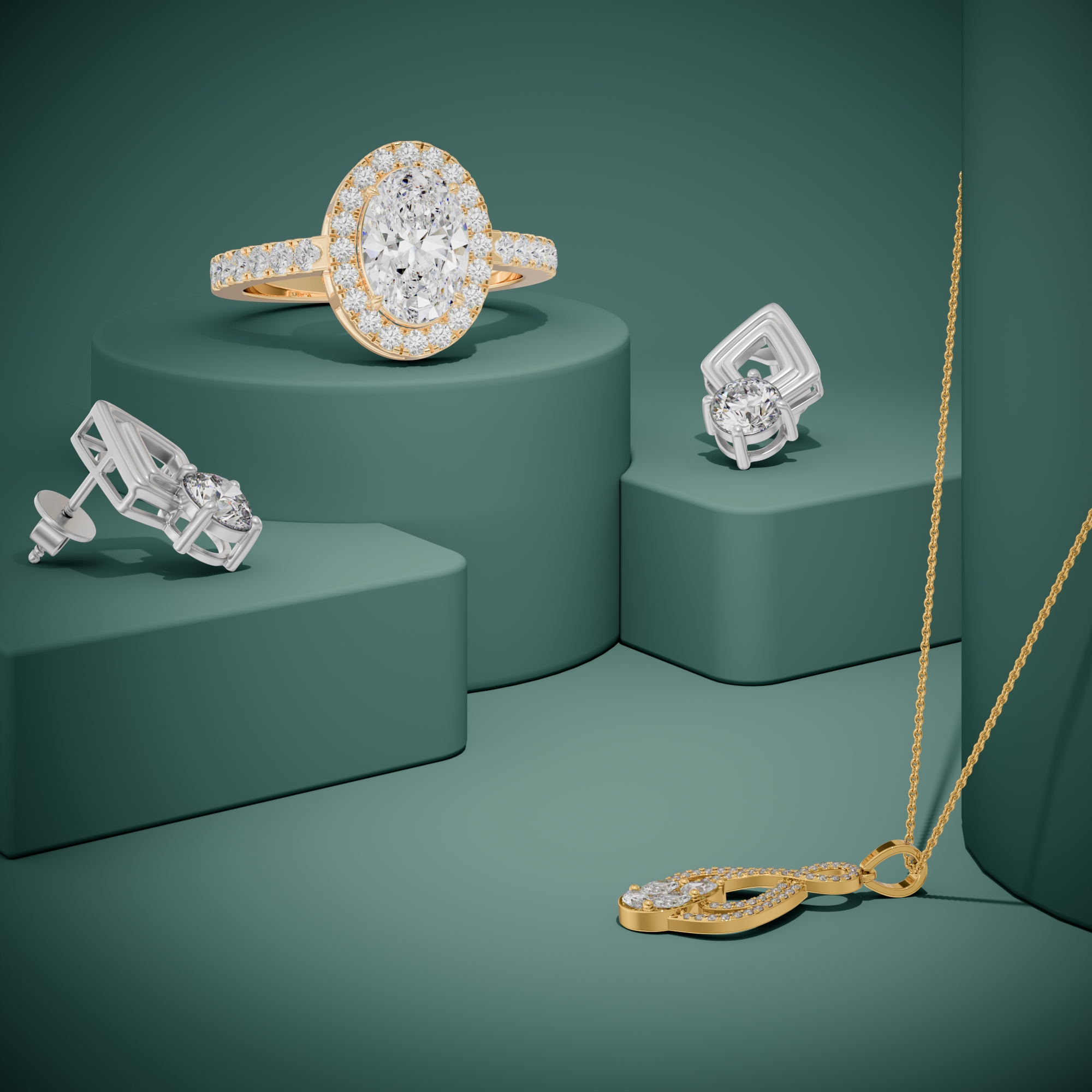
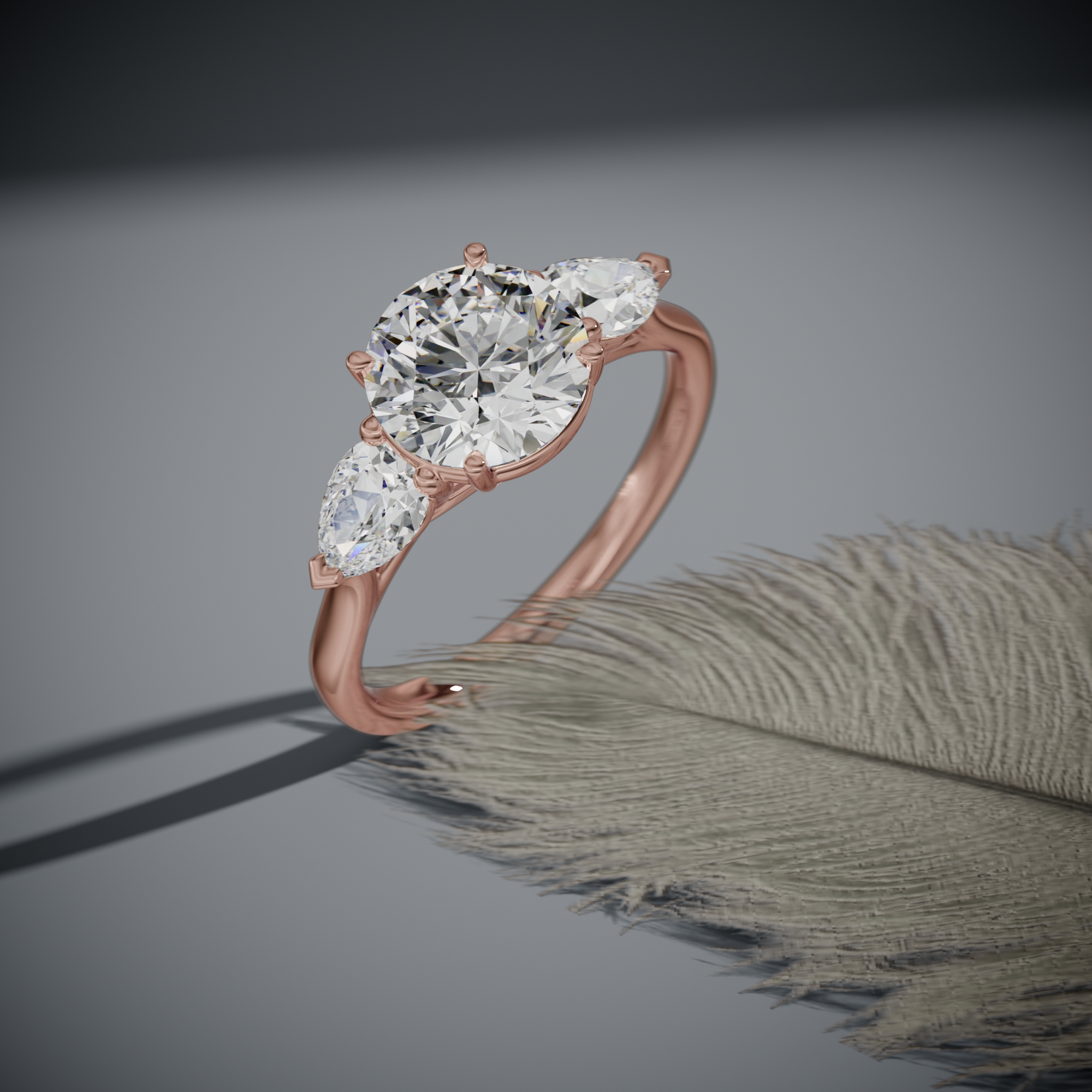
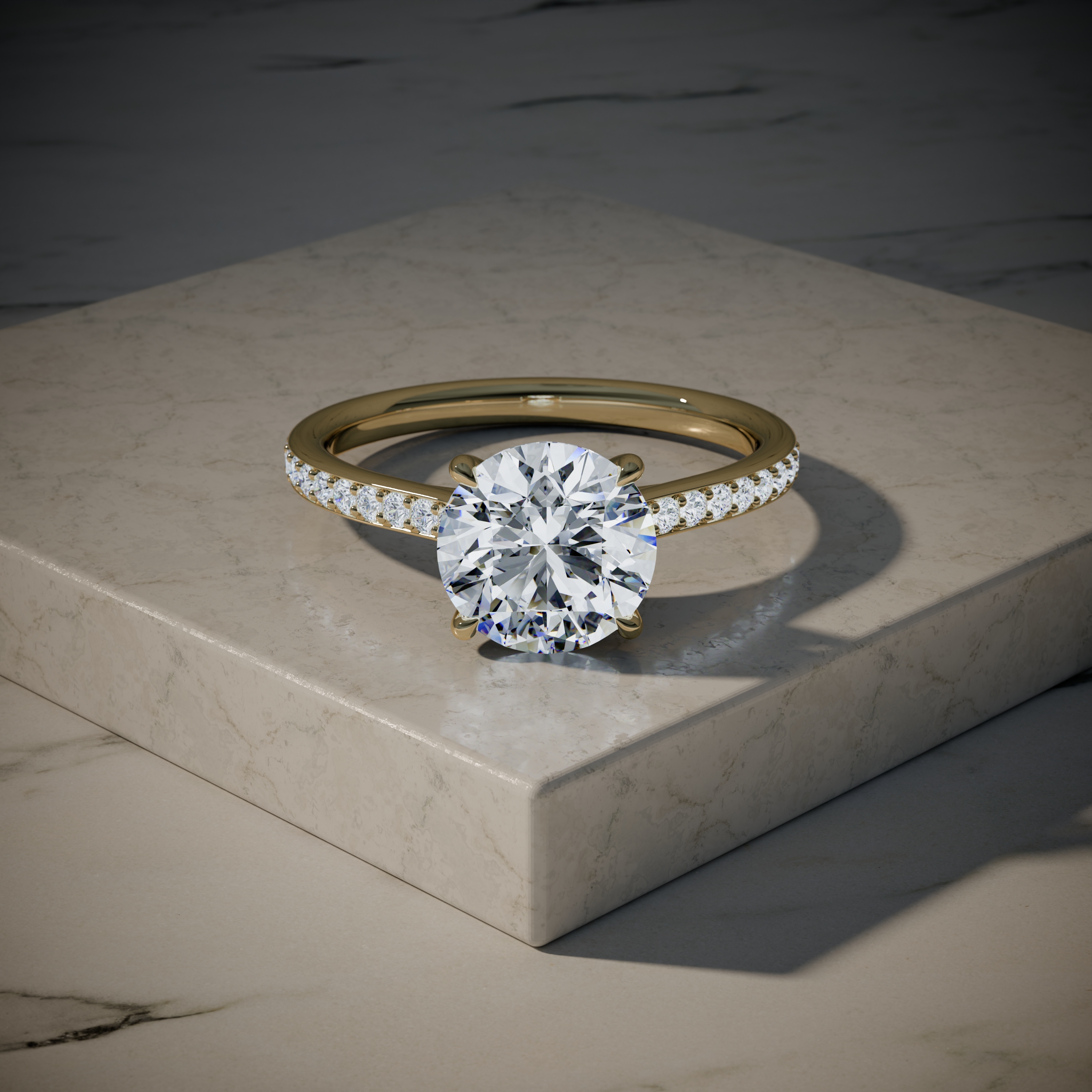
On jewelry, the double darkening shows fast. Polished metal is almost all reflection, so AO multiplied over a gold band reads as grime in every corner. Over a stone, it dulls the light coming back out of the pavilion, which is the opposite of what a diamond render needs.
Where ambient occlusion still earns its place on jewelry
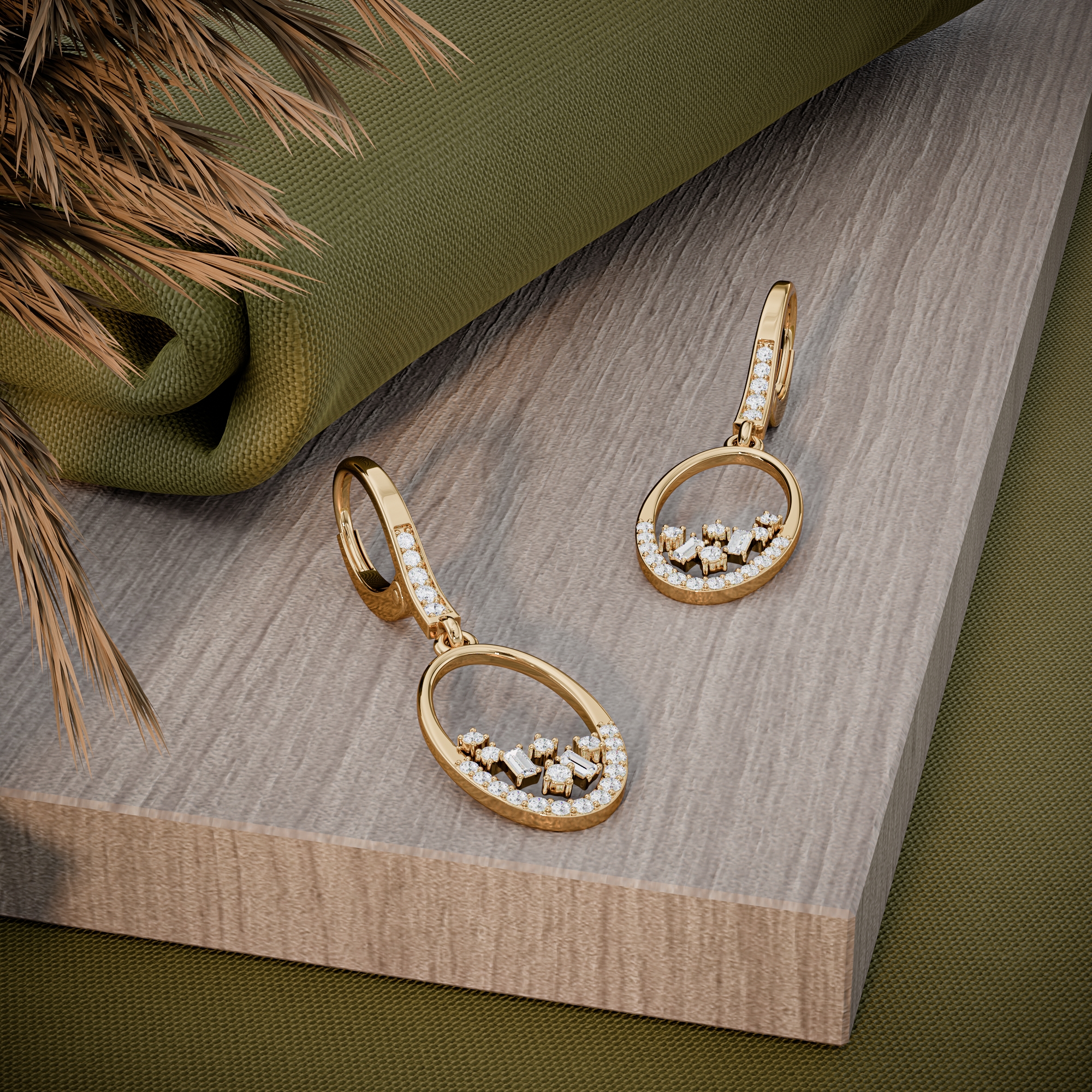
AO is useful as a mask rather than as lighting. Because it finds every recess in the geometry, it can drive where an oxidized or antiqued finish collects: in the lines of hand engraving, between milgrain beads, and down in a filigree pattern. Done by hand, that placement would take far longer.
That is only as good as the geometry. If the engraving lives in a texture rather than in the CAD model, AO cannot see it. An oxidized or antiqued finish is not in the CAD file either, so say so when you send the file, and agree it before you approve the quote. Every image ships at 3000 x 3000 px or larger, so a finish that sits in the wrong recesses is visible on a zoom.
Questions about Ambient Occlusion
What is ambient occlusion in rendering?
It is a shading technique that darkens areas of a 3D model that are hidden from open space by nearby geometry, such as creases, corners, and contact points. It approximates the soft darkening that bounced light produces, without simulating the light itself.
What is the difference between ambient occlusion and a shadow?
A shadow is cast by a specific light and moves when the light moves. Ambient occlusion ignores the lights and depends only on the shape of the model, so it stays in the same creases however the scene is lit.
What is an ambient occlusion map?
It is a grayscale texture that stores the AO result, white where a surface is open and dark where it is enclosed. It is baked once and reused, which is common for game and real-time assets. A photorealistic jewelry render usually computes the effect from the light instead.