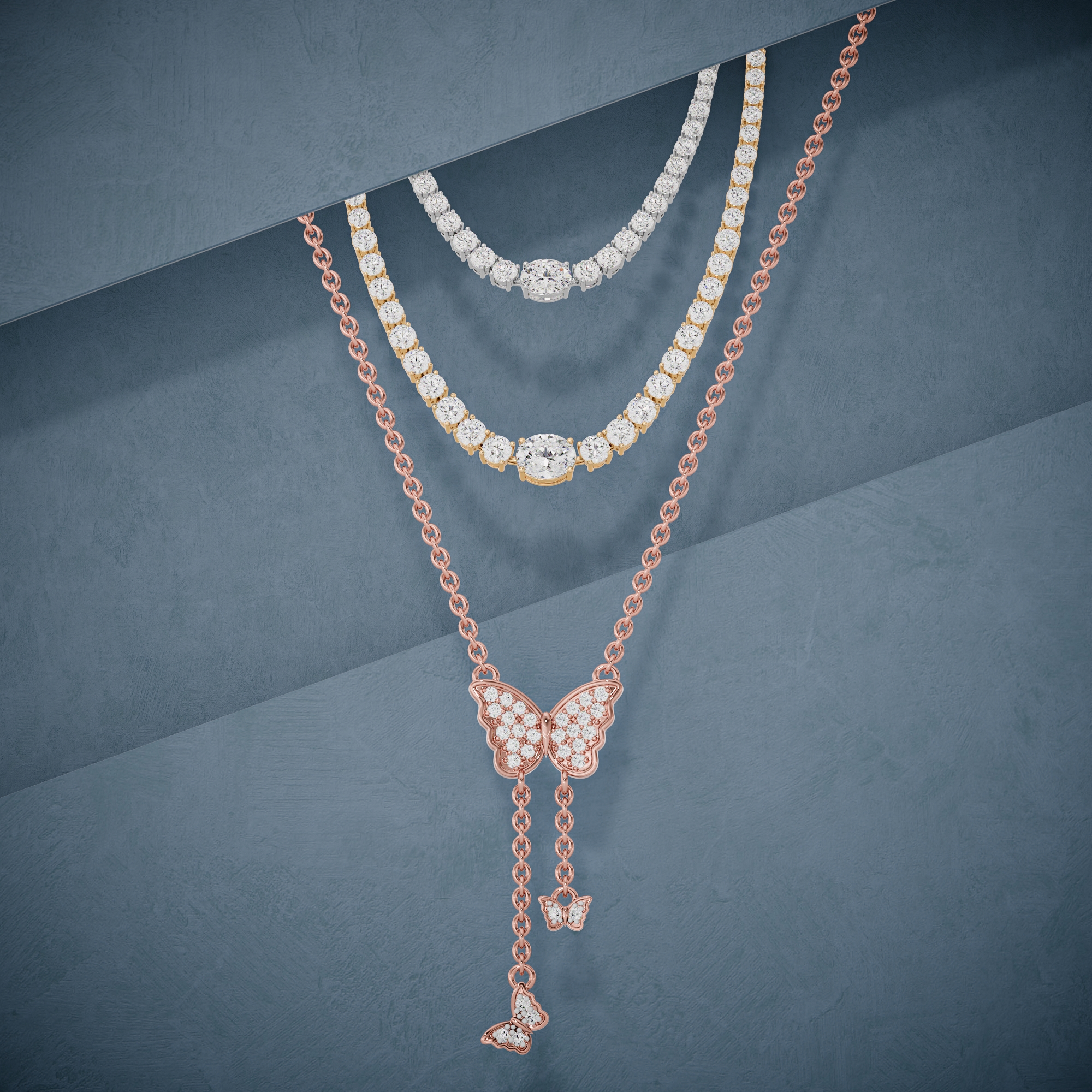
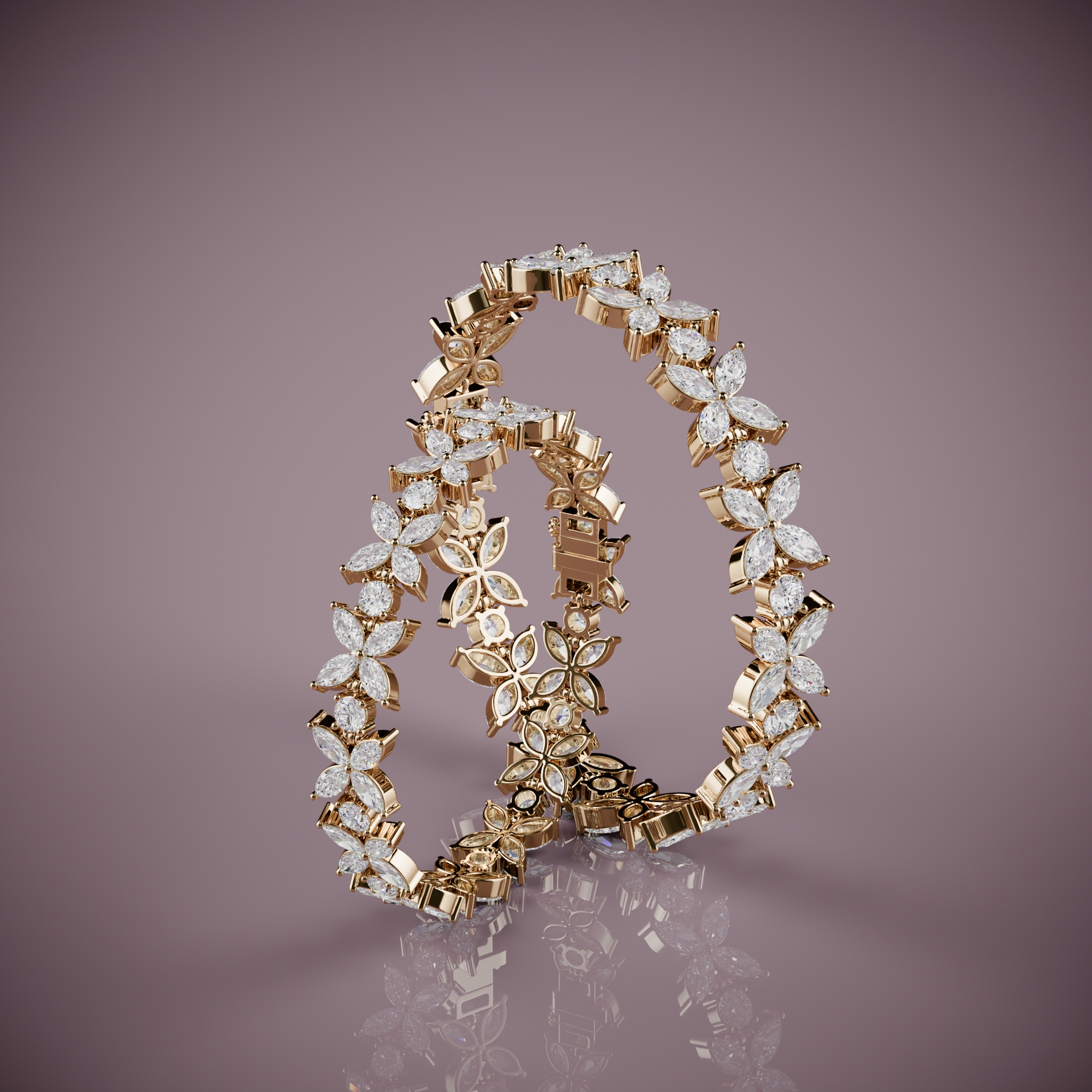
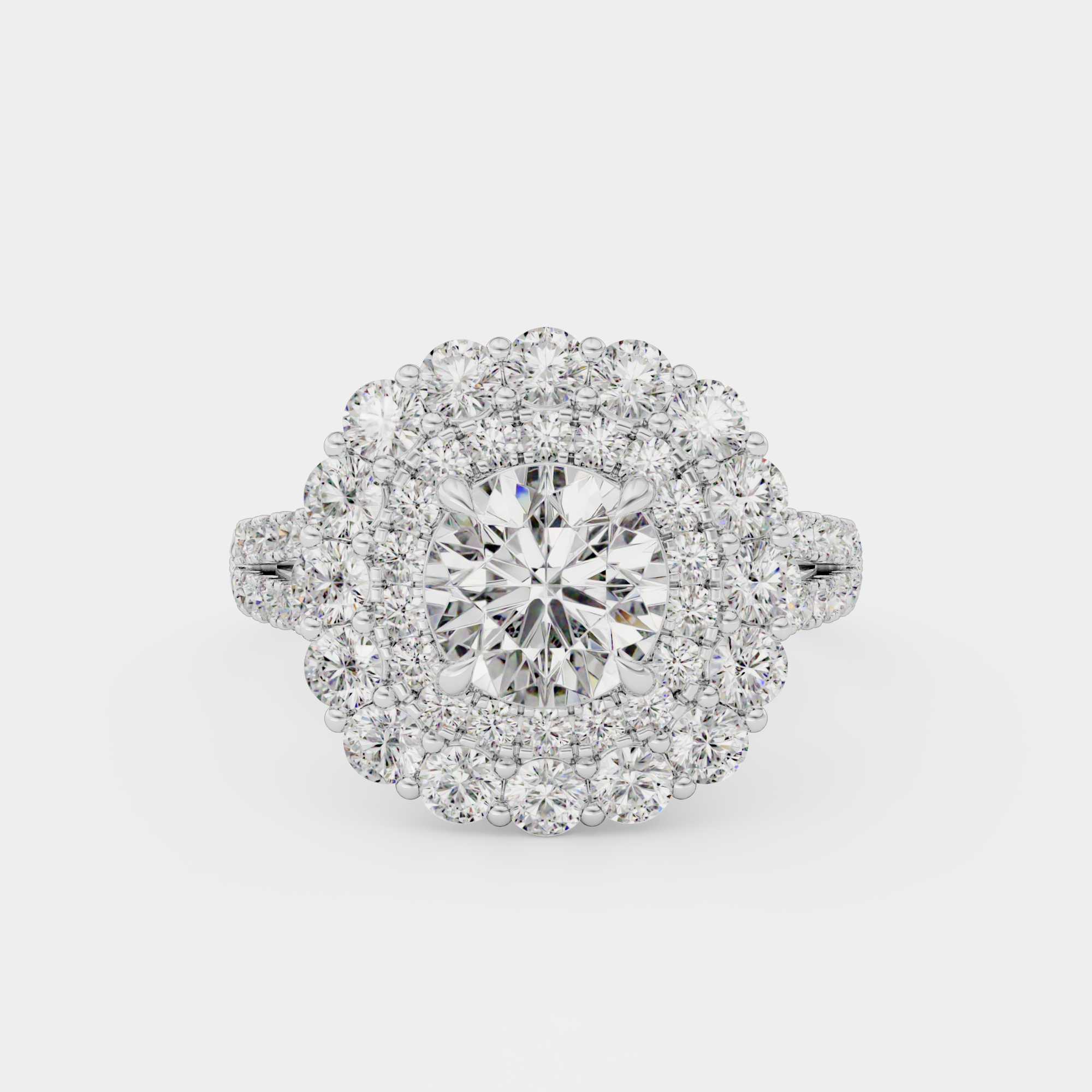
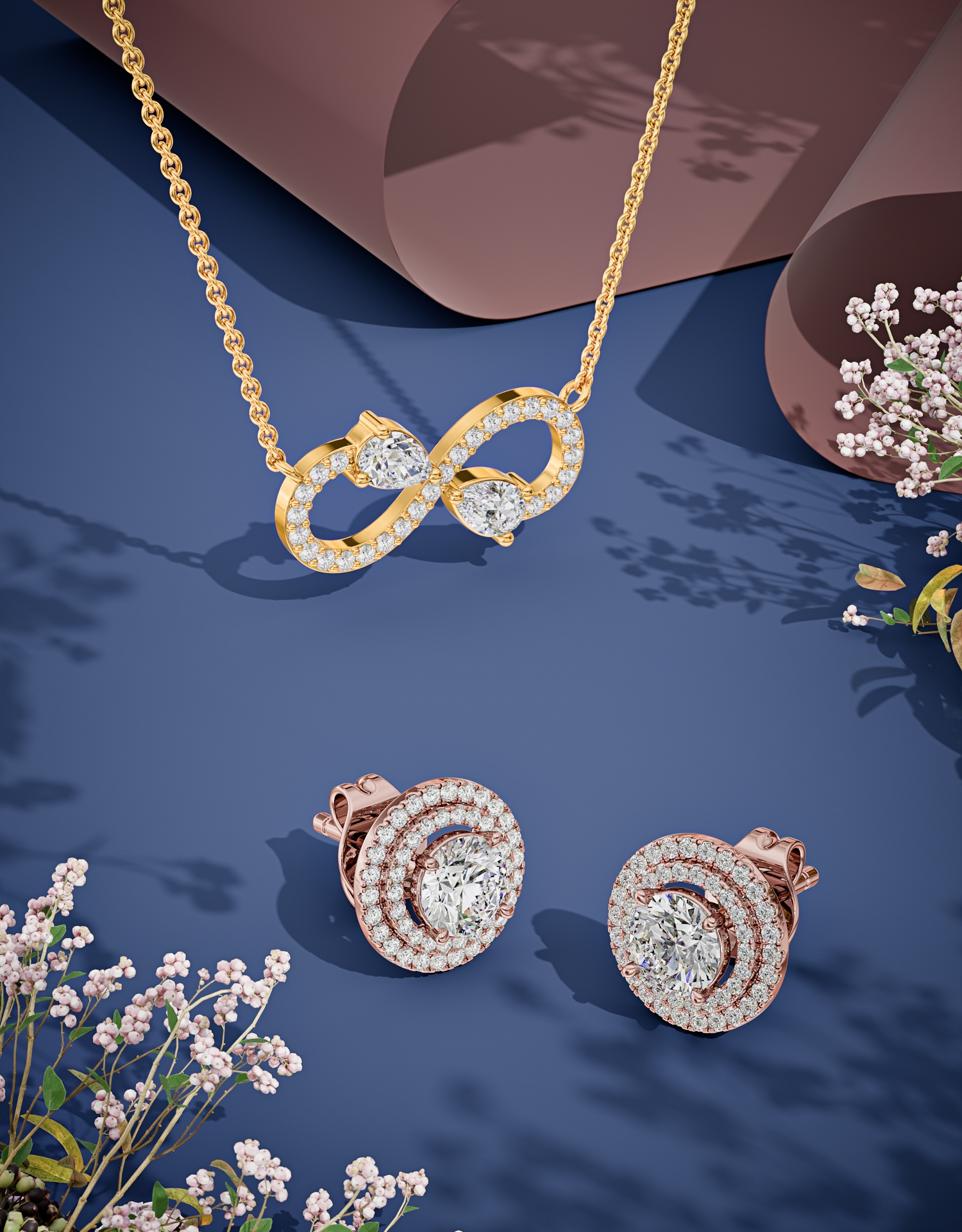
Cubic Zirconia
Also called cz, zirconia
Cubic zirconia is a lab made stone of crystallised zirconium dioxide, used widely as a low cost diamond substitute. It is softer and denser than diamond, so it scratches more easily over time and weighs more than a diamond of the same size.
In other words, an inexpensive diamond imitation, common in fashion jewellery and in sample pieces made before the real stone is set.
How it behaves
CZ is bright when new, which is why it works so well in fashion jewellery and in photographs. Its weakness is wear: it is softer than diamond, so the facet edges dull and the surface picks up fine scratches with daily use.
It is also denser. A CZ cut to the same millimetre size as a one carat diamond weighs considerably more, which is why CZ is sold by millimetre size or by diamond equivalent weight rather than by its own carat weight.
Where it fits in a rendering workflow
Plenty of CAD files arrive with CZ specified because the piece is sold that way, or because CZ is the sample stone used before a real centre is bought. Either way, tell us which one the listing is for.
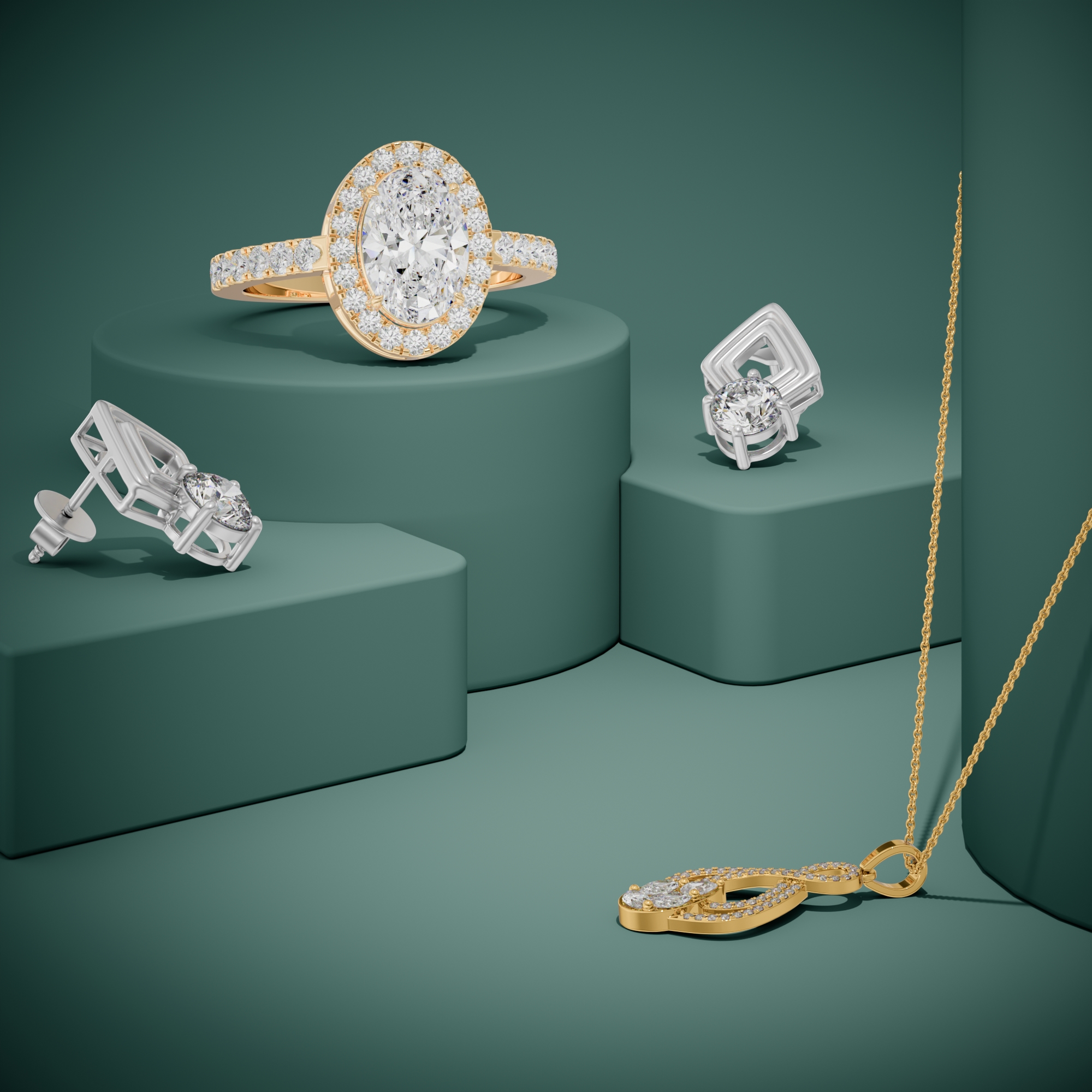
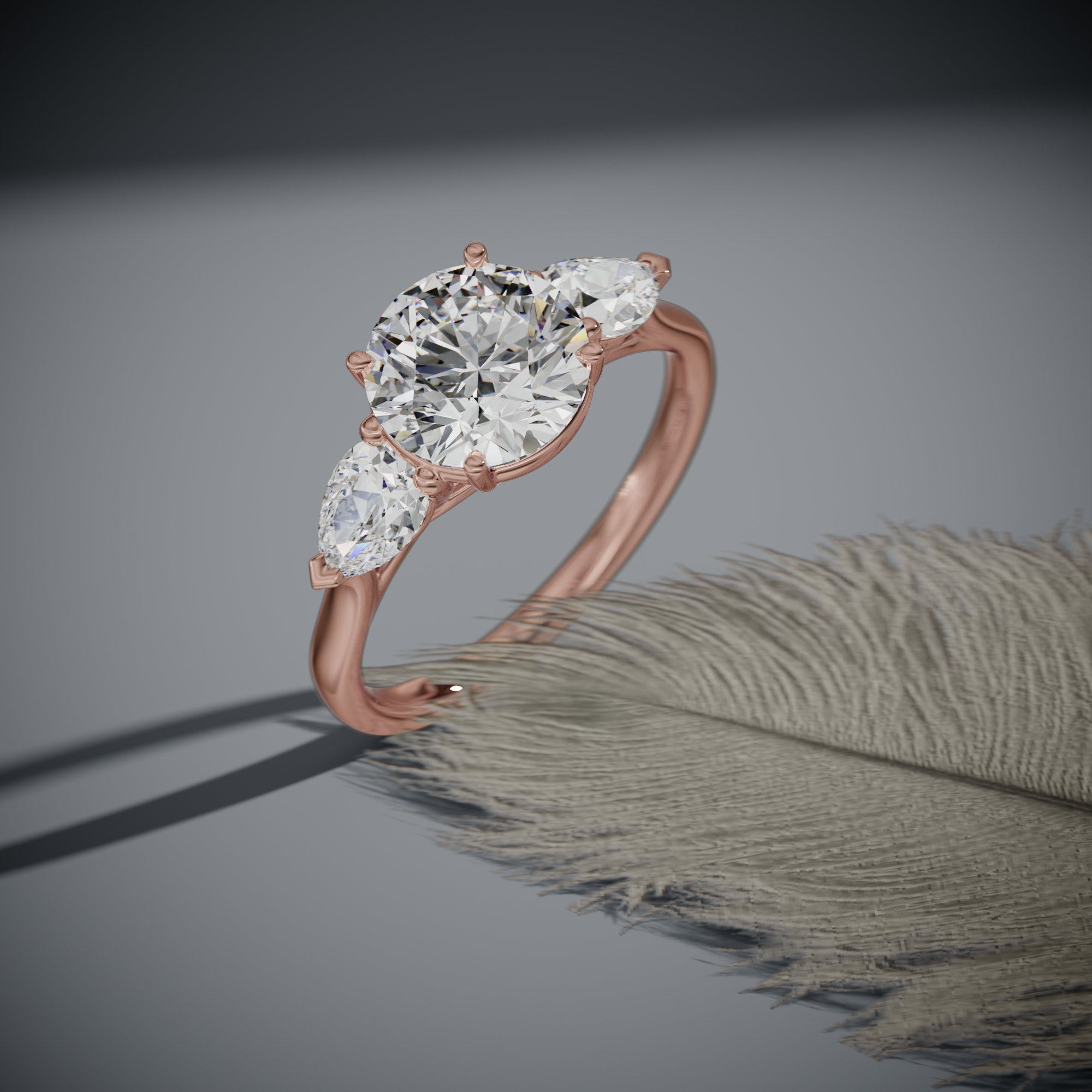
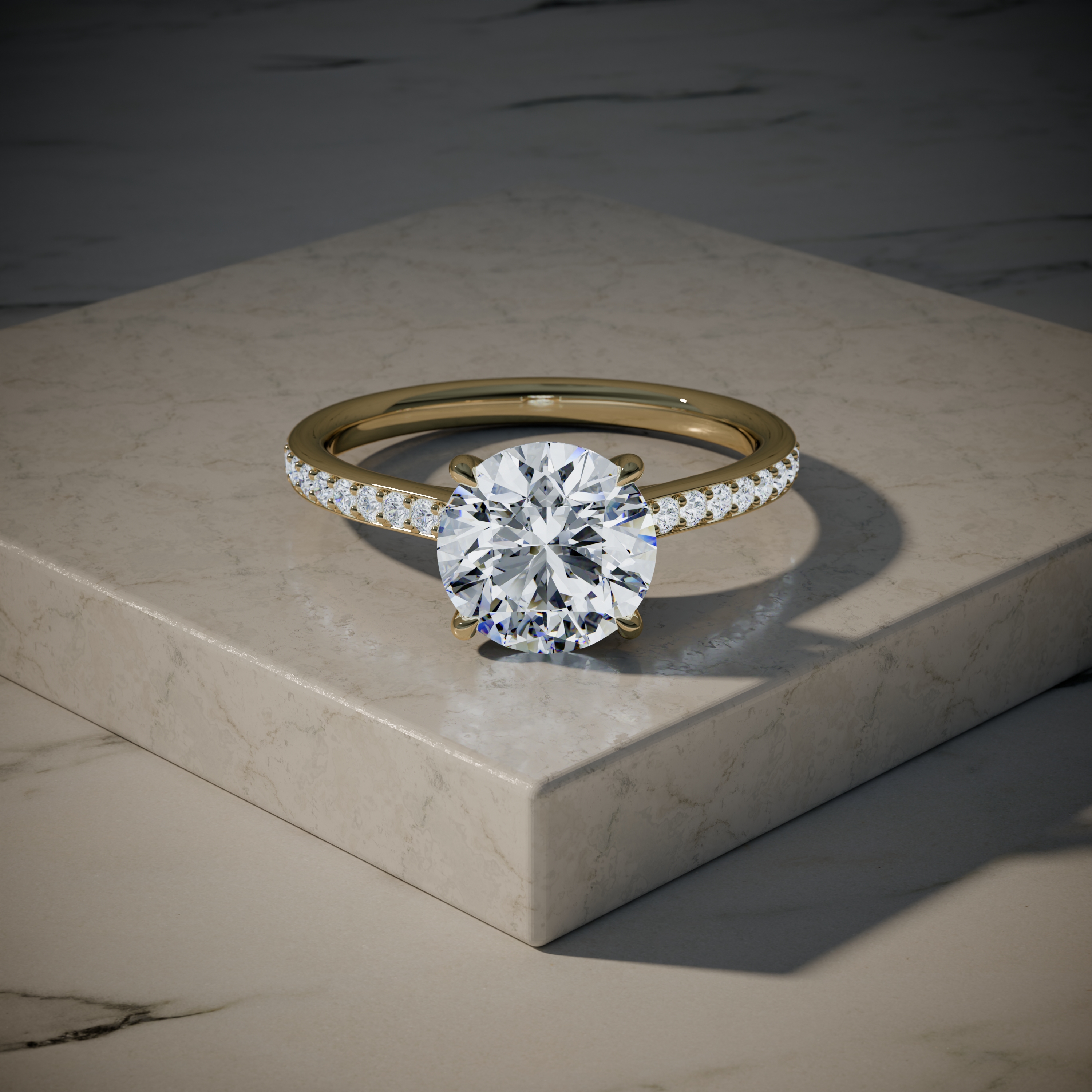
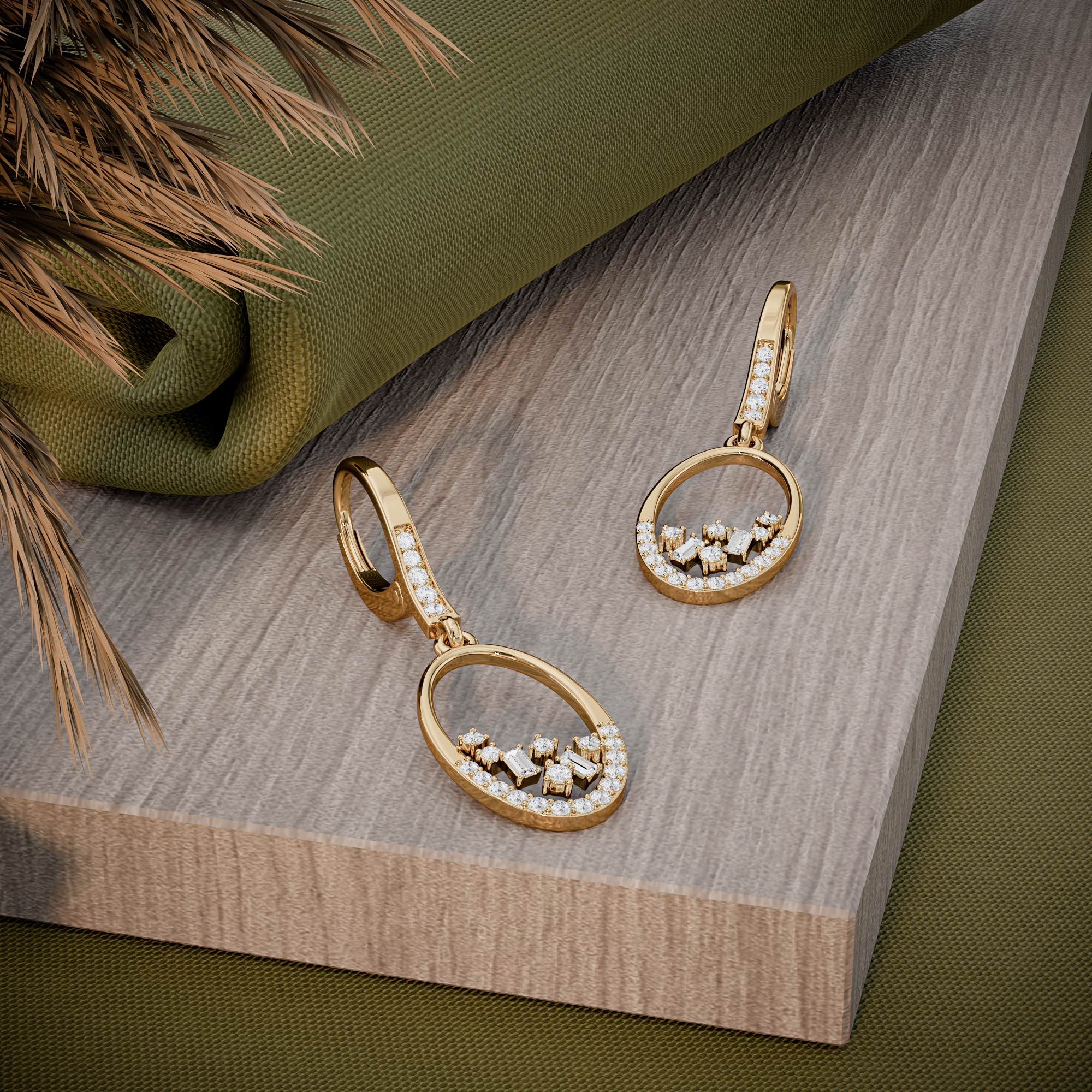
A CZ render is slightly less bright and shows a little less coloured flash than diamond. If the piece is sold with CZ, matching that in the image protects you: the customer opens the box and sees the stone from the picture.
Questions about Cubic Zirconia
Is cubic zirconia the same as moissanite?
No. They are different materials. Moissanite is silicon carbide, is much harder, and holds its brightness far longer. CZ is the cheaper and softer of the two.
Does cubic zirconia get cloudy?
It can dull over time as the surface picks up scratches and skin oils, which is the main practical difference a customer will notice against a diamond.