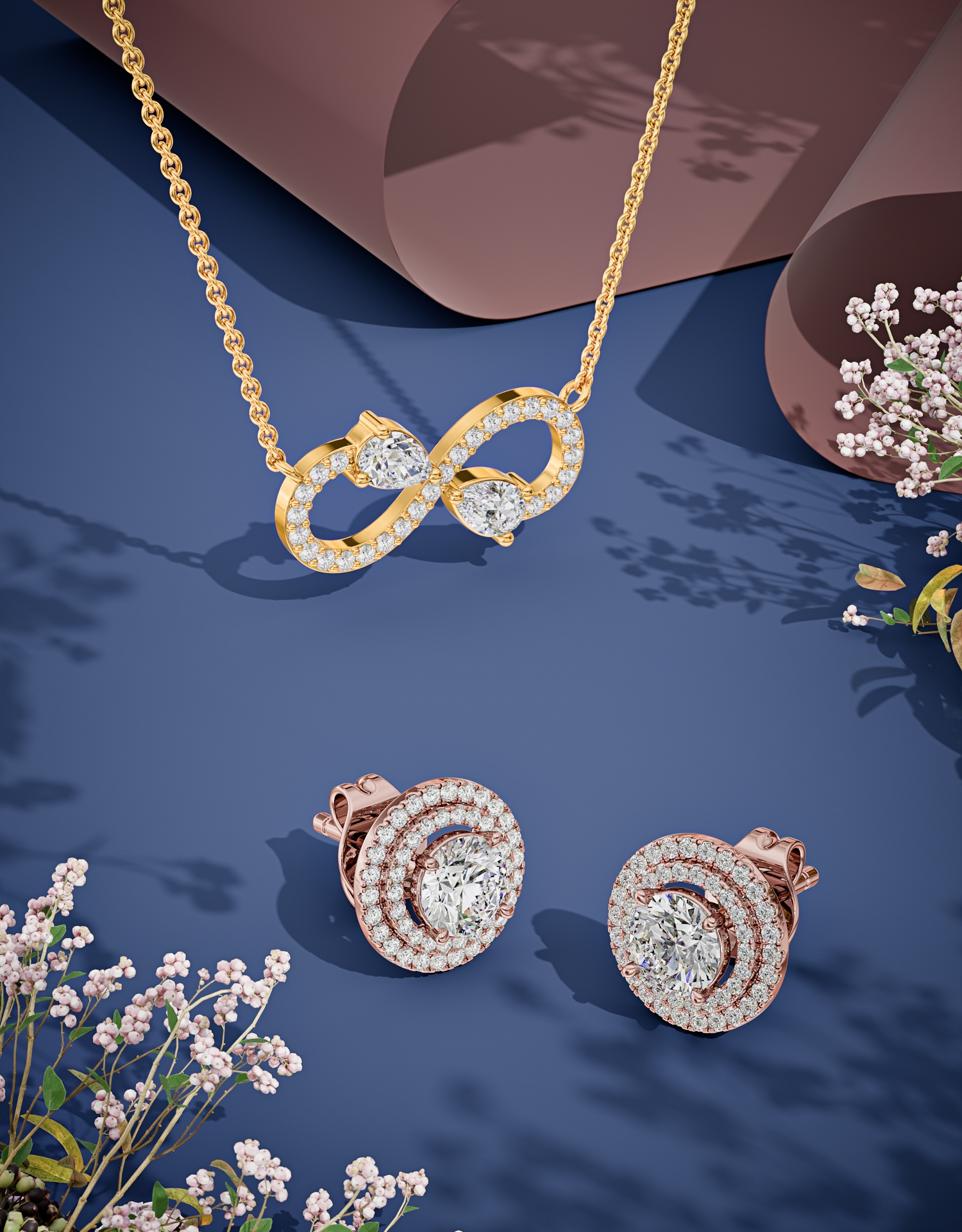
What Is 3D Rendering? A Practical Guide for Jewelry Brands
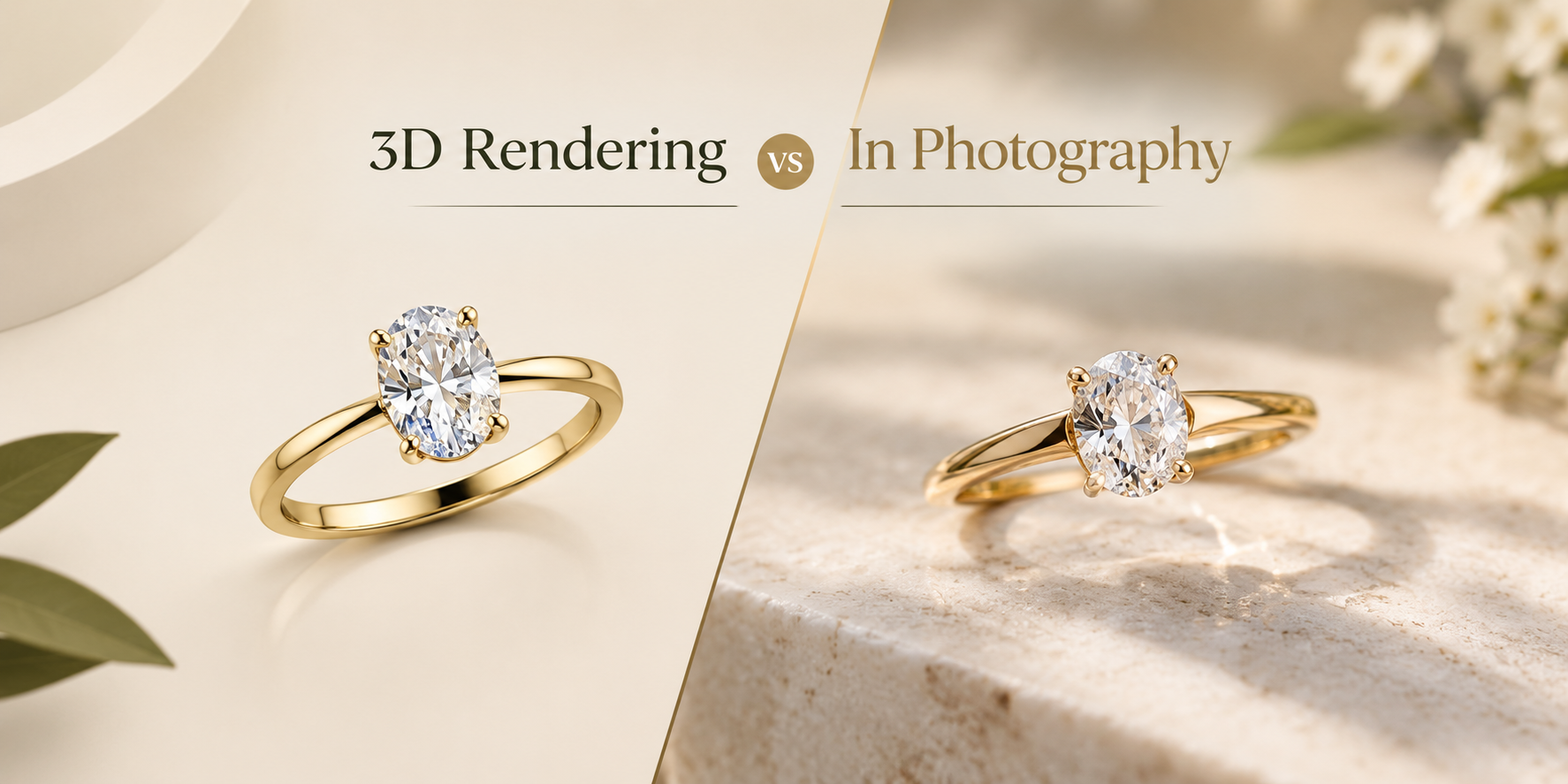
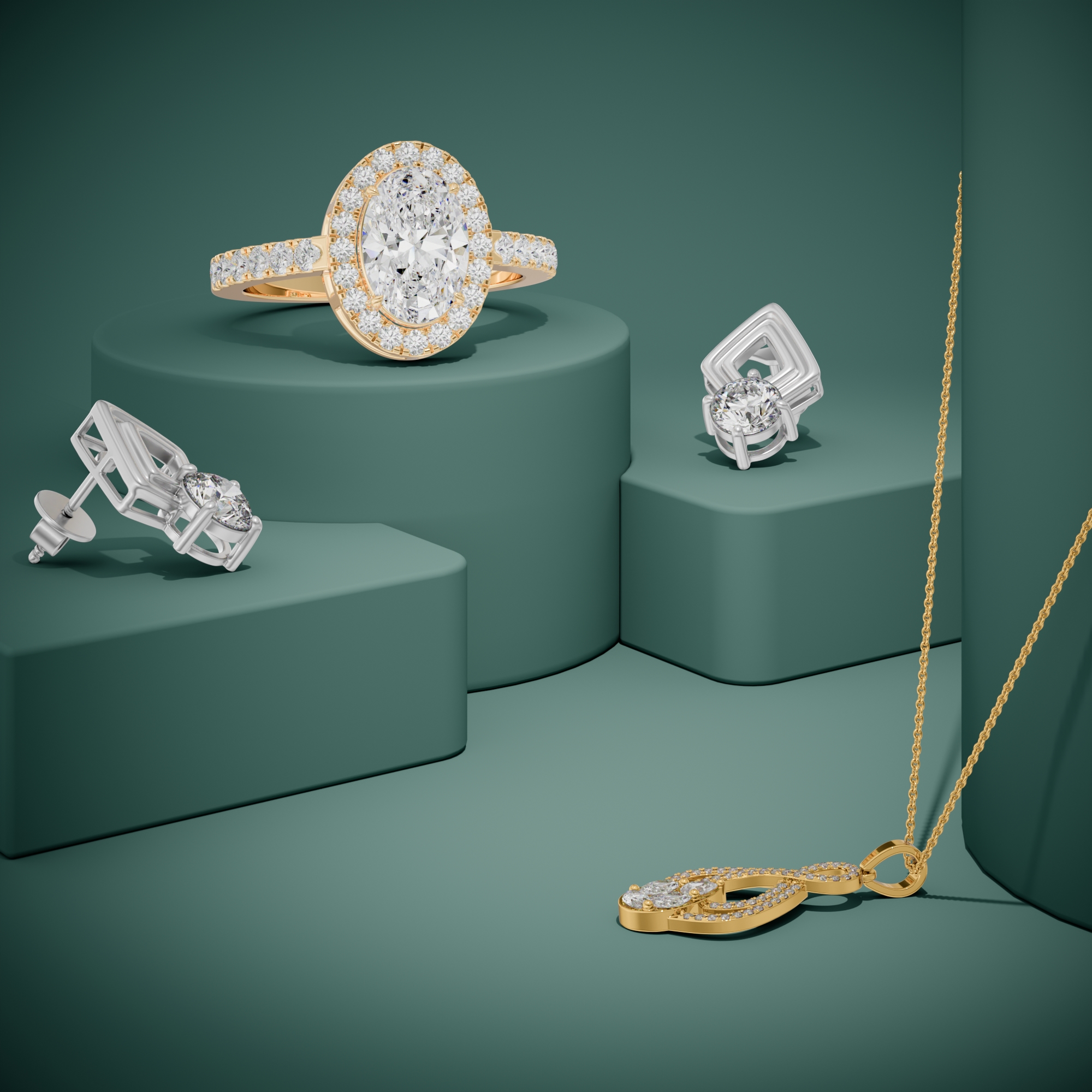
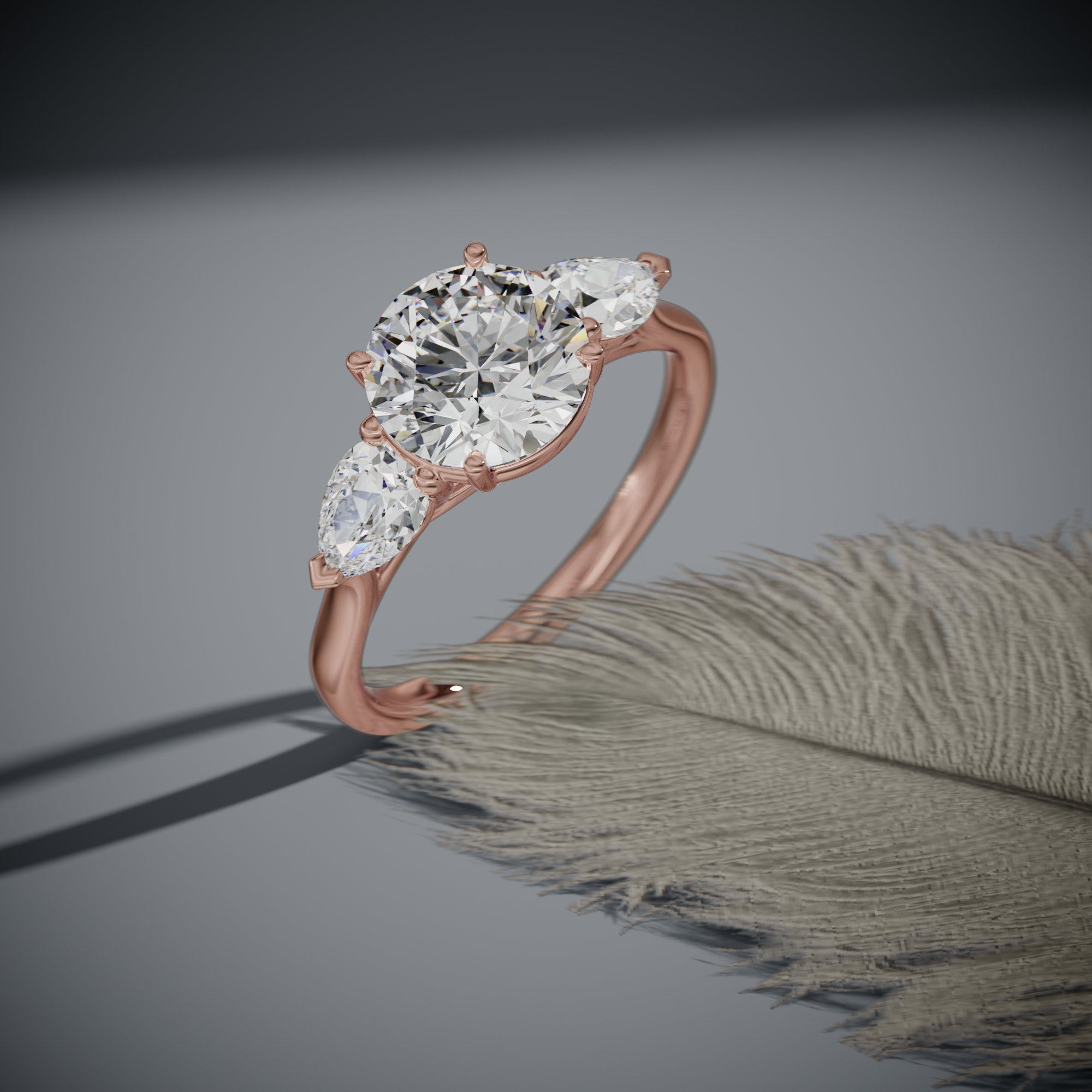
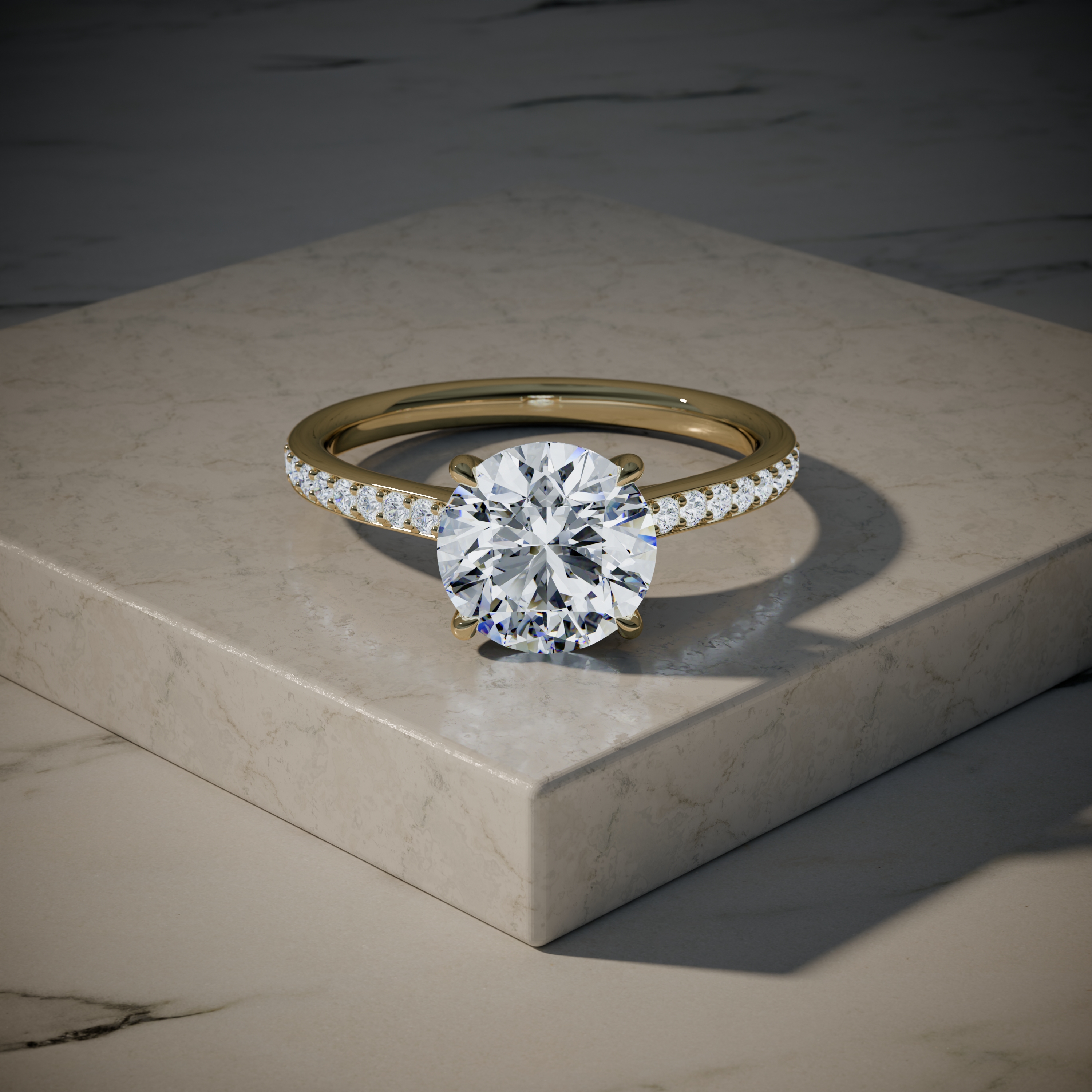
3d rendering is the process of creating highly realistic digital images of jewellery using 3D modeling. It allows designers and brands to visualize a piece with accurate metals, gemstones, textures, lighting, and details, without needing to photograph a physical sample.
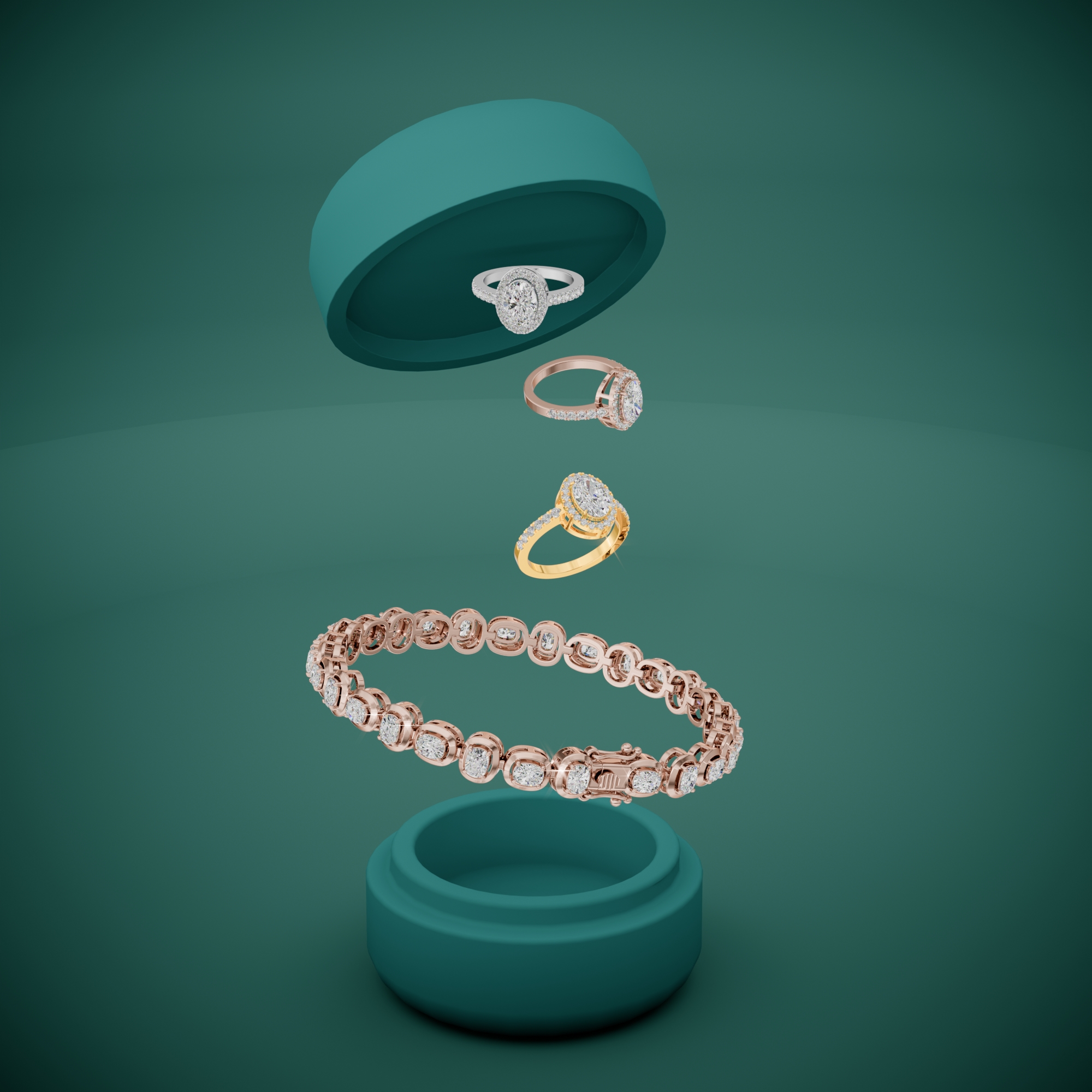
A 3D render is a photorealistic image built by software from a three-dimensional model, not captured by a camera. For a jewelry brand, it means you can produce catalog images of a ring before the ring exists, because the image is calculated from the CAD file rather than photographed from a cast sample. That is the whole idea, and the rest of this post is what it means in practice.
What a 3D render actually is
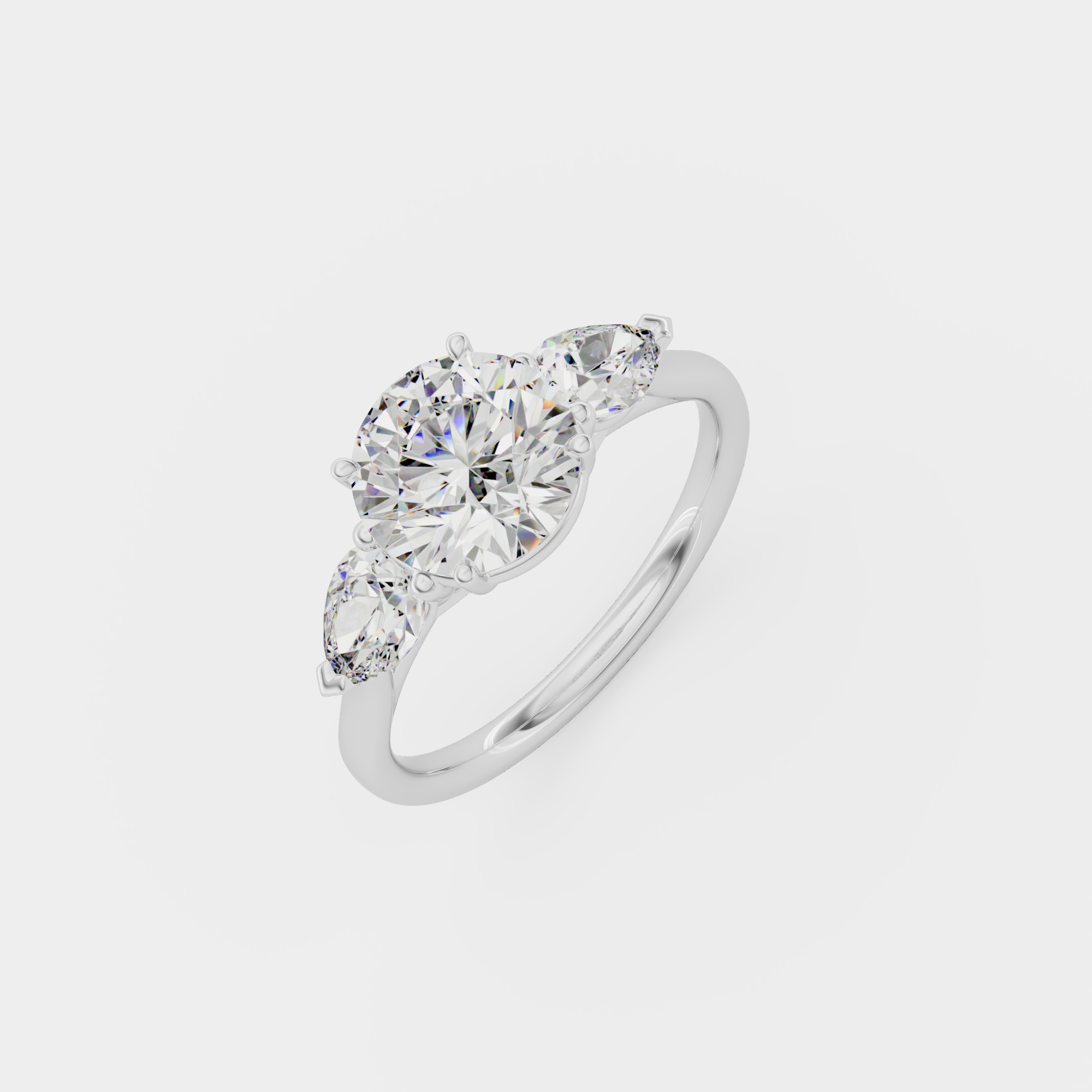
Most people meet the term somewhere other than jewelry. In architecture, a render is a building walkthrough. In gaming, it is an engine drawing frames as fast as the screen refreshes. Product rendering is a narrower job with a stricter standard: one still image that has to survive a customer zooming into it on a product page.
The mechanics are the same in all three. A render starts with a 3D model, which is a mathematical description of every surface of the piece. The software is then told what each surface is made of, where the light sources sit, and where the camera stands.
It calculates how light would travel through that scene, bouncing off the metal and refracting through the stone, and writes the result as a flat image. Chaos, which makes V-Ray, defines rendering as generating a two-dimensional image from a three-dimensional model, which is exactly what is happening.
Nothing is photographed. No metal is cast, no stone is set, and there is no camera in the room. If you want the same process described in jewelry terms rather than industry ones, what jewelry rendering is covers it.
2D and 3D: the difference that matters for jewelry
The phrase "2D vs 3D rendering" causes more confusion than it settles, because the pages explaining it do not agree on what 2D rendering means. Some use it for flat vector artwork. Some use it for retouched photography. Some use it for any static image.
For a jewelry brand the useful distinction is not how the file ends up, since a 3D render is delivered as a flat JPG like everything else. The useful distinction is what the image was made from.
A 2D asset is a finished, flat picture. A photograph of a ring holds what the camera saw from one position, in that light, with that stone. Retouching can clean it, but it cannot move the camera or change the metal, because that information was never captured in the first place.
A 3D render starts from a model that holds the whole piece in space. The angle, the metal, and the lighting are all decisions made after the model exists, so changing any of them is a new calculation rather than a new shoot.
Flat 2D Image vs. 3D Render
|
Factor |
Flat 2D Image |
3D Render |
|---|---|---|
|
Starts from |
A camera exposure or artwork |
A 3D model of the piece |
|
Piece must exist |
Yes |
No |
|
A new angle costs |
A reshoot |
A camera move |
|
A metal change costs |
A new sample and a reshoot |
A material swap |
That last row is the one that matters most in this trade, because a jewelry brand rarely sells one version of anything.
How a CAD file becomes a finished image
Four stages, in order. None of them is optional.
- The model. Someone builds the piece in CAD, or you send one you already have. We accept 3DM, STL, OBJ, and STEP. If all you have is a sketch or a photo, the model gets built first, as a separate step with its own fee, and rendering starts after you approve it.
- Materials and lighting. Every surface is assigned real optical properties: how rose gold reflects, how a diamond bends light, how a matte finish scatters it. The scene is then lit the way a photographer would light a lightbox, with soft sources and reflectors placed by hand.
- The render. The software traces light through the scene and produces the image. This is the part that looks like magic and is mostly arithmetic.
- Post-production. Color, contrast, and background are finished, then the files are exported in the formats you need. Two revision rounds are included, and revisions ship within 24 hours of your notes.
The stage that decides the outcome is the first one, which is the part most guides skip. A clean CAD file renders at the base price. A broken export needs repair time before anyone can light anything, and no amount of care at stage three recovers a model with holes in it.
Why jewelry brands stopped booking sample photoshoots
No sample is needed. This is the whole argument, and everything else follows from it. You can show a design, take pre-orders on it, and put it in front of a buyer without casting metal. Then you cast what sells instead of casting to find out what sells.
One file covers every metal. A single CAD file is rendered in all three golds and ships as 9 HD images plus 3 videos, at $15 per file. The metal is a material assignment rather than a second photoshoot, which is the mechanical reason rendering economics look different from photography economics.
The catalog stays consistent. Lighting, background, angle, and scale are identical across every SKU, because they are numbers in a scene file rather than a setup someone has to rebuild. Photography drifts between sessions. Renders do not.
Turnaround is measured in hours. Most orders deliver in 24 to 48 hours. Several studios match that, so treat it as a supporting fact rather than a reason to pick rendering over anything else.
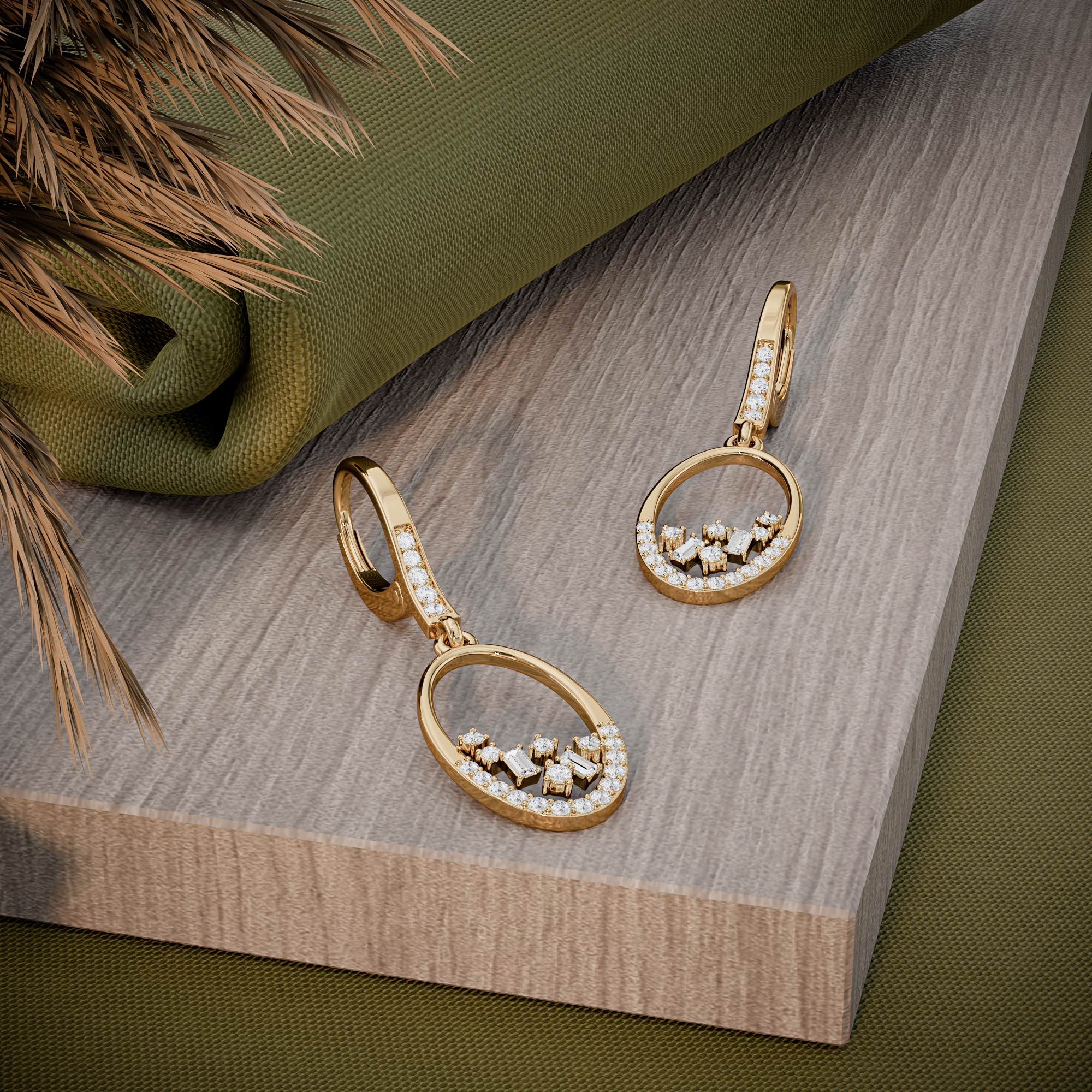
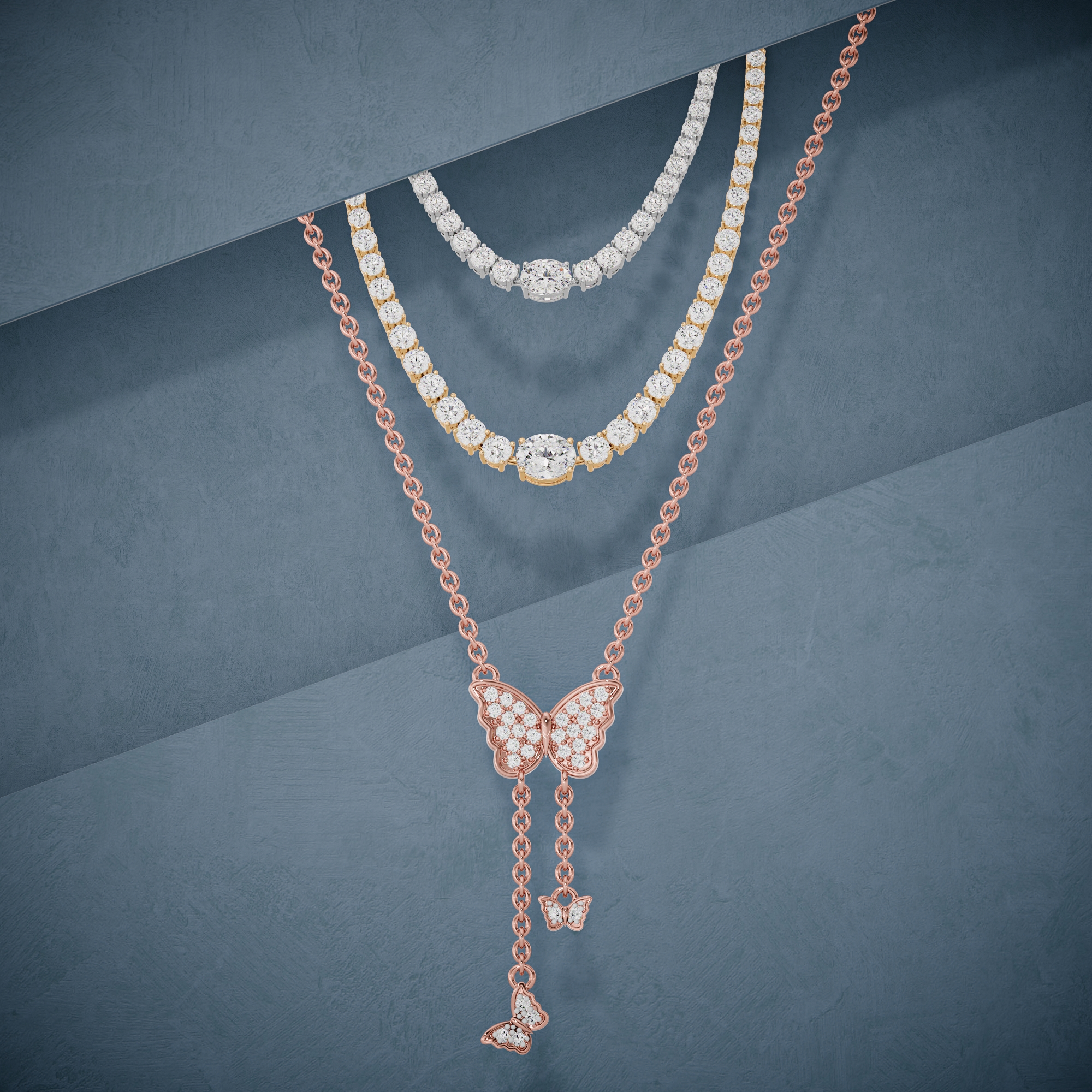
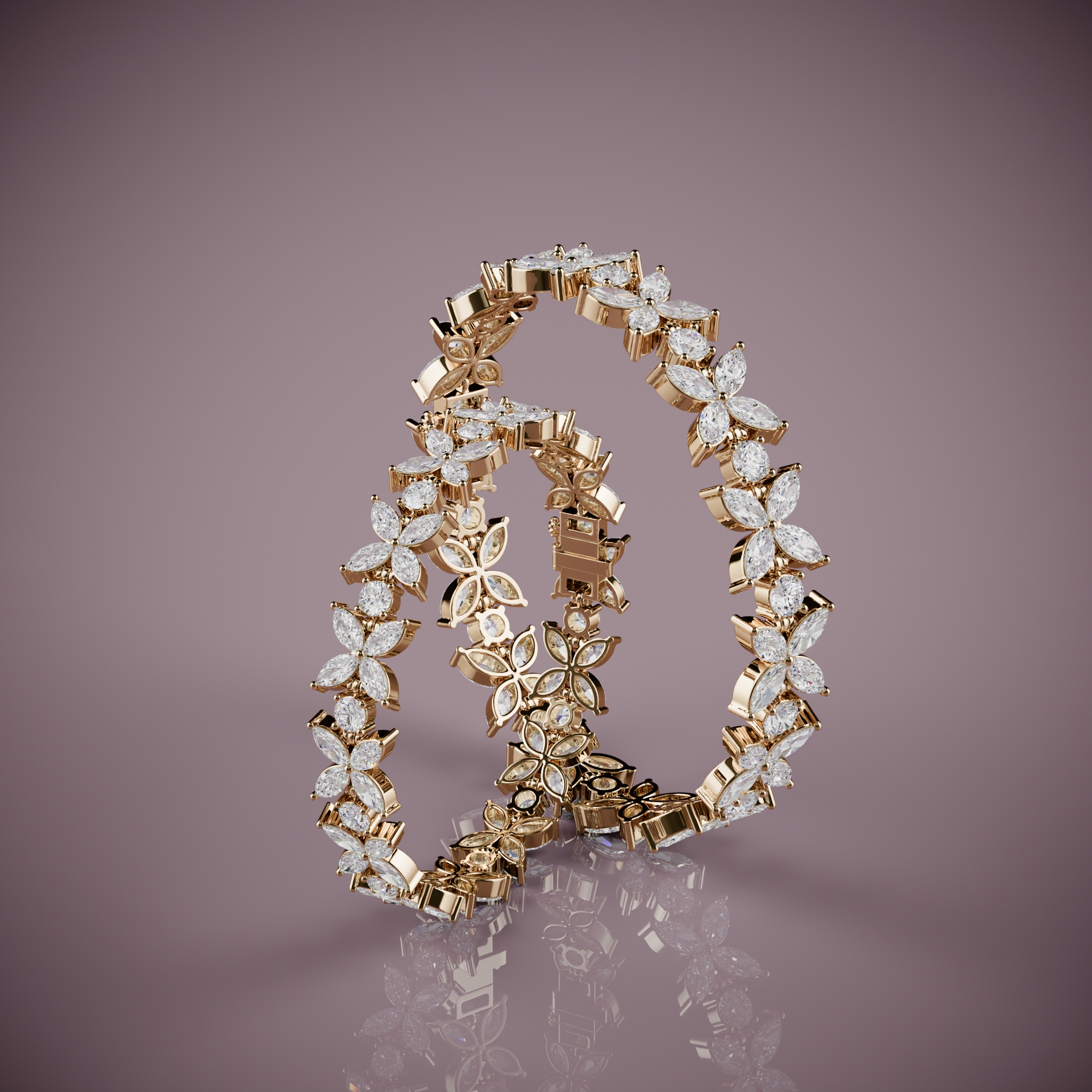
One model, three metals, one camera angle. Nothing was cast to produce this.
Where the render fits: catalog, ads, and social
Product pages. This is the highest-volume use and the least glamorous. Renders deliver at 3000 x 3000 px or larger, and Shopify recommends square product images at 2048 x 2048 px, so a standard file clears the recommended size without resampling. White background, ecommerce ready, same framing down the whole grid.
Ads. Paid social and display need the piece cut out of its background and dropped onto a layout. Transparent PNG and layered TIFF ship with every order for that reason, so a designer is not tracing an outline by hand.
Social and listings that move. Each order includes 3 videos, one per metal, as MP4 and WebM. A rotating piece holds attention on a feed and shows the profile and the setting depth that a single flat image cannot.
The pattern across all three is that one modeling job feeds every channel. That is a different shape of spend from a photoshoot, where each new format tends to mean new studio time.
Where rendering is the wrong call
People. Rendering human skin convincingly costs more than photographing a human. For model shots, campaign imagery, and anything on-body, book a photographer. This is not a close call.
Pieces that already exist. An estate piece or a handmade one-off has no CAD file. Modeling it from scratch purely so it can be rendered usually costs more than putting it on a table and shooting it.
Hand texture. Hand engraving and organic hammered surfaces can be rendered, but capturing their exact character takes modeling time that a camera gets for free.
Bad rendering, which is a real thing. Cheap renders show their tells: plasticky metal, stones that glow instead of sparkle, flat uniform lighting, a piece floating with no shadow. If you are comparing suppliers, those four tells are what to look for.
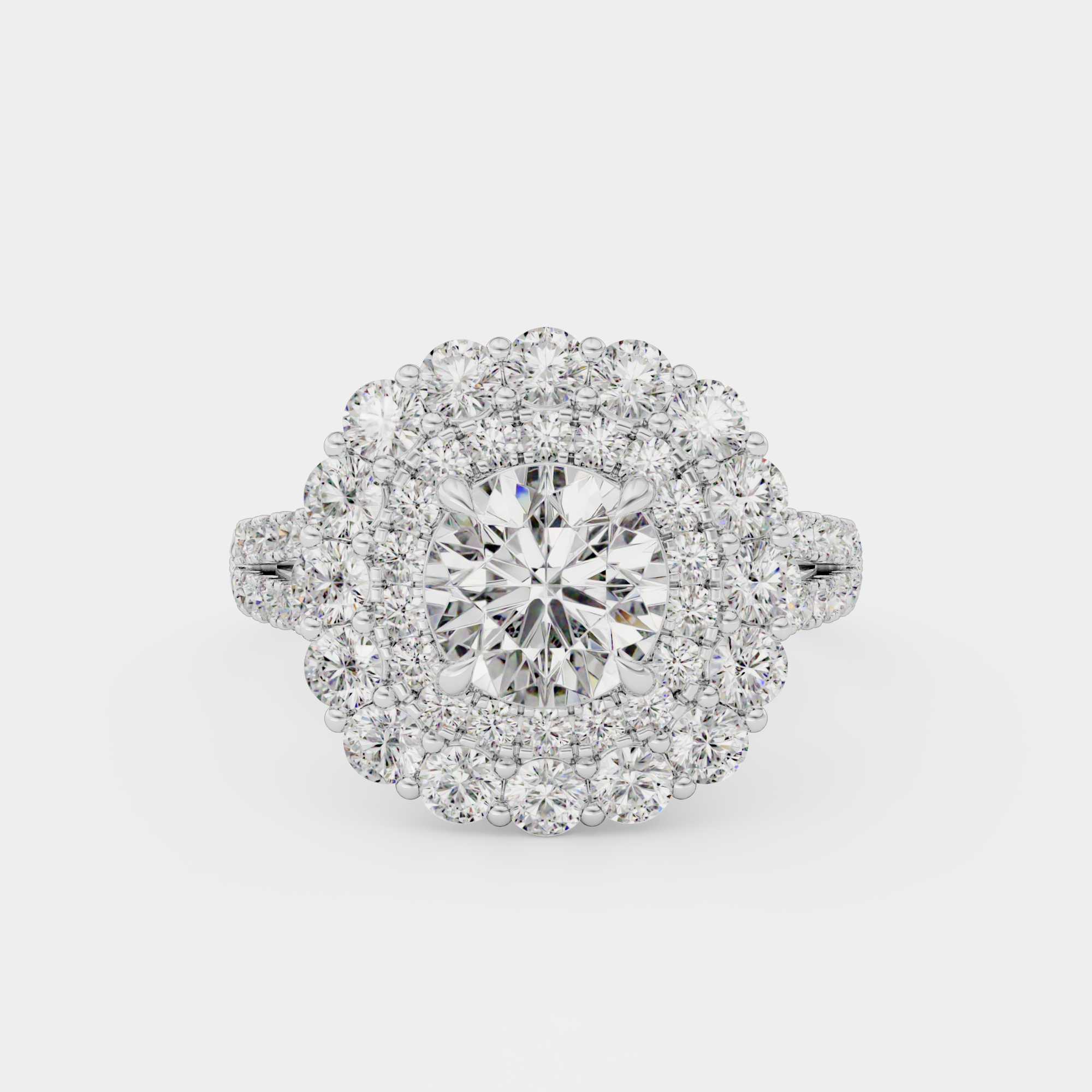
Facet edges stay sharp and the light breaks up across them. A cheap render loses that and the stone reads as a lit bead.
Nine years and more than 12,000 renders in, the honest position is that rendering and photography answer different questions. How rendering compares with photography goes through the trade-offs properly.
Where to start
Send one file and look at what comes back. That is the only test that tells you anything, and it costs nothing: we render one CAD file at full quality as a free sample render, with no payment details asked. Any studio confident in its output will render one piece to prove it, so make that your first question to whoever you are considering.
When you know which pieces you want rendered first, these are the pages for each:
- Ring rendering, for solitaires, bands, halos, and engagement sets
- Earring rendering, for studs, hoops, and drops
- Necklace and pendant rendering, for chains and pendants
- Bracelet and bangle rendering, for bracelets, bangles, and cuffs
- Gemstone and diamond rendering, for loose stones and anything where the stone is the subject
Curious how this works in practice? See the process, browse the portfolio, check pricing, or see every service we run.