Diamond Fluorescence
Also called fluorescence meaning, blue fluorescence diamond, diamond fluorescence chart, fluorescence in diamonds, UV fluorescence.
Diamond fluorescence is the glow some diamonds give off when exposed to ultraviolet light, most often blue. GIA grades its strength from None to Very Strong and lists it on the report separately from the 4Cs, because it identifies a stone rather than rating its quality.
In other words, Put a diamond under a blacklight, and some stones light up. That reaction is fluorescence, and it disappears the moment the UV source is removed.
How Diamond Fluorescence Works?
Fluorescence is a reaction to long-wave ultraviolet light. Certain trace elements in the crystal, most commonly nitrogen, absorb the UV and release it as visible light. Sunlight contains long-wave UV, so a strongly fluorescent stone can react outdoors as well as under a lab lamp.
It is common but not universal. GIA puts the share of diamonds that fluoresce at about 25 to 35 percent, and more than 95 percent of those glow blue. Yellow, white, orange, and green reactions exist but are rare.
GIA reports intensity on a five-step scale, which is what most retailers mean by a fluorescence chart. When the reaction is Medium or stronger, the report also records its color:
- None: no visible reaction under UV
- Faint: a weak glow, color not recorded
- Medium: a clear glow, color recorded
- Strong: an obvious glow, color recorded
- Very Strong: an intense glow, color recorded
Is Diamond Fluorescence Good or Bad
For most stones, it is neither. GIA's observation studies found no systematic effect on appearance for the average viewer, and observers often judged strongly blue stones as having better color when viewed face up. Fluorescence never changes the color grade on the report.
Where it matters depends on the color grade. In the I to M range, blue fluorescence can offset a faint yellow tint and make the stone look more colorless in daylight. In the D to H range, the trade often treats blue fluorescence as a negative, and Very Strong stones in those grades tend to sell for less, even though their color and transparency are likely unaffected.
The real risk is haze. Fluorescence does not cause it, but it can intensify haze from rare light-scattering defects, giving the stone an oily look. GIA sees this in fewer than 0.2 percent of the fluorescent diamonds submitted to it.
Why Fluorescence Does Not Show in a Render
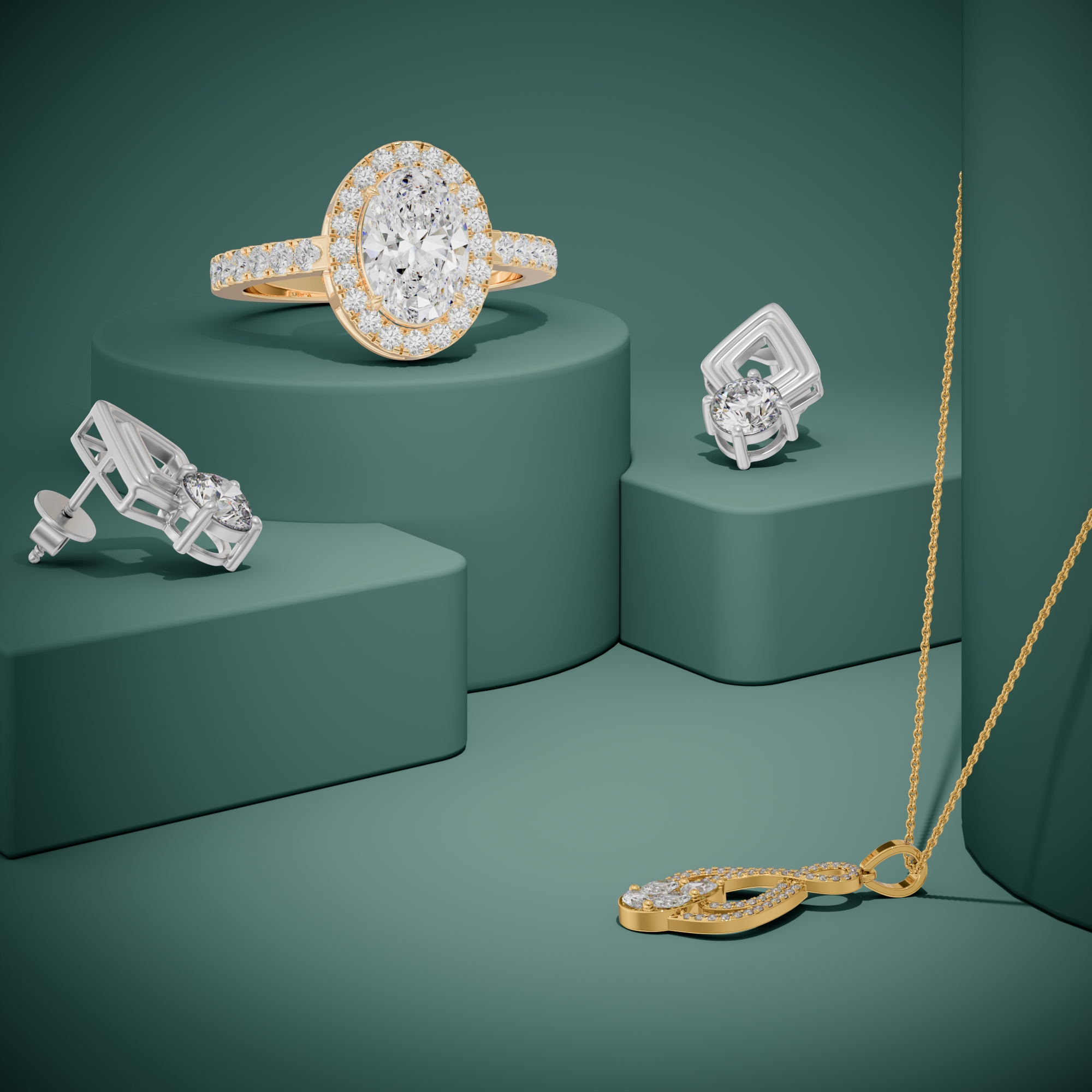
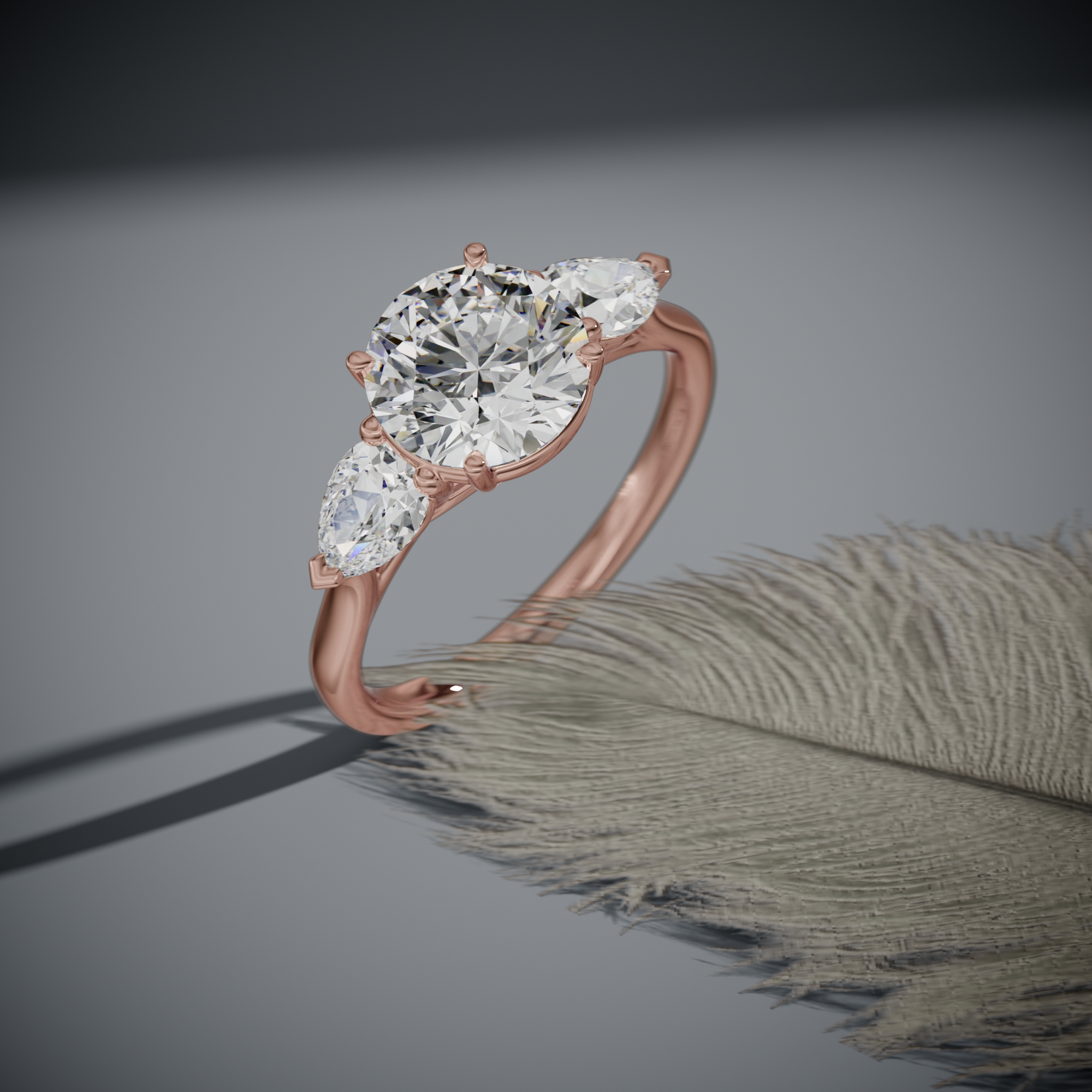
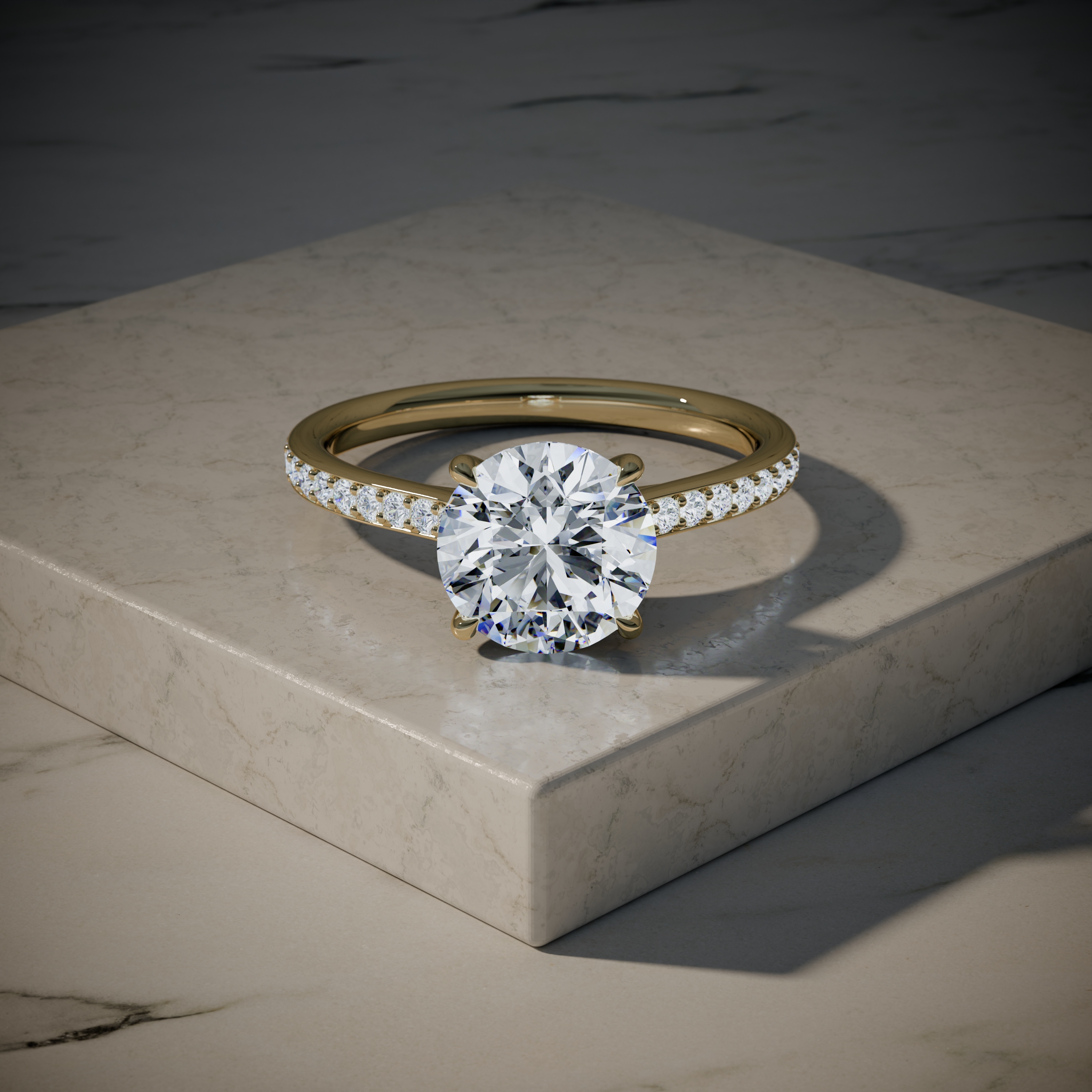
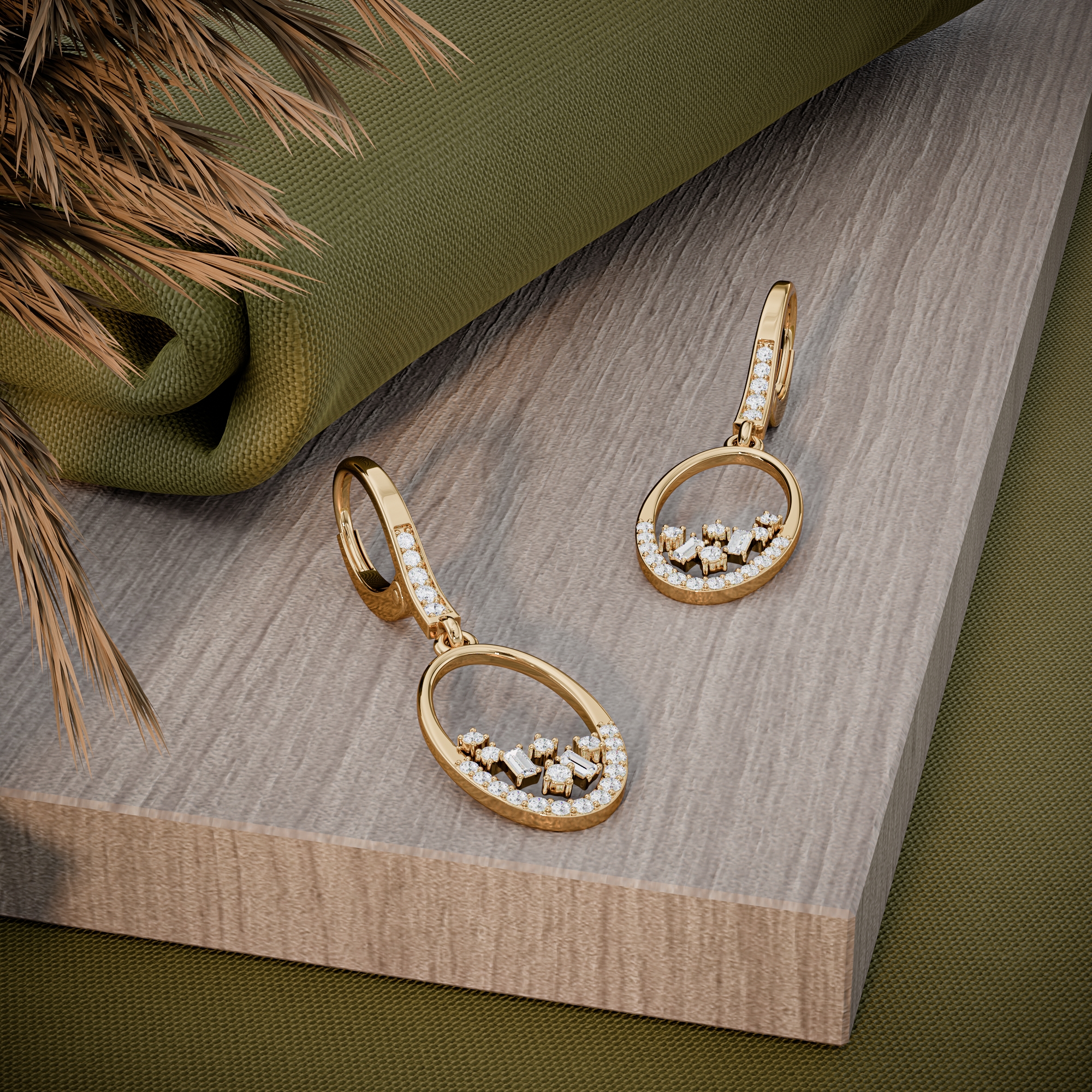
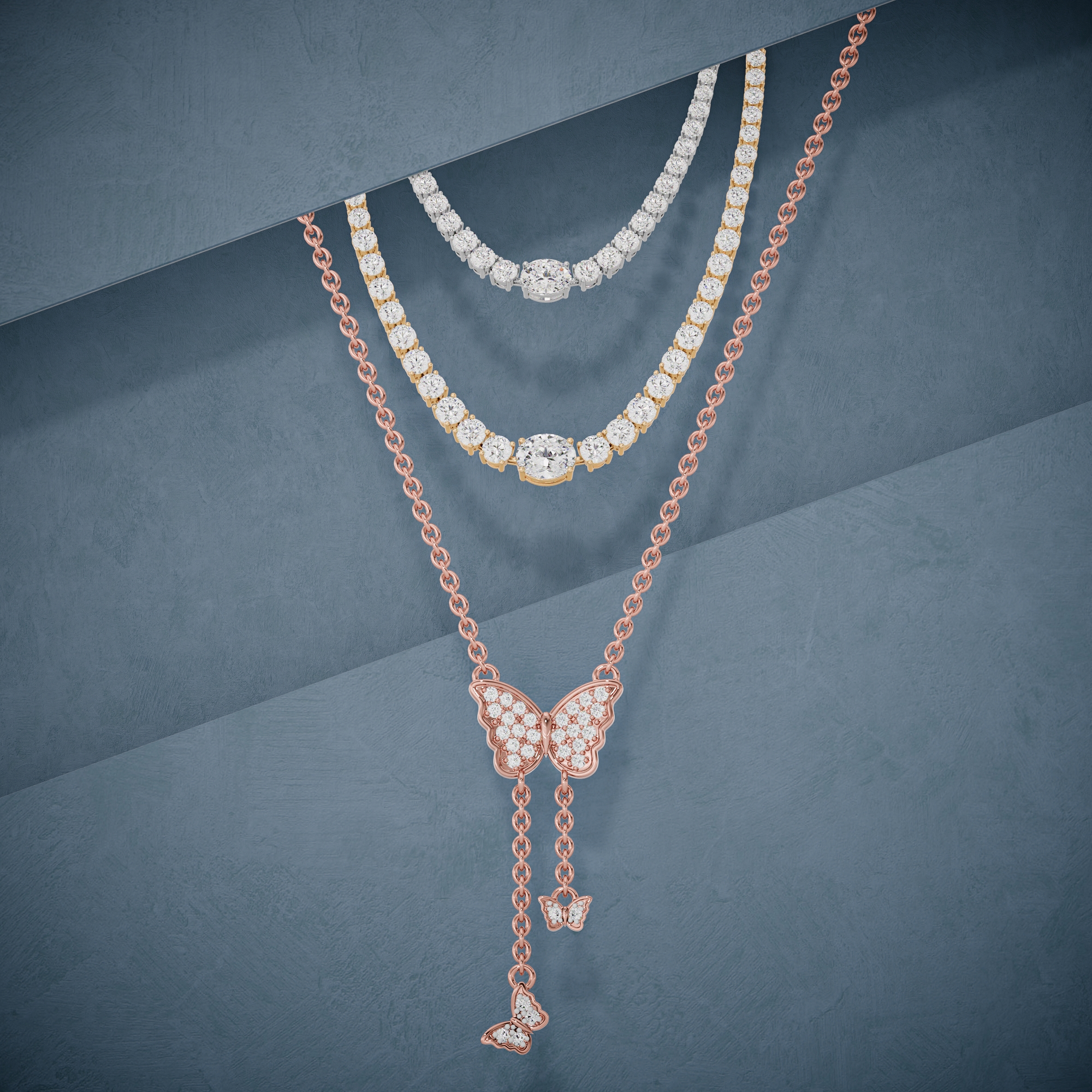
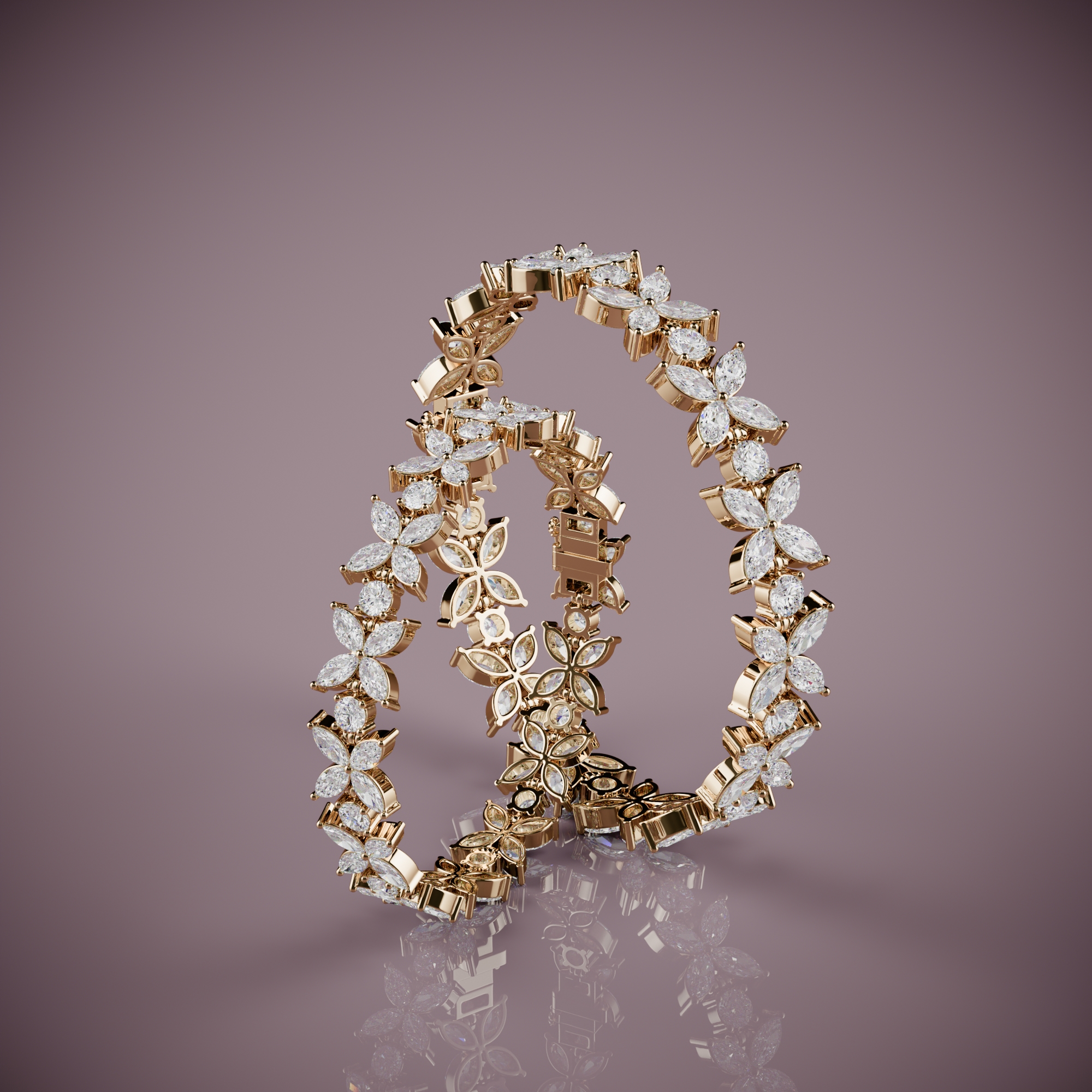
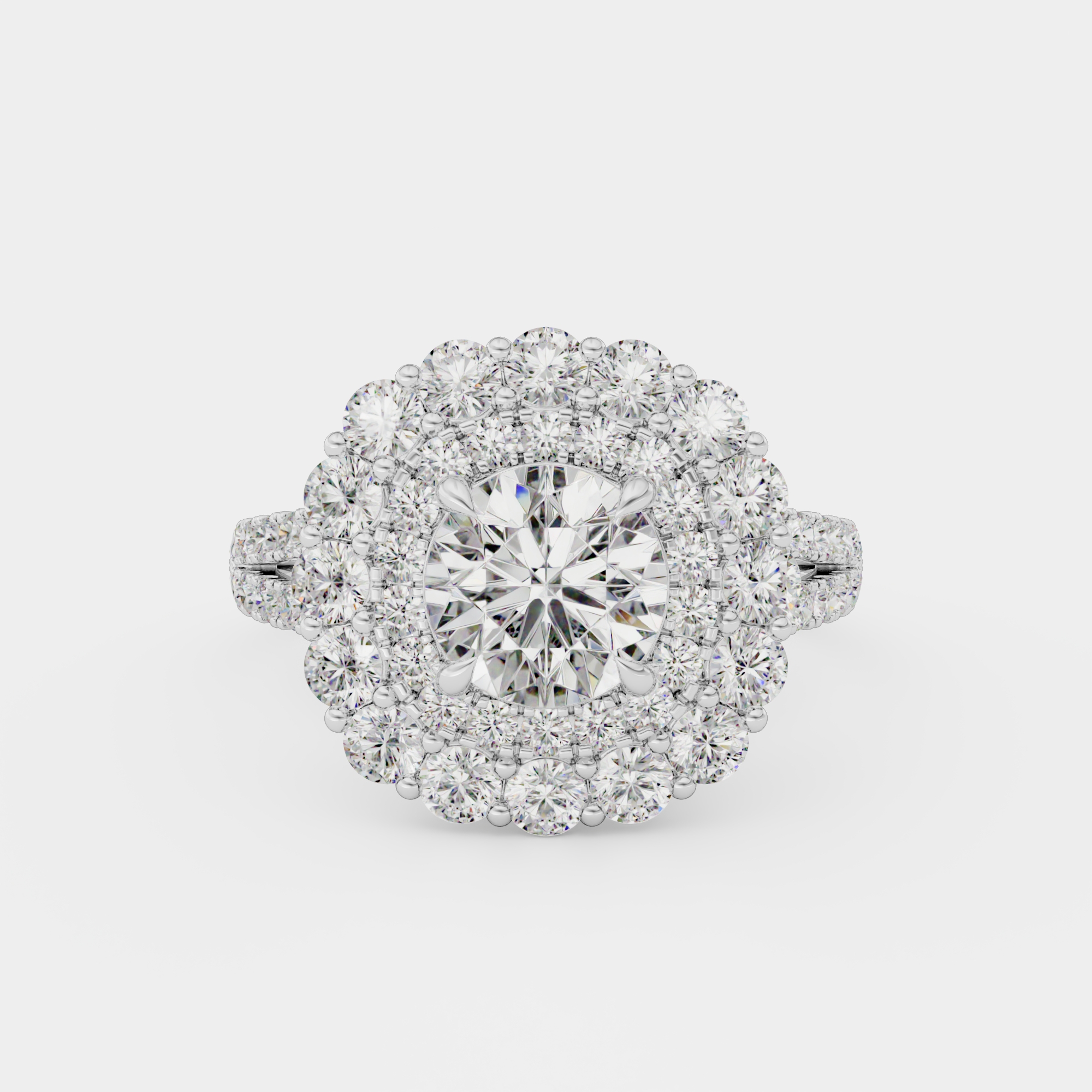
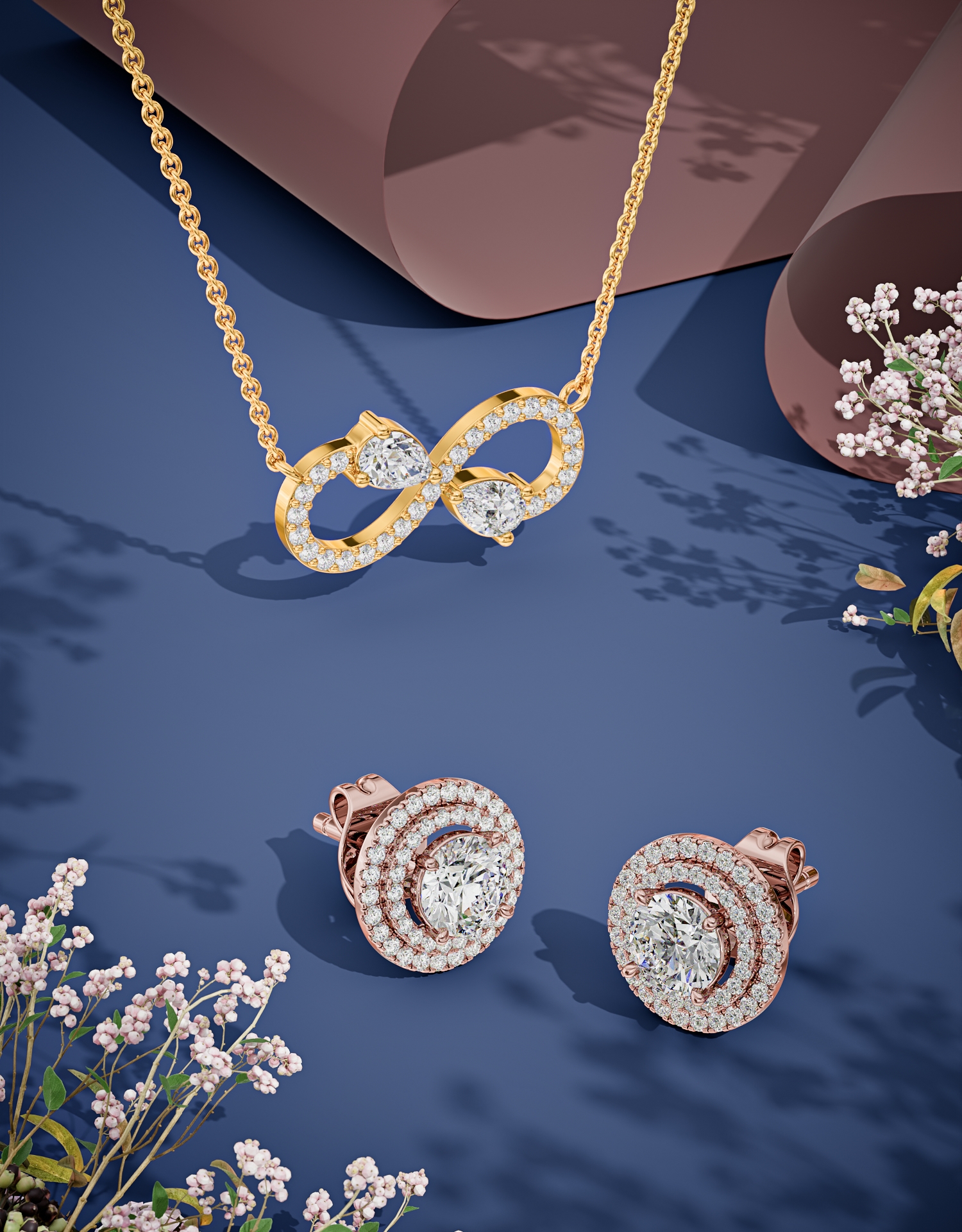
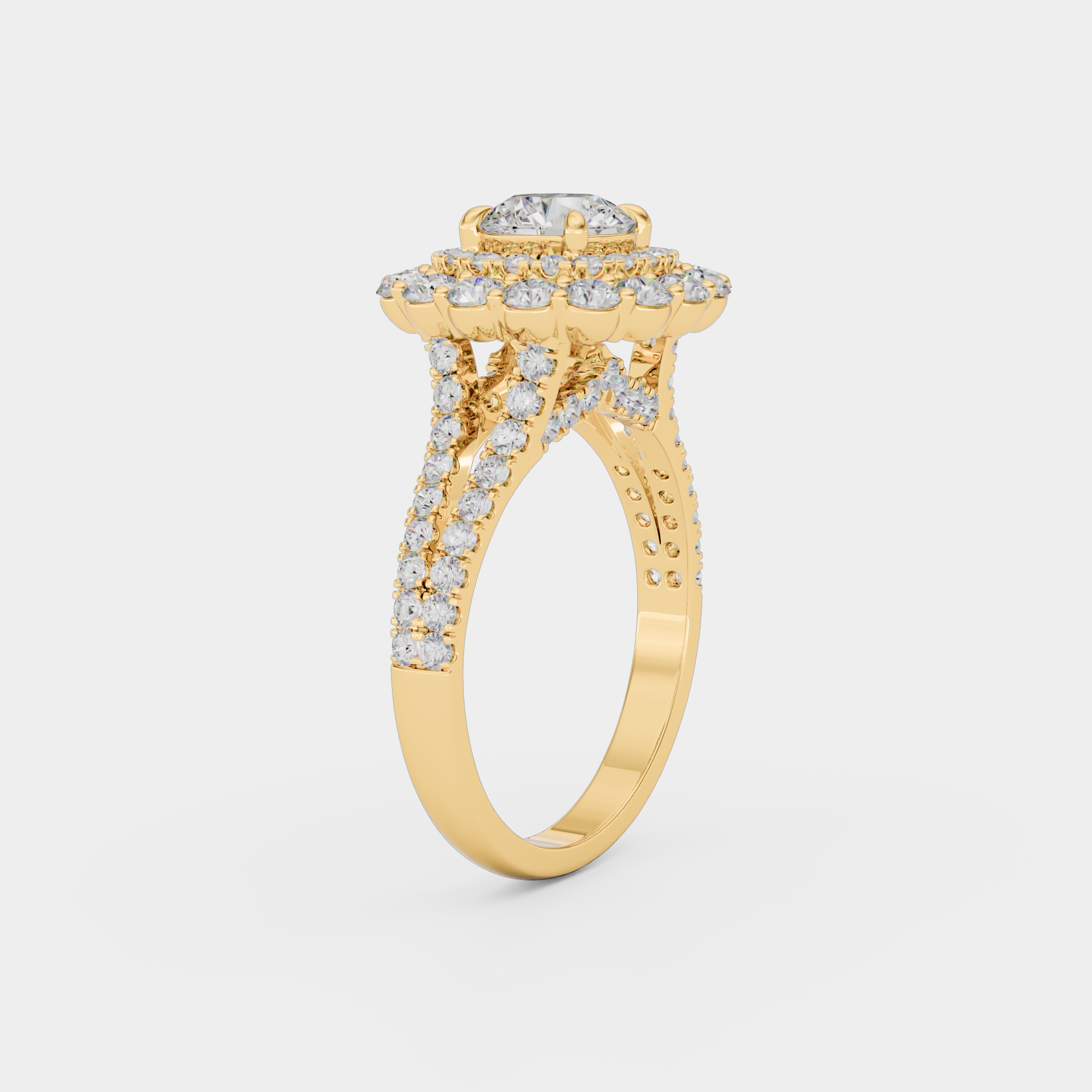
A render shows a diamond under the light in the scene, and product lighting carries no ultraviolet. So a rendered stone always looks the way a non-fluorescent stone looks under studio light. That matches what a shopper sees in most indoor settings, which is the point of a product image.
The CAD file holds no stone data at all, only geometry. Color, fire, and brilliance are set at the render stage, so tell us the grade you want the stone to read as. Stone appearance is one of the things two included revision rounds cover, if the first pass reads too white or too warm.
Send the file in 3DM, STL, OBJ, or STEP. From one file you get 9 HD images and 3 videos, in rose, white, and yellow gold, at 3000 x 3000 px or larger, so the stone still holds up when a buyer zooms in.
Where a Render Cannot Settle the Fluorescence Question
A render cannot tell you how a specific fluorescent stone will look. It shows the design and the intended grade, not the behavior of the physical diamond that ends up in the setting. The rare hazy stone will look clear in every render, because the defect lives in the real crystal.
So treat the two decisions separately. Use the render to approve the design and sell the piece. Choose the stone from its grading report, and if it is graded Strong or Very Strong, look at it in person under daylight-equivalent light before you buy it.
This matters most on custom work, where a client approves a render before the stone is bought. Say in writing that the render shows the design and the target grade, not the stone itself. A client who later sees a Strong blue stone glow under a blacklight should already know why.
Questions about Diamond Fluorescence
Is blue fluorescence in a diamond bad?
Usually not. Blue fluorescence can make an I to M color stone look whiter in daylight. It can lower the price of D to H stones, and in fewer than 0.2 percent of fluorescent diamonds it makes an existing haze worse.
What does the fluorescence grade on a diamond report mean?
It records how strongly the stone glows under long-wave UV, on a scale of None, Faint, Medium, Strong, and Very Strong. From Medium upward the report also names the color of the glow. It has no effect on the color grade.
Can you see diamond fluorescence in normal light?
Rarely. The glow needs ultraviolet, so it shows under a blacklight and sometimes in strong sunlight. Under most indoor lighting a fluorescent stone looks the same as one with none.
Does a jewelry render show fluorescence?
No. Render scenes are lit without ultraviolet, so the stone appears as it would under studio light. The render shows the color grade you specify, not the fluorescence of a particular diamond.